
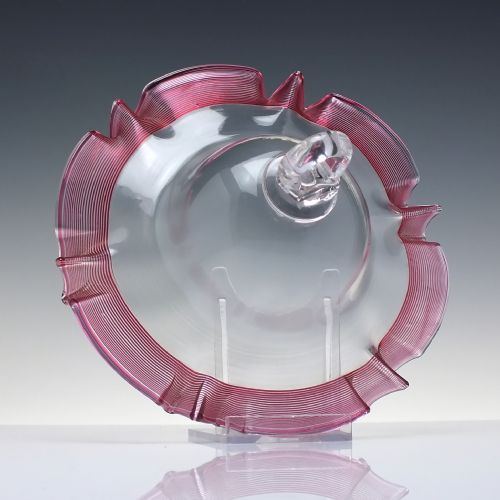


Victorian Bell Jar
A victorian bell jar is a glass cover used to protect delicate objects and specimens, combining clear visibility with period character.
Victorian Bell Jar
When you search for a victorian bell jar, you encounter blown glass covers designed to house displays, taxidermy, and botanical specimens. The forms span tall display domes, oval collectors' cases, and garden cloches.
The pieces on this page appear from the Victorian, Edwardian, and Georgian periods, alongside items from the 1870s, 1880s, 1890s, and 1900s. You meet tall showcases, flat-sided domes, and garden ornaments.
English examples predominate, often paired with wooden bases in oak, pine, or ebonised wood. Interior contents range from taxidermy specimens and beadwork bouquets to fruit compositions and clock movements.
Materials and construction
Glass production relies on hand-blown techniques, resulting in varied thickness, bubbles, and optical distortions within the bell jar. Some items incorporate diamond-cut crystal or heavy cast iron frames.
Bases utilise timber such as oak and pine, frequently finished with an ebonised surface. Interiors incorporate fabric, velvet, felt, and terracotta alongside natural elements like feathers.
Listings feature materials including glass, ebonised wood, fabric, velvet, felt, feathers, and terracotta across Victorian, Edwardian, and Georgian periods.
Evaluating quality and proportion
Quality rests in the clarity and weight of the glass, where hand-blown examples show subtle irregularities absent in machine-made items. The proportion between the bell jar and its wooden base dictates visual balance.
The integrity of the original base and interior fittings separates standard utility covers from finer display pieces. Subtle details like diamond cutting on crystal lanterns elevate the execution.
The Victorian Bell Jar Glossary
- Bell jar
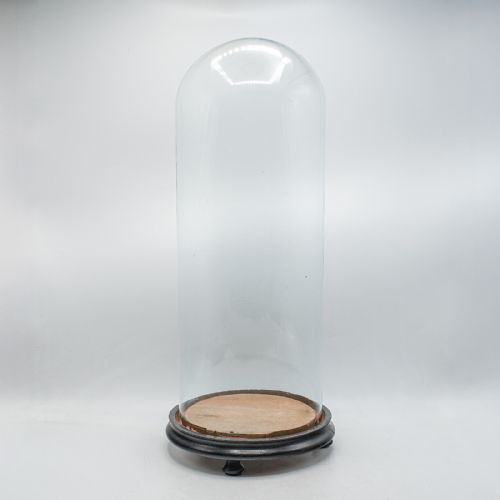
- A bell-shaped glass cover used to enclose and protect objects or specimens. It sits directly on a flat surface or a fitted base.
- Cloche
- A bell-shaped cover traditionally used in gardens to protect plants from frost or outdoors as an ornament. The evidence includes cast iron versions.
- Taxidermy dome
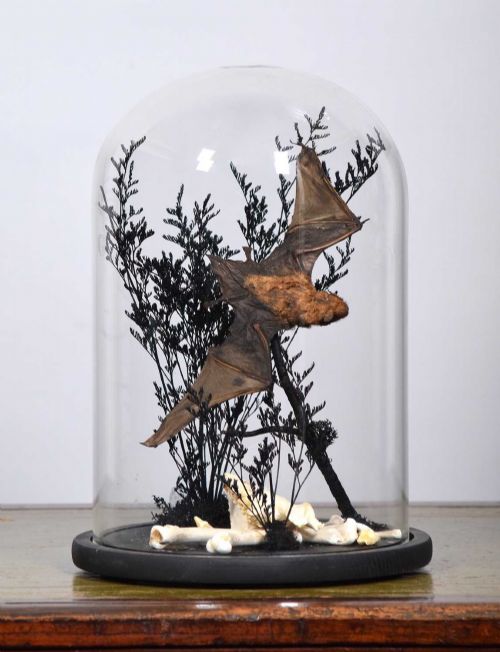
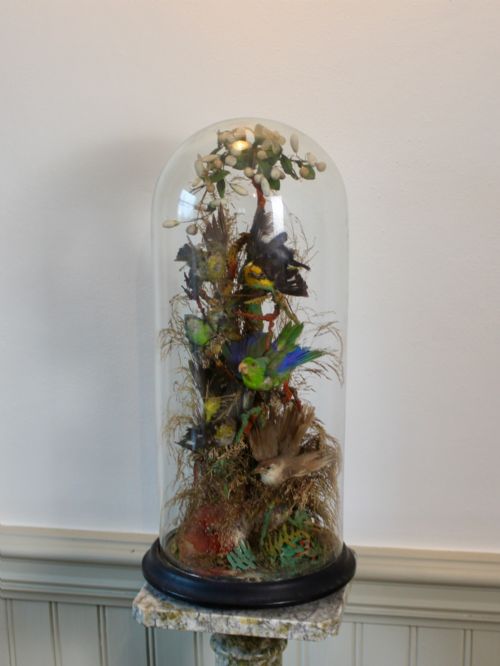
- A glass cover specifically proportioned to house preserved animal specimens, birds, or bats. These often include interior mounts and bases.
- Ebonised wood
- Timber treated with a dark finish to imitate ebony. This material frequently forms the display bases for Victorian domes.
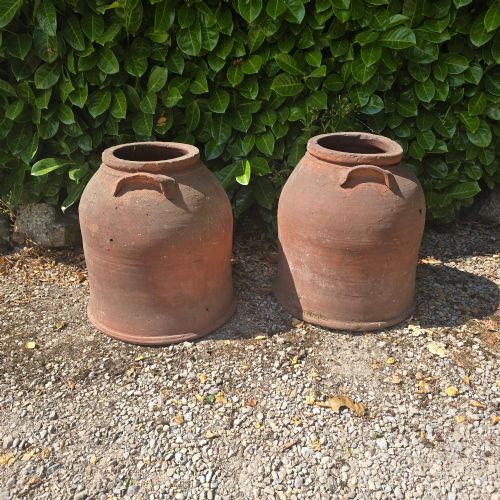
- Rhubarb forcer
- A ceramic or terracotta vessel placed over rhubarb plants to encourage early growth. The evidence includes large Victorian examples.
Victorian Bell Jar: Frequently Asked Questions
What did people put under a victorian bell jar?
These glass covers housed taxidermy specimens, clocks, and delicate ornaments to protect them from dust in the home.
Interiors also held beadwork bouquets, botanical specimens, and still-life arrangements of fruit.
How do I clean an antique glass dome?
Use a soft, dry cloth to remove dust from the exterior glass without applying heavy pressure. Avoid harsh chemical cleaners that might damage aged wooden bases or internal fabric.
If the glass lifts from the base, lift it carefully with both hands on a stable surface.
Are these domes fixed to their bases?
Most antique glass domes rest within a groove on the wooden or cast iron base rather than being permanently fixed. This allowed access to the interior display.
Take care when moving them to ensure the glass does not slide off the timber plinth.
How do I date a glass dome?
Dating relies on the manufacturing marks in the glass, the wood type of the base, and the style of the interior contents. Pieces from the Victorian and Edwardian eras show specific hand-blown characteristics.
Encased specimens like taxidermy bats or birds often correspond to the fashions of the 1870s and 1880s.