

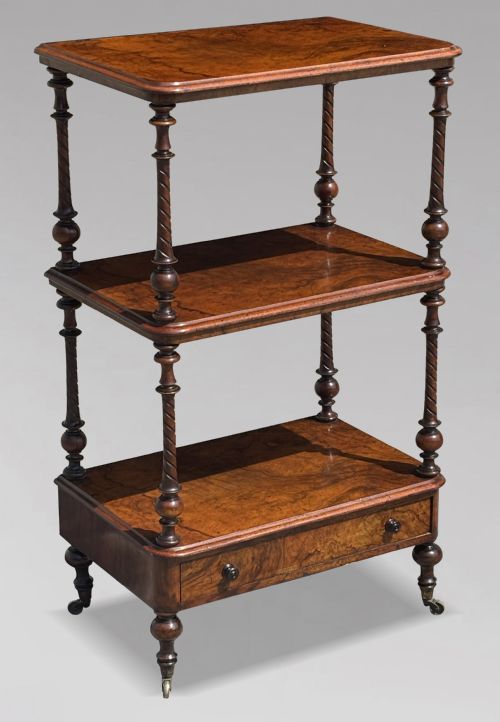


Victorian Barley Twist Shelving
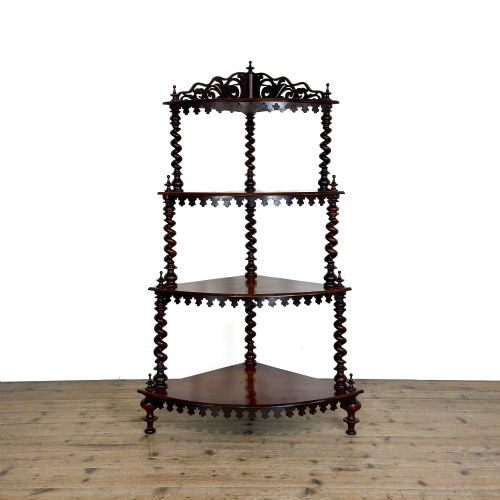
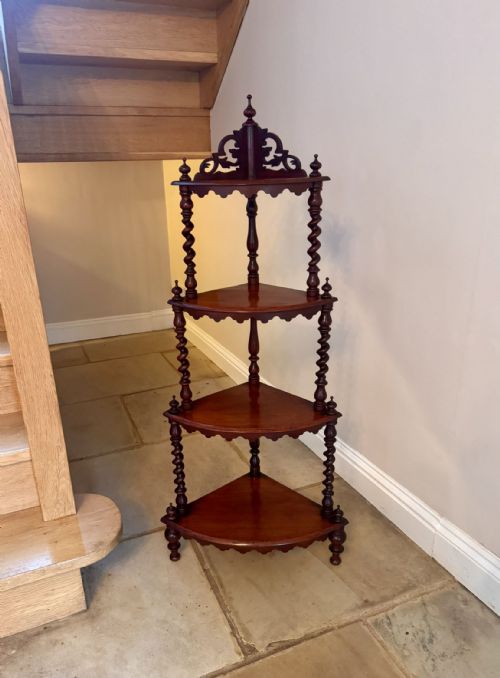
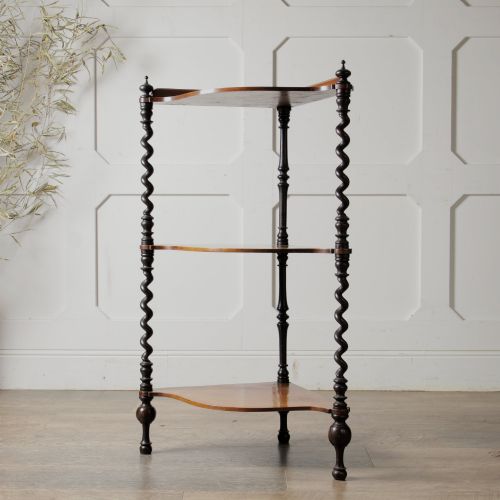
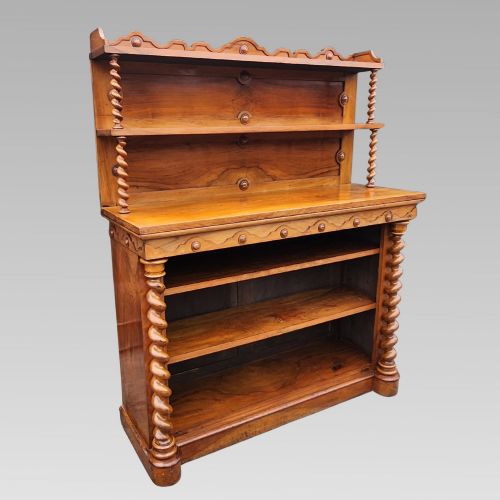
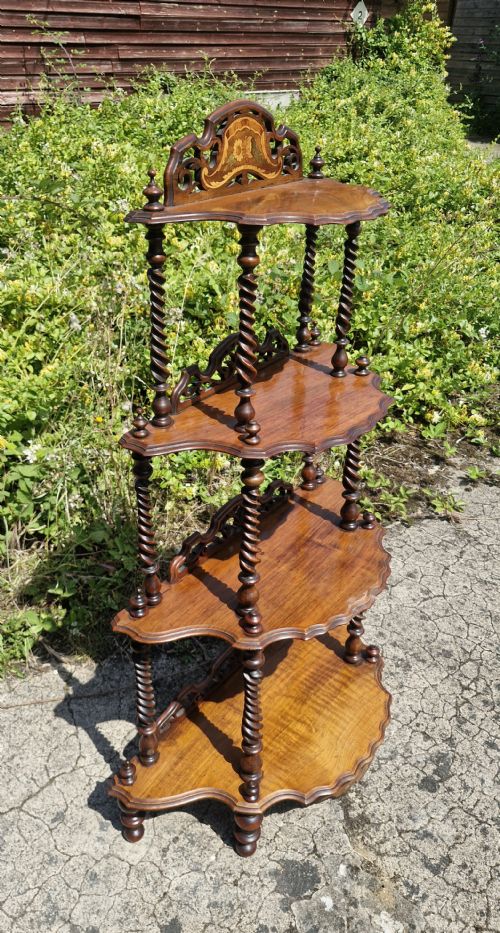
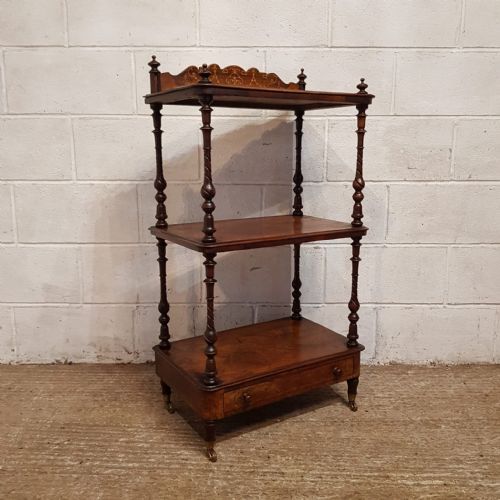
Victorian barley twist shelving brings tiered display stands and whatnots into the room, offering layered timber tiers supported by turned wooden columns.
Victorian Barley Twist Shelving
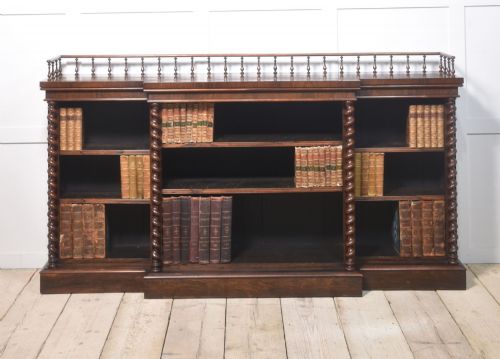
Victorian barley twist shelving encompasses multi-tiered display stands, whatnots, etageres, and bookcases that make efficient use of vertical space in period rooms. These pieces provide open surfaces for books, ceramics, and decorative objects across multiple levels.
The common form on this page is the tiered whatnot or etagere, often featuring three to six shelves held aloft by turned uprights. Corner designs and freestanding units appear frequently in the selection.
Originating largely within the nineteenth century, these items span early Victorian, mid-Victorian, and later decades. Woods such as walnut, burr walnut, mahogany, and rosewood dominate the construction.
Materials and construction
Cabinet makers utilised dense hardwoods like mahogany, walnut, and rosewood to support the weight of multiple tiers without sagging. Burr walnut veneer and delicate wood inlay frequently decorate the surfaces and friezes.
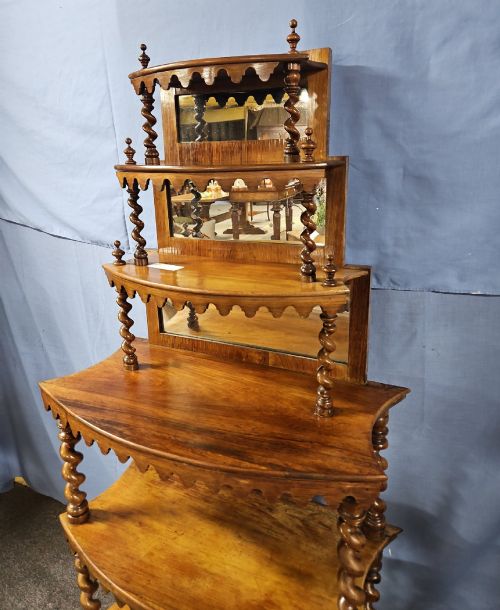
The distinctive spiral supports are turned from solid timber to create the characteristic twist profile. Brass hardware and mirrored glass panels occasionally accompany the main wooden frames.
Victorian Barley Twist Shelving Retail Price Guide 2026
Typical asking prices for victorian barley twist shelving among the pieces listed under this phrase on Sellingantiques today, from the lower quarter to the upper quarter. They describe what is for sale here now, not the wider market.
Some nineteenth-century makers could not resist twisting every upright they touched, creating stands that double as optical illusions.
The spectrum of quality
Finer examples distinguish themselves through the selection of highly figured burr walnut or rich rosewood veneers. The precision of the turning on the uprights and the crispness of any carved friezes separate superior pieces from standard workshop output.
Structural integrity across multiple tiers relies on tight joinery where shelves meet the upright supports. Subtle details such as single drawers fitted beneath shelves or complex demi-lune shapes elevate the standing of the piece.
The Victorian Barley Twist Shelving Glossary
- Whatnot
- A piece of furniture consisting of a set of open shelves for small objects, popular in the nineteenth century. These multi-tiered stands were designed for sitting in corners or against walls.
- Etagere
- A piece of furniture with a set of open shelves for displaying ornaments. The term often overlaps with whatnot in nineteenth-century listings.
- Barley twist
- A type of turned column resembling a twisted rope or barley sugar stick. This decorative woodworking technique appears frequently on the vertical supports of Victorian stands.
- Canterbury
- A low stand with partitions for holding music sheets, books, or portfolios, sometimes incorporated into the lower section of a multi-tiered whatnot.
- Demi-lune
- Half-moon shape, used to describe console tables and corner-fitting shelves designed to sit flush against a wall.
Victorian Barley Twist Shelving: Frequently Asked Questions
What is a whatnot?
A whatnot is an open-tiered shelving unit designed for displaying decorative objects, books, and collections in nineteenth-century interiors. They were placed in parlours and drawing rooms to hold ornaments that lacked a permanent home.
Over time, the form evolved to include drawers, mirrors, and specialised compartments while maintaining its primary function as an open display stand.
Where do I put an etagere?
An etagere fits well in corners or against flat walls where vertical display space is needed without blocking light. Their open construction keeps rooms feeling spacious while providing multiple levels for storage.
In modern rooms, they hold books, plants, and ceramics, echoing their original Victorian domestic placement.
How do I identify a Victorian piece?
Victorian pieces typically display dense hardwoods such as mahogany, rosewood, and walnut, often finished with distinctive grain patterns or veneer work. Turned structural elements like barley twist columns provide strong stylistic clues to the nineteenth-century origin.
Construction methods visible underneath, such as hand-cut joints and traditional timber framing, help confirm the period.
Are these shelves sturdy?
The tiered design relies on solid upright columns and secure shelf fixings to distribute weight across multiple levels. While intended for decorative items and books, the structural strength depends on the original timber quality and joinery.
Heavier loads sit best on the lower tiers, leaving the upper shelves for lighter ornaments.