

Antique Display Shelf Unit
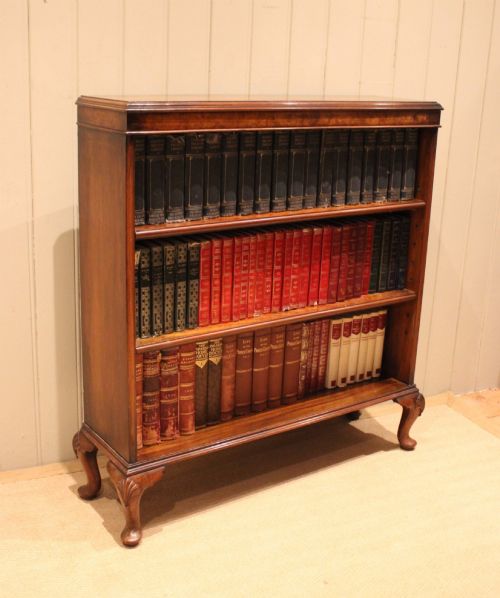
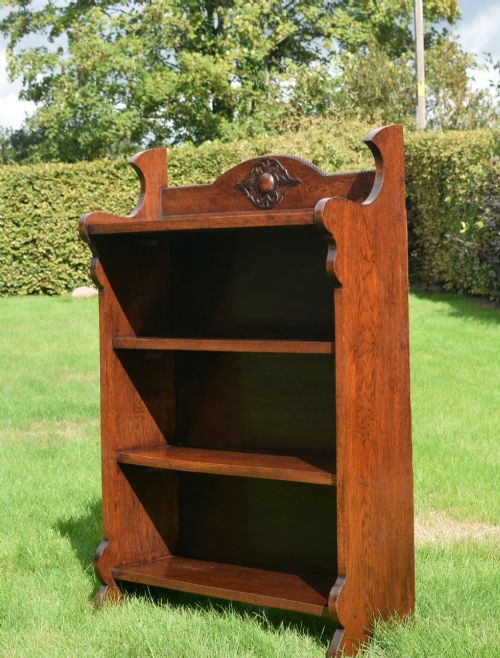
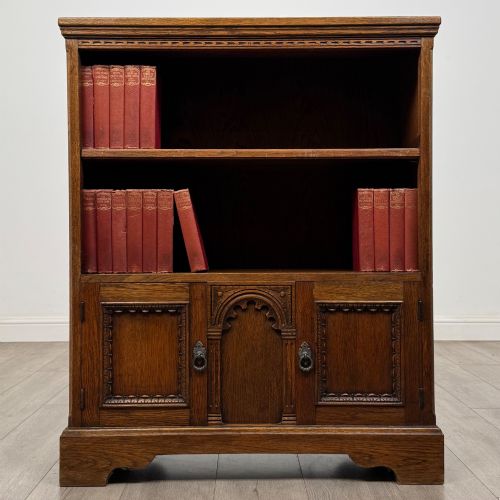
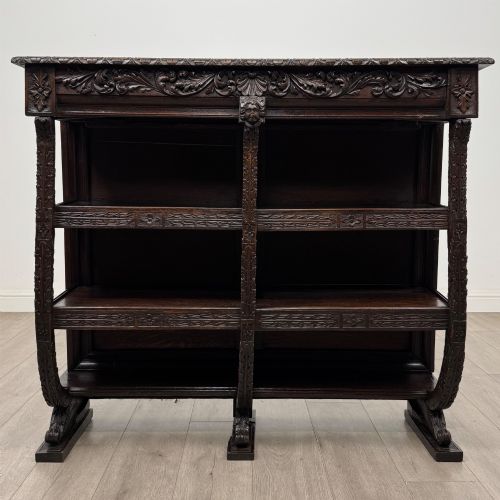
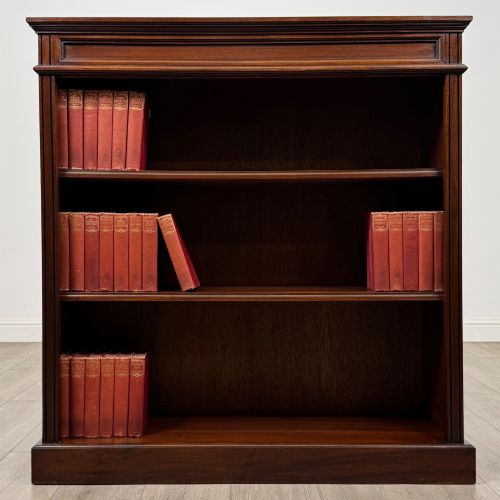
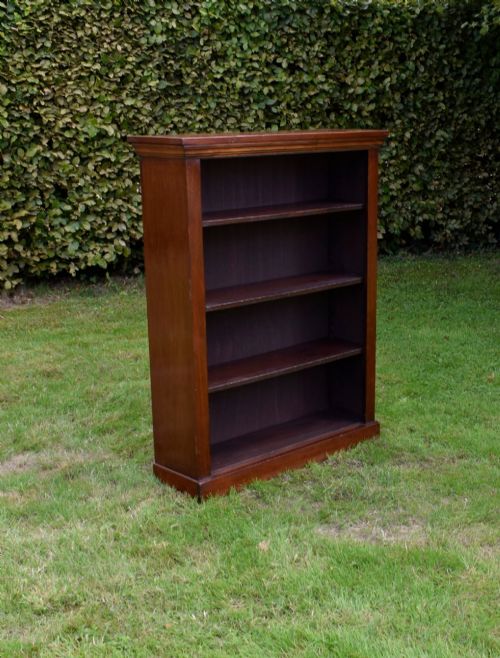
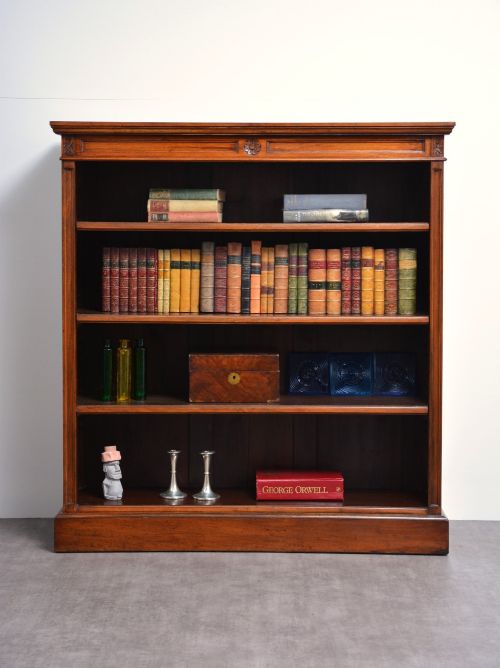
An antique display shelf unit organises a room with timber tiers that show books and objects.
Antique Display Shelf Unit
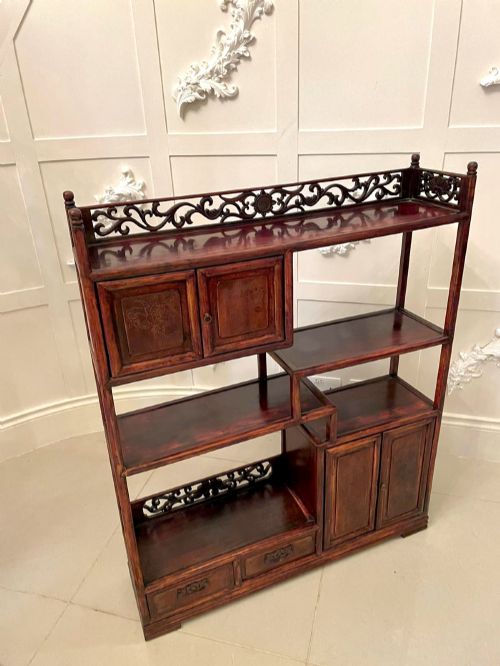
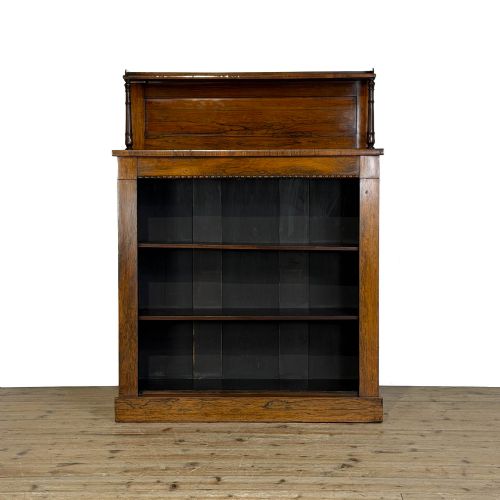
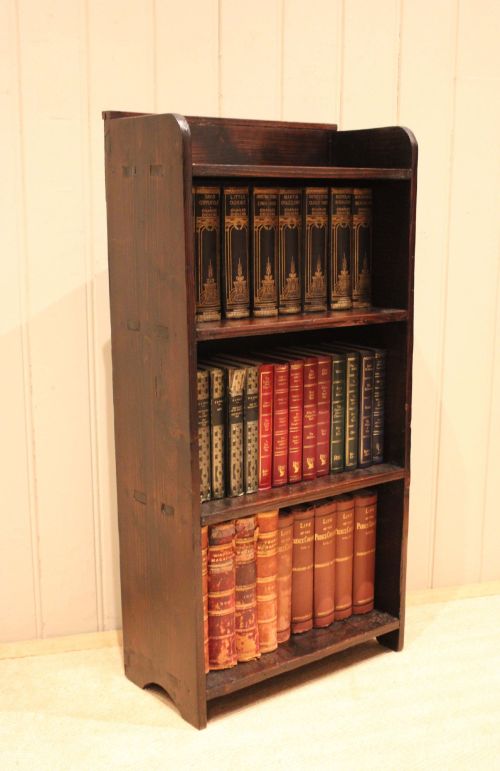
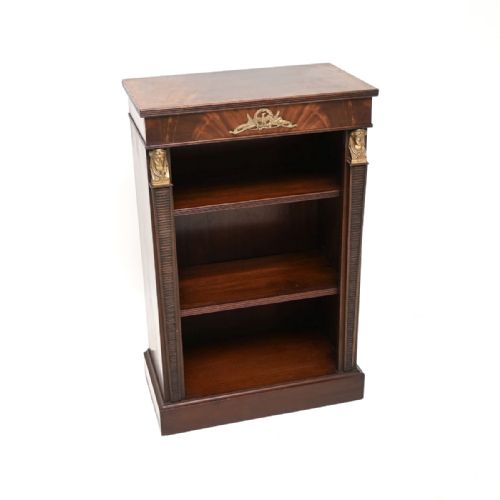
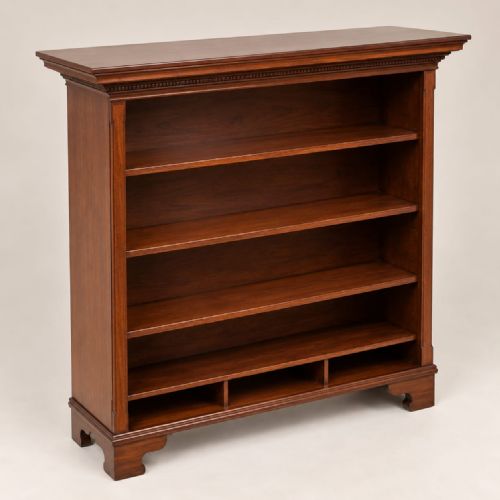
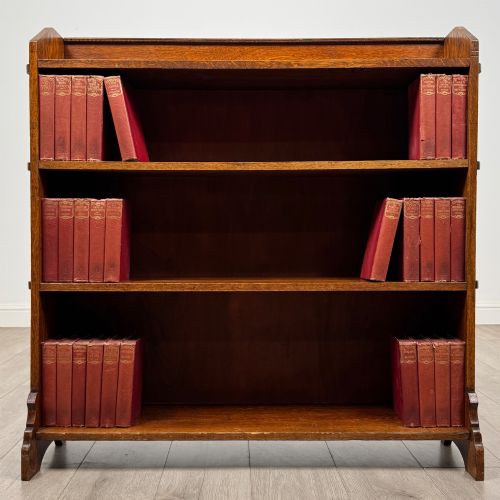
An antique display shelf unit comprises open bookcases, hanging shelves, etageres, and whatnots designed to hold books and decorative objects in domestic spaces. These pieces emerge from the nineteenth century through the early twentieth century, spanning Victorian, Edwardian, Regency, and Arts and Crafts periods.
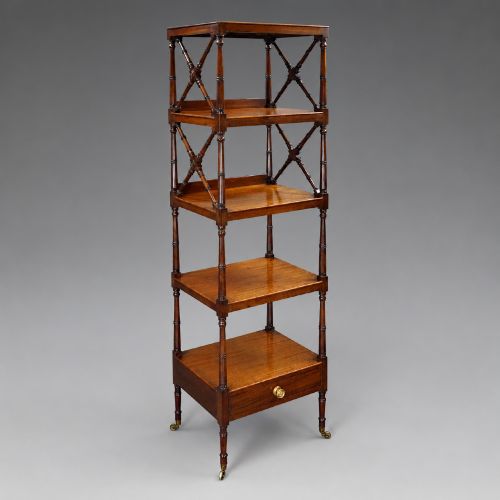
The version most commonly encountered on this page is the open bookcase in oak or mahogany, often fitted with adjustable shelves for practical storage. Whatnots and etageres also appear frequently, offering tiered platforms supported by turned columns or carved uprights.
Materials and construction
Cabinetmakers utilised hardwoods such as mahogany, oak, walnut, and burr walnut, alongside softer timbers like pine and exotic padauk. Grain selection defined the visual weight, with figured burr walnut and rich rosewood applied to prominent surfaces.
Joinery techniques relied on traditional framing and fitted shelves, occasionally supplemented by brass castors for mobility on floor units. Carved details, barley twist uprights, and inlaid banding distinguished specific stylistic revivals from plain utility pieces.
Burr walnut whatnots occasionally ride on brass castors, ready to roll away from clumsy dusters.
Distinctions in quality
Quality rests in timber selection and the handling of secondary details, such as matching veneers across drawer fronts and sides. Fine examples demonstrate crisp carving and precise joinery that maintain structural integrity without excessive bulk.
Proportion and scale separate ordinary storage from distinguished examples, particularly in waterfall designs and serpentine whatnots. The presence of secondary elements like brass hardware or integrated cupboards adds complexity to the construction.
The Antique Display Shelf Unit Glossary
- Whatnot
- A moveable piece of furniture with multiple tiers for displaying small objects or books. It typically stands on slender legs and originated in the eighteenth century.
- Waterfall bookcase
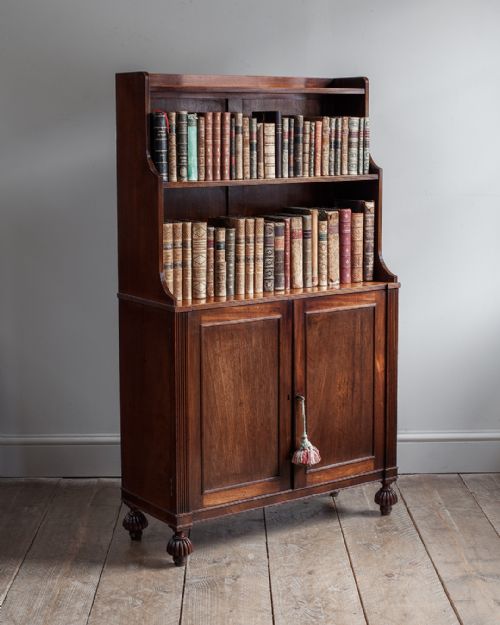
- A standing set of open shelves where each successive tier steps back from the one below. This tiered profile creates a stepped cascade effect.
- Adjustable shelves
- Shelving supported by movable pegs or ratchets that allow height changes. This mechanism provides flexibility for varying book sizes.
Antique Display Shelf Unit: Frequently Asked Questions
How do I date an open bookcase?
Dating relies on timber choices, construction methods, and stylistic markers visible in the mouldings or feet. Oak and mahogany appear across multiple decades, while specific carved motifs align with Victorian or Edwardian periods.
Examining the shelf support system and backboards offers further clues to the manufacturing decade. Later pieces often incorporate standardised fixings absent in earlier examples.
What is the difference between a whatnot and an etagere?
A whatnot traditionally refers to a multi-tiered stand used for ornaments or books, often with turned supports. An etagere serves a similar display function with French stylistic roots and lighter framing.
In practice, makers and dealers used these terms interchangeably during the nineteenth century. Both forms prioritise display space over enclosed storage.
Can adjustable shelves be trusted on old units?
Original adjustable mechanisms generally function reliably if the wooden tracks and pegs remain intact. Many Victorian and Edwardian examples use brass studs or wooden tooth racks that withstand regular movement.
Careful handling ensures the internal sides do not split when repositioning heavy books. Modern replacements differ noticeably from period fittings upon close inspection.
Where should I place a waterfall bookcase?
Waterfall bookcases suit corners or flat walls where their graduated tiers receive adequate light. Their stepped profiles present books and small collections without dominating smaller rooms.
Placing them away from direct heat sources protects the polished mahogany or walnut surfaces. Stable flooring prevents tipping on uneven antique timbers.