


Vintage Etagere Shelf Unit
A vintage etagere shelf unit offers open multi-tiered display for precious objects, drawing on Victorian and Regency forms in mahogany, walnut, and iron.
Vintage Etagere Shelf Unit
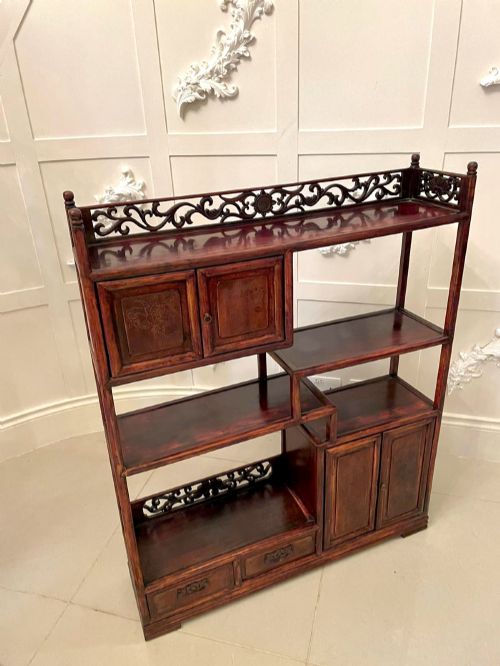
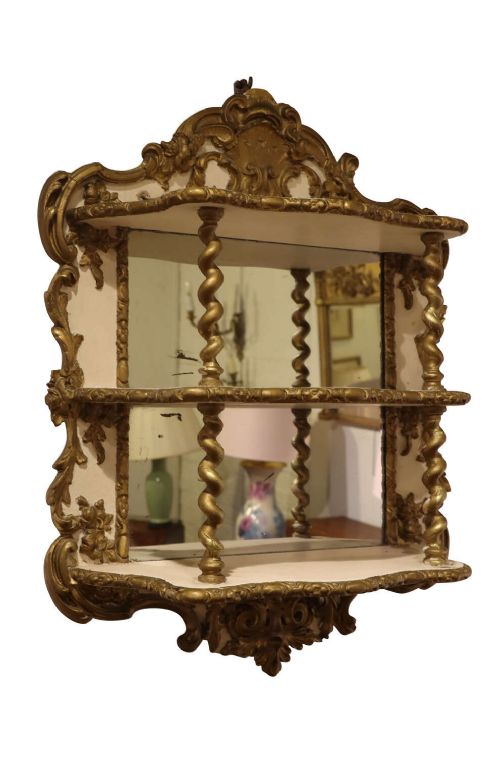
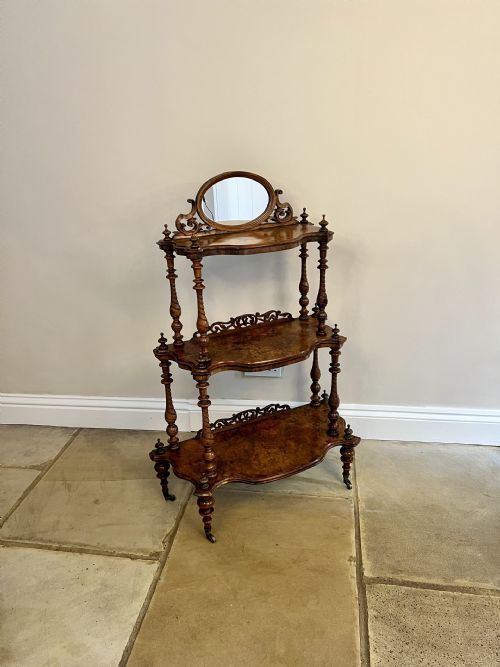
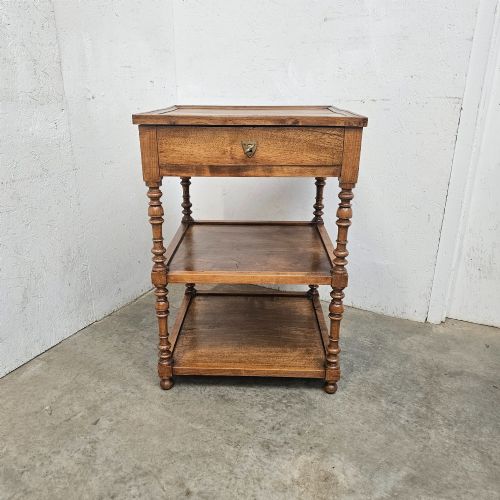
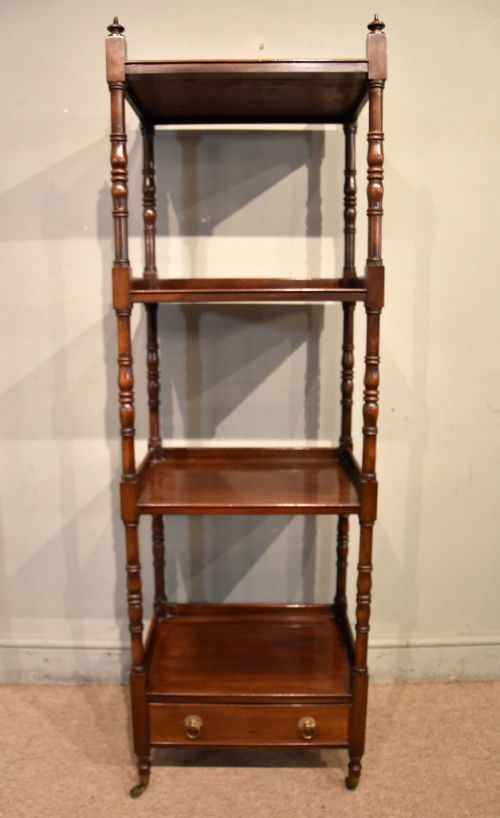
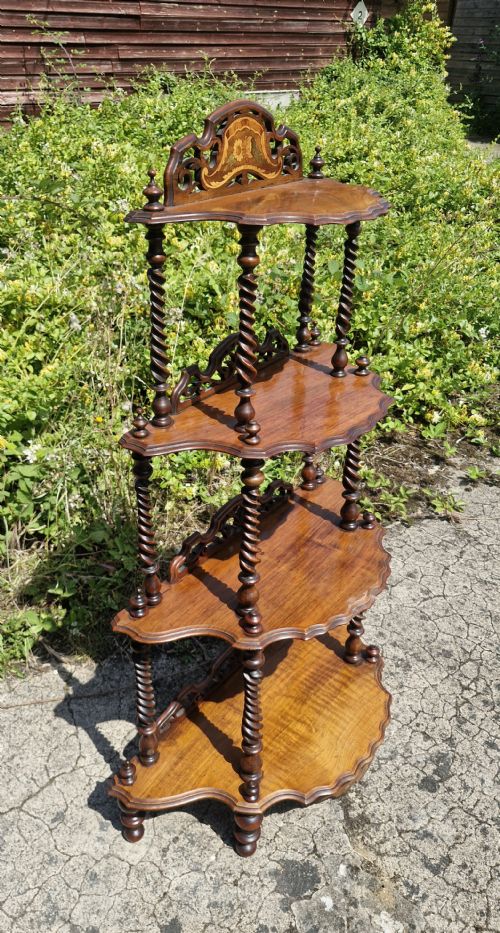
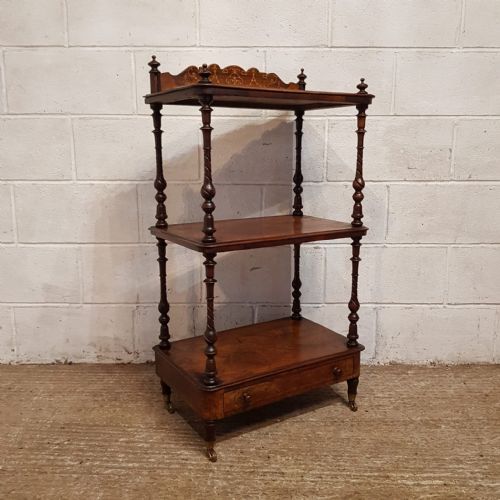
A vintage etagere shelf unit spans several traditional forms, most frequently appearing as Victorian whatnots, multi-tiered display stands, and wall-mounted shelving. These pieces serve to exhibit books, ornaments, and curiosities across successive horizontal surfaces rather than hiding them behind solid doors.
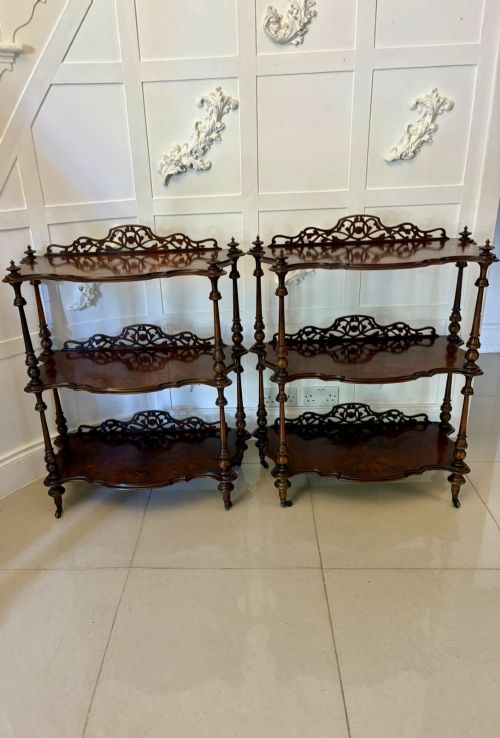
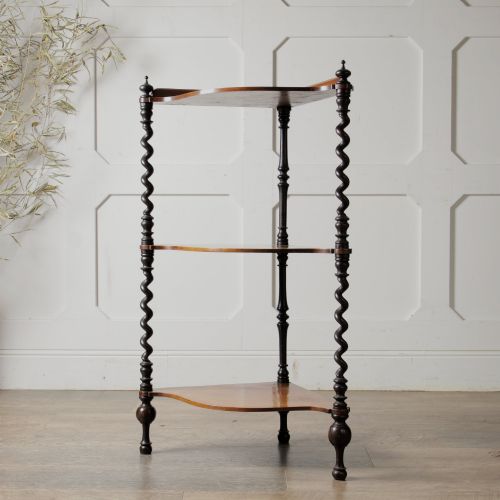
The versions most commonly met on this page belong to the Victorian and nineteenth-century periods, constructed from timbers such as mahogany and burr walnut with tiered platforms supported by turned legs or barley twist columns.
How they were made
Makers utilised rich hardwoods including mahogany, burr walnut, and rosewood, often finished with polished surfaces that highlighted the natural grain. Structural support relied on sturdy turned uprights, barley twist columns, and precise joinery to bear the weight of multiple tiers.
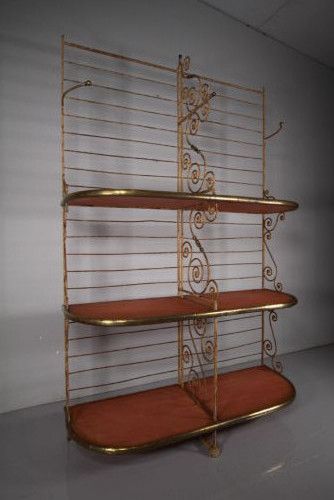
Alternative constructions incorporated wrought iron and brass for industrial or shop display stands, alongside lightweight bamboo for aesthetic period pieces. Decorative flourishes included carved giltwood, ebonised details, and painted finishes.
Listings feature nineteen-century pieces alongside early twentieth-century examples, spanning walnut, mahogany, brass, iron, and bamboo.
What varies in quality
Quality rests in the choice of timber and the precision of the joinery, where finely figured burr walnut and rich mahogany command attention above plain utility pieces. The sophistication of the turned supports and the crispness of any carved detailing distinguish finer examples from standard workshop production.
Proportion and structural integrity define the higher end of the range, ensuring that multi-tiered stands remain balanced and stable. The integration of specialised elements, such as inlaid veneers or stamped metalwork, elevates a utilitarian shelf into a decorative focal point.
The Vintage Etagere Shelf Unit Glossary
- Etagere
- A piece of furniture consisting of a set of open shelves for displaying small objects or ornaments. The term originates from France and often describes lighter, more decorative display stands.
- Burr walnut
- A prized wood veneer showing intricate swirling grain patterns formed from tree growths. It was frequently utilised on high-end Victorian furniture to create decorative surfaces.
- Barley twist
- A type of turned wooden column resembling the spiral twist of barley sugar. This decorative turning method appears frequently on nineteenth-century supports and legs.
- Aesthetic period
- A design movement of the late nineteenth century emphasising art for art's sake and drawing inspiration from Japanese motifs. Pieces from this era often feature bamboo or ebonised wood.
Vintage Etagere Shelf Unit: Frequently Asked Questions
What is an etagere?
An etagere is an open shelf unit designed specifically for displaying decorative objects, porcelain, and small books. These pieces provide multiple levels of surface area without enclosing the items behind glass or timber doors.
Originating as a decorative French form, the etagere evolved to suit various interior styles throughout the nineteenth and early twentieth centuries. They function well in principal rooms where visual lightness and accessible display space are required.
How were whatnots used historically?
Historical whatnots served as versatile storage and display furniture in Victorian and Georgian drawing rooms. Households placed them in corners or against walls to hold books, tea services, and decorative ornaments.
Their open tier construction allowed owners to showcase prized possessions within easy reach. Over time, variations emerged ranging from portable bookshelves to elaborate multi-tiered corner units.
Where should I place a display shelf?
A display shelf unit suits living rooms, hallways, or studies where it can anchor an empty wall or corner. Freestanding mahogany and walnut models work effectively away from direct heat sources to protect the polished wood surfaces.
Wall-mounted versions require secure fixing to support the weight of books and ceramics safely. Placing them at eye level maximises their decorative impact in the room.
How do I identify a Victorian whatnot?
Victorian whatnots typically feature stacked open shelves supported by turned wooden columns, barley twists, or slender uprights. They frequently employ rich timbers such as mahogany, walnut, or burr walnut with fine grain patterns.
Earlier nineteenth-century examples often display simpler joinery, while later Victorian pieces may incorporate elaborate turnings or inlaid details. Checking the underside and joints helps confirm the period construction methods used by the makers.