


Victorian Banquet Table
A victorian banquet table provides scale and architecture for large dining rooms, built to accommodate extensive gatherings.

Victorian Banquet Table
When you search for a victorian banquet table, you are looking at substantial dining furniture designed to seat large numbers of guests comfortably. These pieces typically originate from the nineteenth century, spanning periods such as William IV, Regency, and Victorian eras.
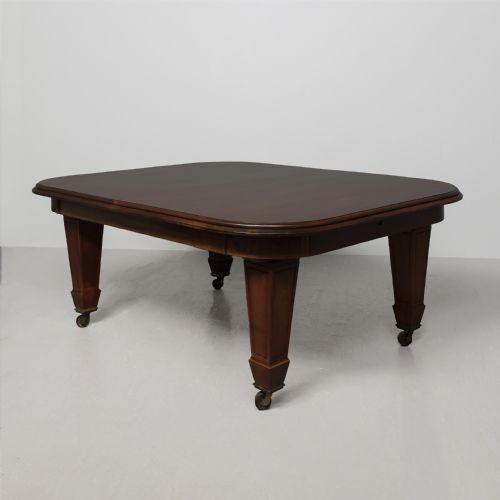
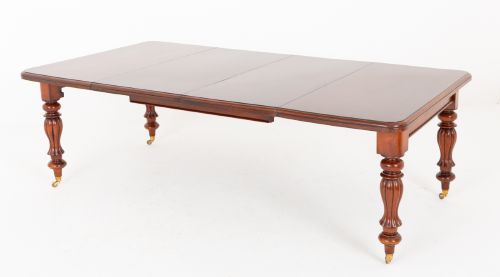
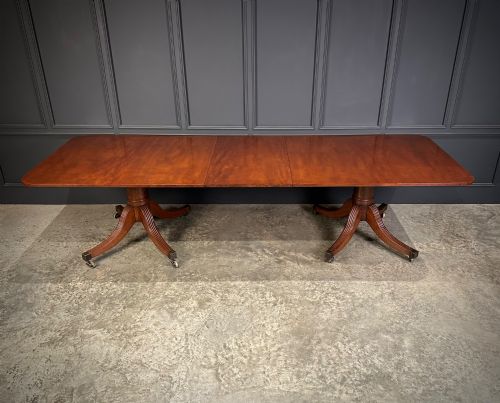
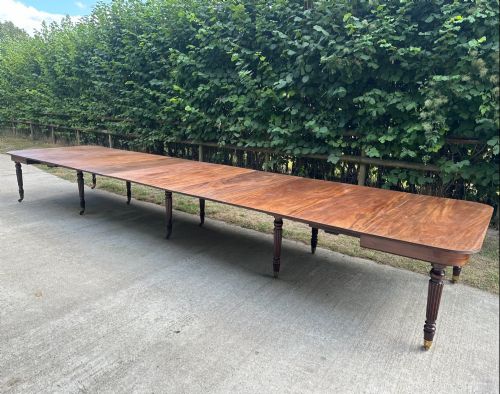
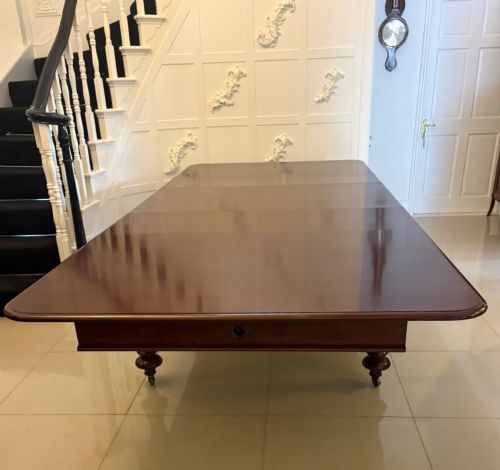
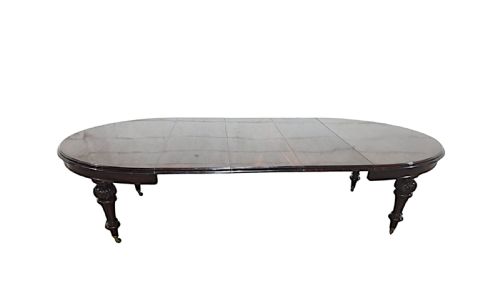
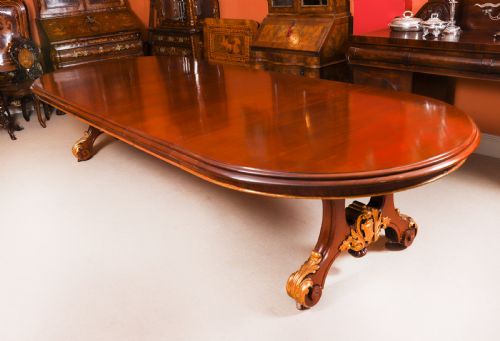
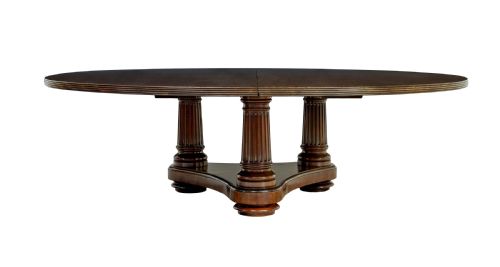
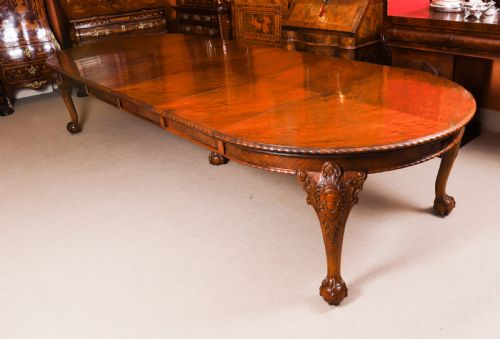
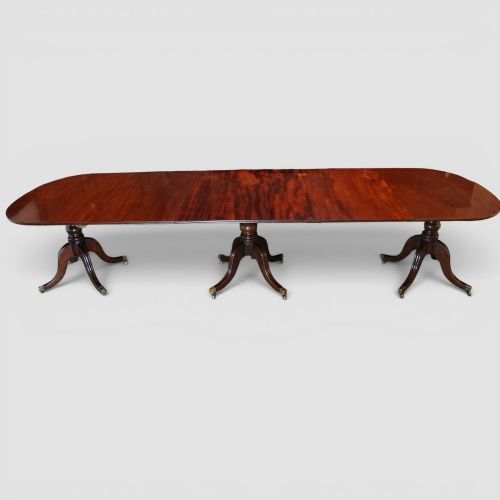
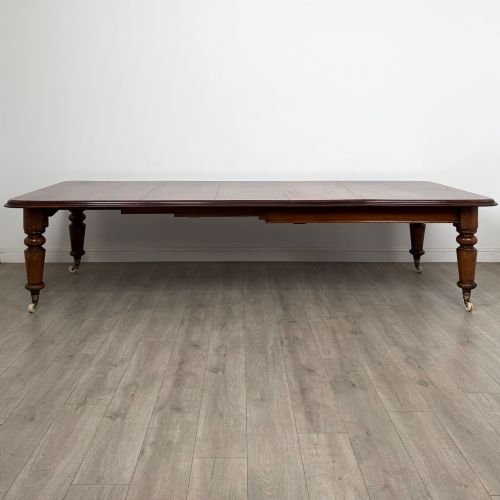
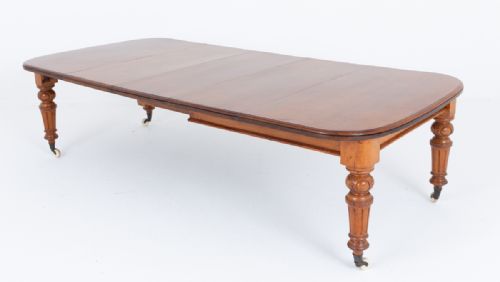
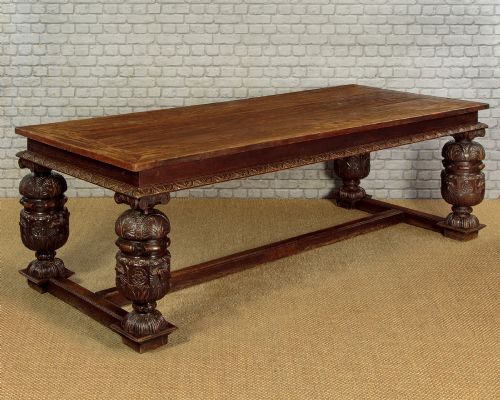
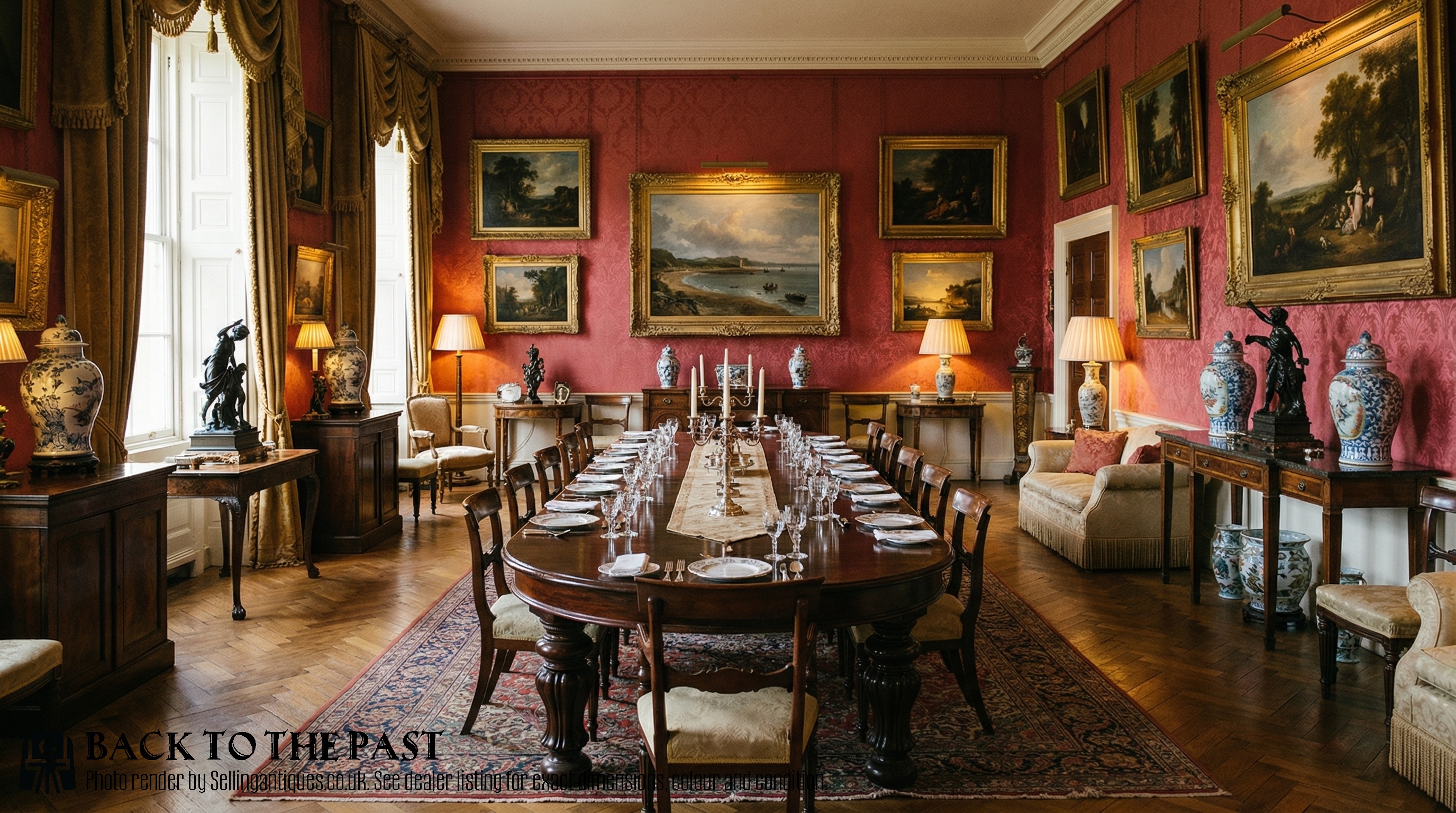
The most common form on this page is the extending dining table constructed from mahogany, often featuring multiple leaves and pedestal or pillar supports. Examples range from ten-seater designs to massive boards seating over twenty people, alongside occasional large refectory and D-end formats.
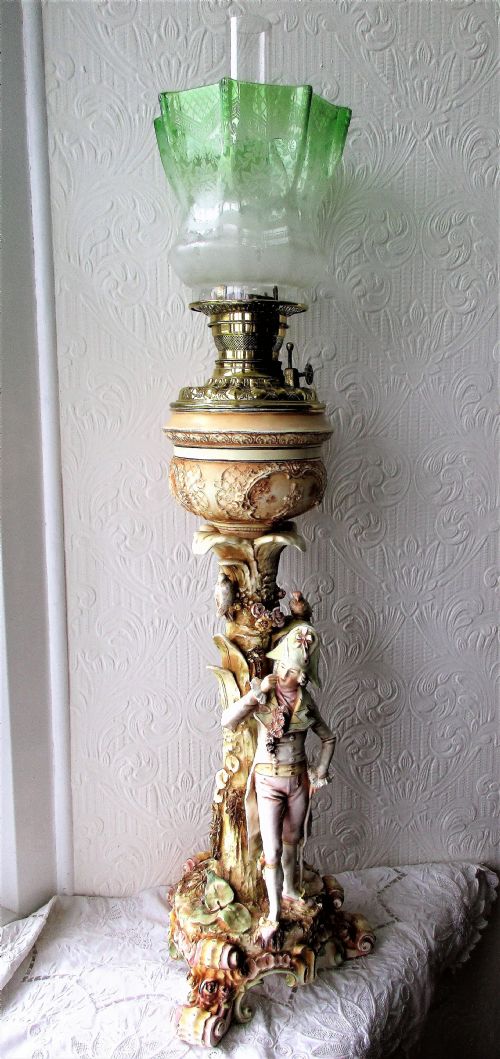
Makers such as Gillows, Wylie & Lochead, and Maple & Co appear among the evidence, showing the high level of cabinet-making applied to these dining rooms. Alongside tables, the listings include occasional porcelain and glass oil lamps that belong to the same period setting.
Materials and construction
Cabinet-makers relied primarily on mahogany, oak, and burr walnut to build these large frames, often selecting figured or flame veneers for the top surfaces. Brass components frequently appear in the winding mechanisms, castors, and pillar mounts that allow the tables to extend smoothly.
Construction techniques involve wind-out mechanisms and multiple removable leaves supported by twin, triple, or imperial pedestals, as well as multi-leg configurations. Oak appears in refectory styles and gothic revival pieces, whilst ceramic and porcelain components are found in period oil lamps.
Victorian Banquet Table Retail Price Guide 2026
Typical asking prices for victorian banquet table among the pieces listed under this phrase on Sellingantiques today, from the lower quarter to the upper quarter. They describe what is for sale here now, not the wider market.
Pedestal formats and multi-leg extending frames dominate the forms designed for large dining spaces.
Factors determining quality
Quality rests upon the selection of timber, such as figured mahogany or flame mahogany, and the precision of the mechanical extension system. Tables that retain their original set of leaves and operate smoothly via a wind-out mechanism demonstrate superior original manufacture.
Gillows·Wylie & Lochead·Maple & Co·William and Gibton
The Victorian Banquet Table Glossary
- Extending dining table
- A table designed with a mechanism and removable leaves to lengthen the surface for larger dinners.
- Wind-out mechanism
- An internal screw-thread system operated by a handle to separate the table halves for inserting extra leaves.
- Pedestal
- A central support pillar, often twin or triple, resting on splayed legs that carry brass castors.
- D-end
- A table format with semi-circular ends formed by splitting a console table, popular in Regency and nineteenth-century dining rooms.
- Flame mahogany
- A veneer cut from timber fork junctions that creates a distinctive flickering flame pattern across the table top.
- Refectory table
- A long, narrow dining table style associated with earlier centuries but revived in the nineteenth century in oak.
Victorian Banquet Table: Frequently Asked Questions
How do I know how many people can sit at a table?
Length serves as the primary indicator for seating capacity, with large tables on this page accommodating anywhere from ten to over twenty guests. Extra leaves increase the span significantly.
Checking the number of original leaves and the overall length in the description confirms the exact capacity for dining.
What is a wind-out table?
A wind-out table uses a built-in metal screw mechanism operated by a detachable handle to part the table halves. This allows the owner to drop in extra leaves without straining the frame.
This nineteenth-century innovation replaced older rule-joint systems and made extending large boards much easier.
How do I tell William IV tables from Victorian ones?
William IV pieces often display bolder, heavier classical carving with scrolling pedestals and flame mahogany veneers dating from the earlier part of the nineteenth century. Victorian examples span a wider range of revival styles including Gothic Revival and Queen Anne.
Both periods overlap in their use of mahogany and extending mechanisms, so construction details help clarify the date.