
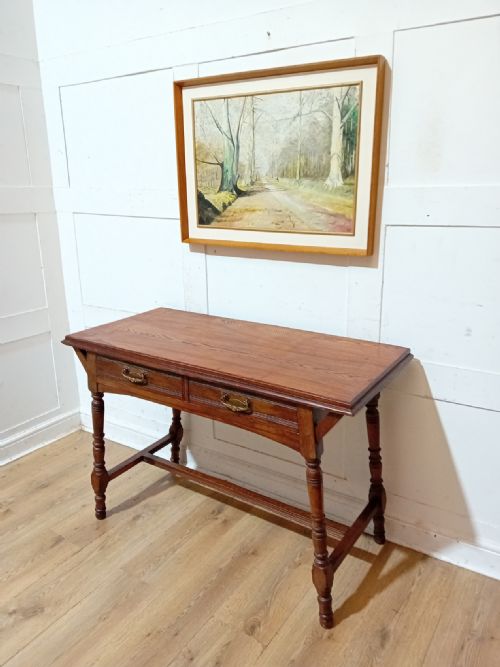


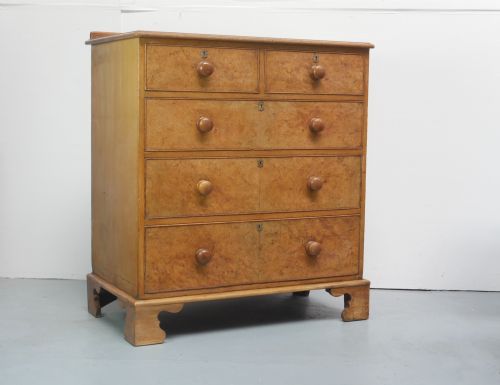


Victorian Ash Drawers
Victorian ash drawers bring pale wood and sturdy nineteenth-century utility into rooms that need honest storage and practical surface space.
Victorian Ash Drawers
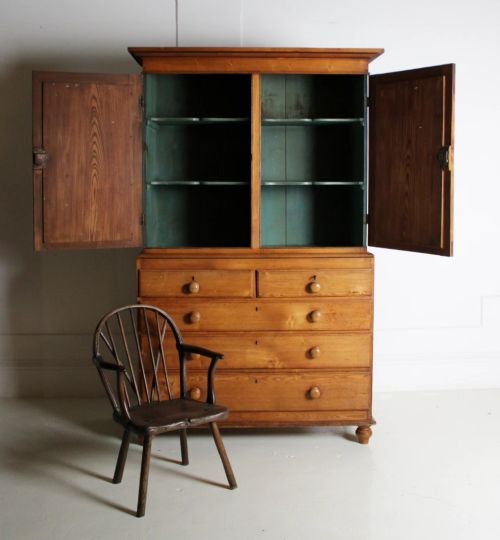
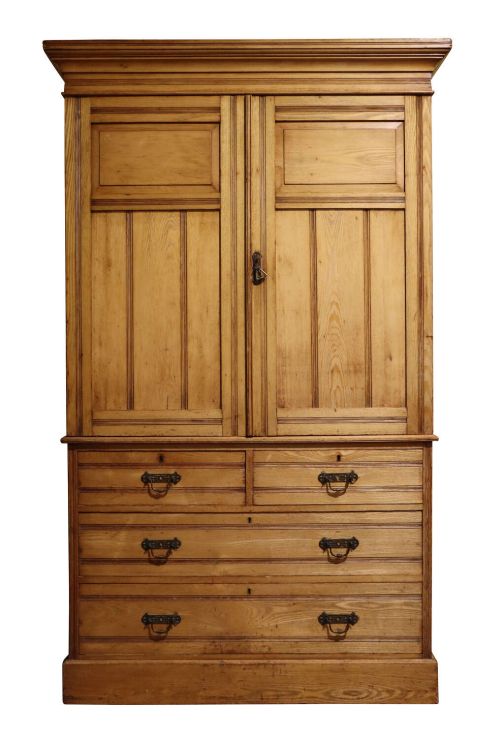
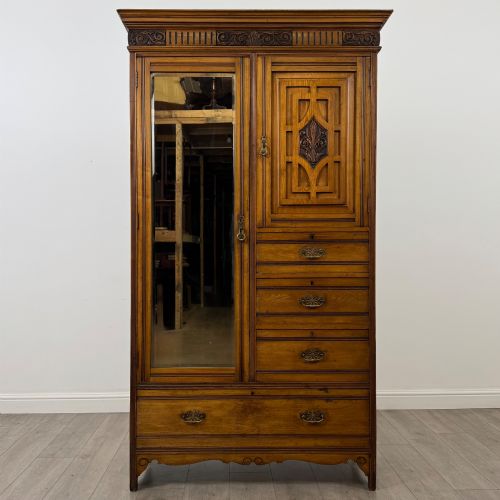
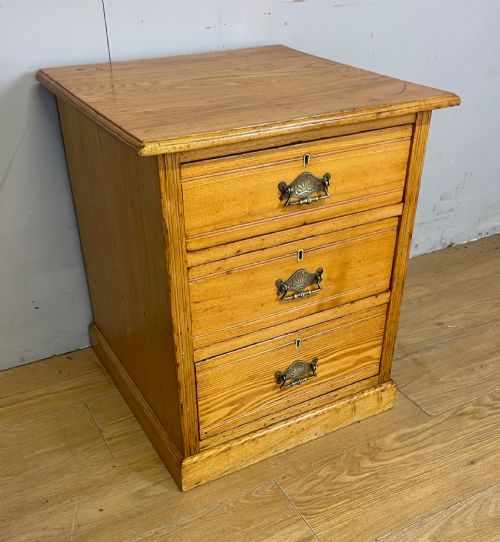
When you search for victorian ash drawers, you are looking at nineteenth-century storage furniture built primarily from native or figured ash timber. The selections on this page span several decades of the Victorian era, reaching into the transitional period around nineteen hundred.
The pieces appear in numerous formats beyond standard chests of drawers. You will encounter compactum wardrobes, linen presses, writing desks, side tables, sideboards, and occasional writing tables featuring integrated drawer space.
Many examples align with the Arts and Crafts movement or English country traditions rather than formal parlour styles. These pieces range from simple farmhouse iterations to cabinetmaker-built items carrying distinct regional character.
How they were made
Cabinetmakers utilised solid ash, burr ash, and Hungarian ash timber, often selected for strong grain patterns or decorative figuring. Secondary woods like pine sometimes appear in internal linings, whilst brass and glass serve as supplementary fittings.
Construction techniques combine traditional joinery with solid timber panels, dovetailed drawer construction, and occasional hand-painted surface treatments. Some items pair ash with burr walnut, lacewood, or birds-eye maple to contrast pale surfaces with darker framing.
Listings feature nineteenth-century periods spanning from eighteen-fifty to nineteen hundred, utilising ash, burr ash, brass, and glass.
What varies in quality
Quality rests primarily on timber selection and grain continuity across the facade. Pieces utilising highly figured burr ash or carefully matched Hungarian ash stand apart from plain utility boards.
The precision of the cabinetwork dictates the hierarchy of these items. Workshops associated with known makers deliver tighter drawer tolerances, integrated hardware, and more confident proportions than standard provincial joinery.
Maple and Co·Liberty·Harris Lebus·James Shoolbred·Trapnell and Gane of Bristol
The Victorian Ash Drawers Glossary
- Ash
- A tough, pale hardwood valued for its pronounced grain and elasticity. It forms the primary structural and visual medium for these pieces.
- Burr Ash
- A knotted, highly figured growth timber taken from the tree burl. It creates swirling, decorative patterns across drawer fronts.
- Hungarian Ash
- A European timber noted for distinct figuring and warm tone. Cabinetmakers used it selectively on high-status Victorian drawer fronts.
- Compactum
- A large wardrobe or combination piece incorporating hanging space, shelves, and multiple internal drawers. It offers comprehensive bedroom storage in a single footprint.
Victorian Ash Drawers: Frequently Asked Questions
How do I care for Victorian ash furniture?
Keep timber away from direct heat sources and sudden humidity changes to prevent splitting. Dust gently with a dry cloth and avoid heavy silicone polishes.
Wax surfaces occasionally using a traditional beeswax paste to nourish the grain. This preserves the natural pale tone without building up cloudy residue.
Were these drawers painted originally?
Most Victorian ash furniture displayed the natural grain of the timber under clear varnish or wax. Makers highlighted the pale, figured surfaces rather than masking them.
Later decorative treatments, such as hand-applied painted finishes, appeared on specific country or redecorated pieces. Check internal surfaces to understand the original finish history.
How do I distinguish Arts and Crafts ash furniture?
Arts and Crafts pieces emphasise honest construction, exposed joinery, and simpler functional lines. They often feature minimal carved ornament, letting the ash grain provide the visual texture.
Many examples link directly to the design philosophies promoted by Liberty or Pugin-influenced workshops during the late nineteenth century.
What is the difference between standard and burr ash?
Standard ash displays straight, strong grain patterns in pale blonde tones. It provides a clean, durable surface suited to everyday furniture.
Burr ash comes from irregular tree growths, producing dense, swirling patterns. Cabinetmakers reserved these decorative veneers for primary drawer fronts.