


Victorian Armchair Brass Castors
A victorian armchair brass castors brings together deep sprung comfort and robust nineteenth-century timber frames finished with metal wheel mounts.
Victorian Armchair Brass Castors
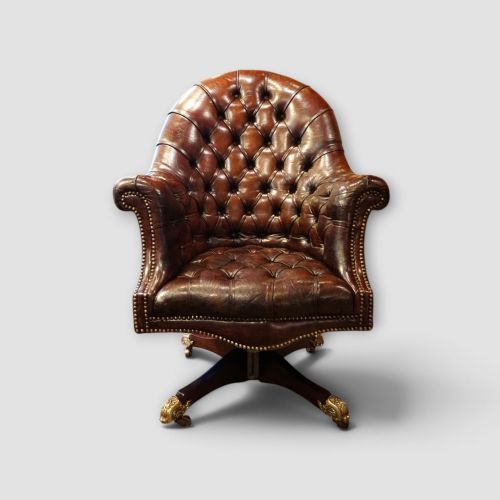
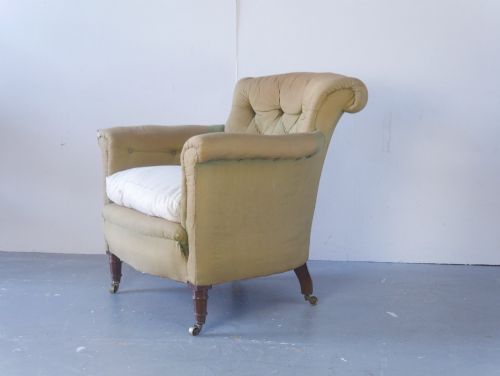
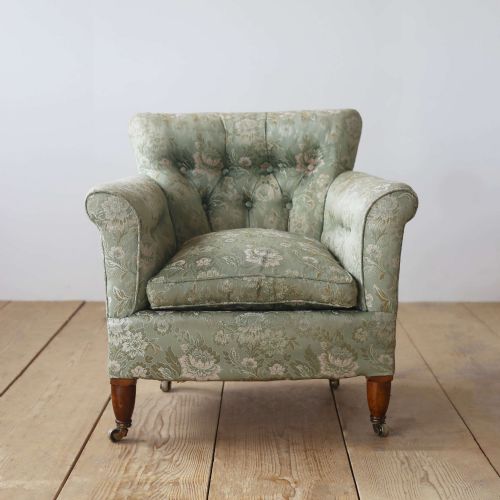
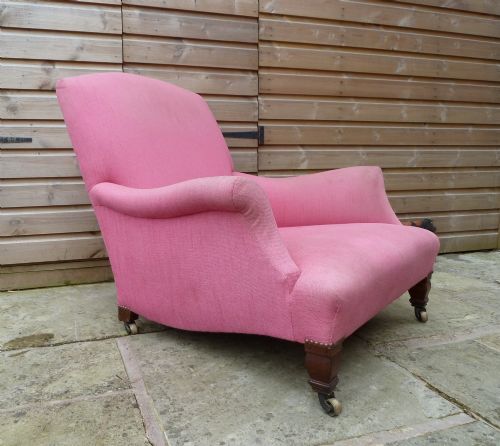
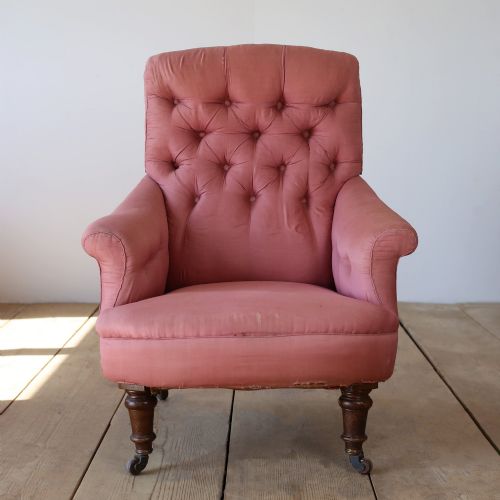
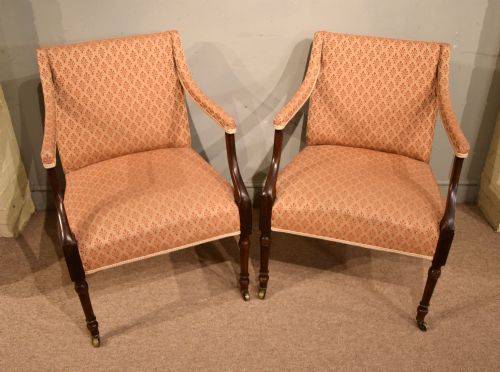
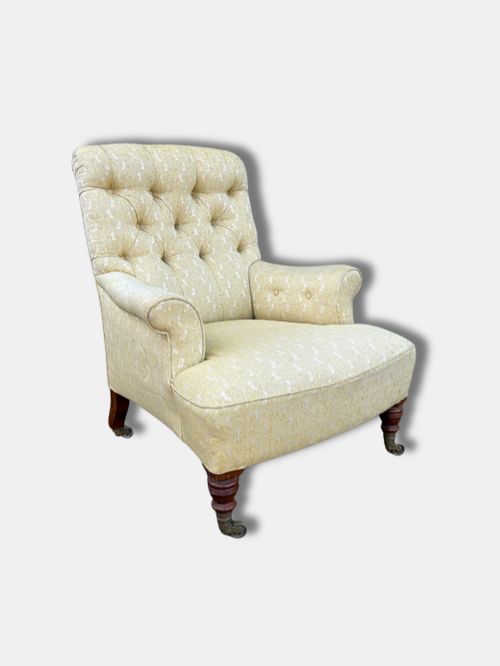
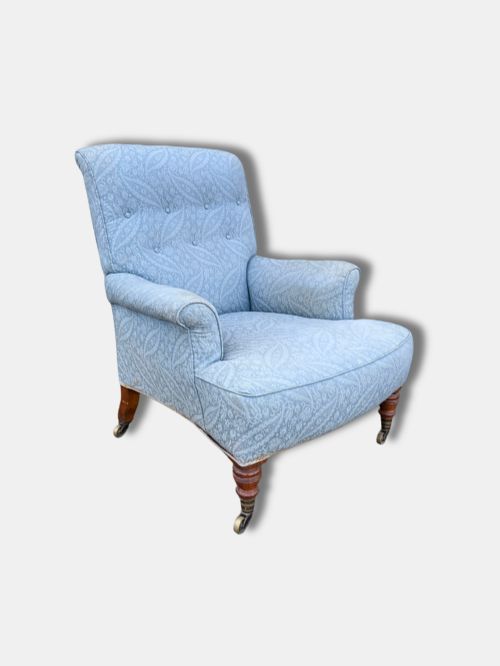
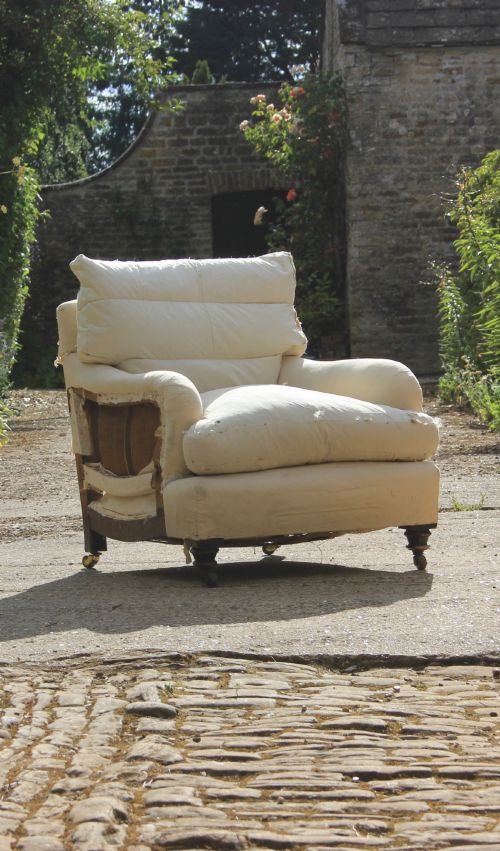
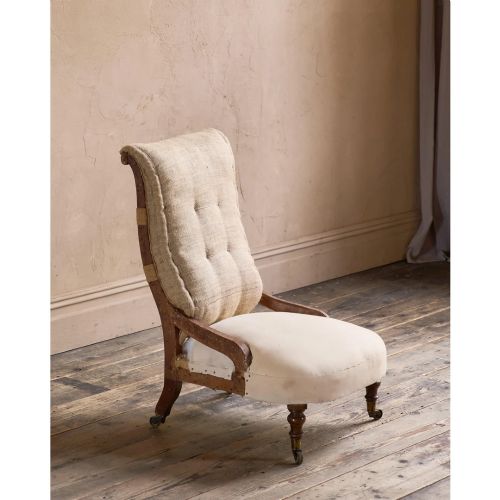
When buyers search for a victorian armchair brass castors, they seek nineteenth-century seating built for domestic relaxation and library use. The most frequent examples on this page are generous club styles, low-slung Howard types, and button-backed armchairs dating from the Victorian and Edwardian eras.
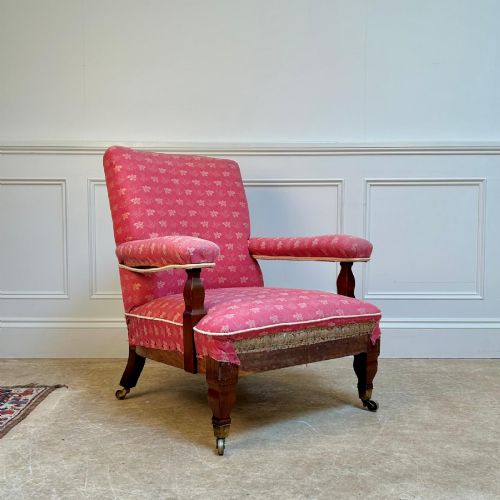
These chairs span formal library furniture to relaxed country house seating. Many feature substantial sprung seats supported by sturdy frames of mahogany, walnut, or hardwood, resting on castors designed for easy movement across heavy carpets.
Materials and construction methods
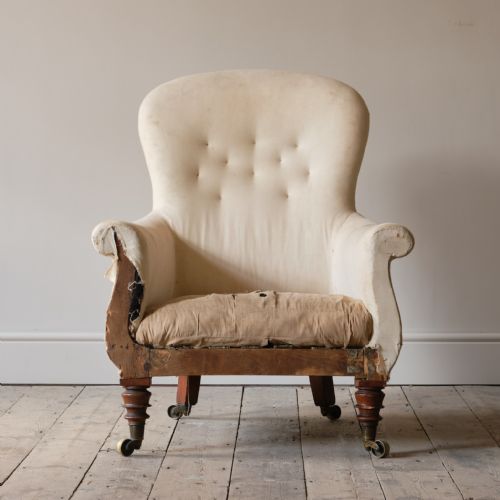
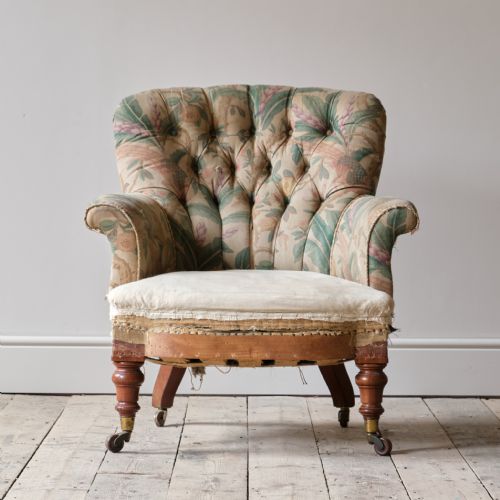
Frames rely on solid timbers such as mahogany, walnut, and regional hardwoods to provide structural integrity. Traditional upholstery techniques involve internal webbing, coil springs, and stuffing held by layers of hessian and calico before final finishing in velvet, leather, or printed fabrics.
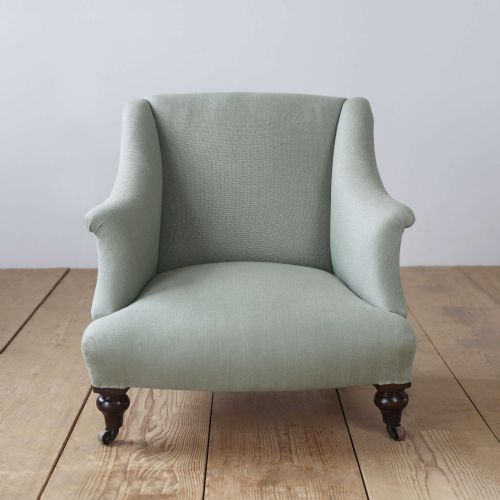
Metal components play a vital functional role, with turned timber legs terminating in brass cappings and swivel castors. These allowed heavy seating to be repositioned easily within nineteenth-century drawing rooms and libraries.
Listings span Victorian, Edwardian, and Regency periods, incorporating materials such as brass, mahogany, velvet, and calico across various armchairs.
Quality factors in traditional seating
The standard of a piece rests on the integrity of its internal framing and the retention of original maker marks or stamps. Pieces by documented makers demonstrate superior joinery and refined proportions compared to unbranded workshop alternatives.
Preservation of original structural elements, from the coil spring tension to the casting quality of the brass wheels, defines the upper tiers of the market. Re-upholstery alters surface appearance, but the underlying timber skeleton dictates the longevity and authenticity of the chair.
Howard and Sons·George Jack For Morris and Co·Gillows·Hindley and Sons·Hampton and Sons·William Birch
The Victorian Armchair Brass Castors Glossary
- Castor
- A small swivelling wheel attached to the base of a leg to allow smooth movement. These fittings are commonly cast in brass and mounted on ceramic or metal sockets.
- Button back
- An upholstery style where depressions are formed in the padding by stitching through to the frame, holding rows of fabric-covered buttons in place. This creates a tufted surface.
- Calico
- A plain-woven cotton fabric used as an interior lining or base layer beneath top upholstery. It provides a tight substrate for stuffing.
- Hessian
- A coarse woven fabric, typically made from jute fibres, used for internal webbing and foundation support in traditional upholstery. It prevents sagging under heavy coil springs.
- Reeded
- A decorative moulding featuring parallel convex semi-circular ridges carved into timber legs or frames. It mimics the effect of fluting in reverse.
Victorian Armchair Brass Castors: Frequently Asked Questions
How do I identify a Howard style armchair?
Howard chairs typically feature low scrolled arms, deep sprung seats, and low turned walnut legs on brass castors. Look for stamped numbers on the rear legs or castor housings.
Many bear characteristic low profiles designed for lounging, often accompanied by down-filled cushions and traditional ticking or replacement covers.
Are brass castors original to the chair?
Original castors match the timber patina and wear patterns of the legs they support. Replacement castors are common due to nineteenth-century floor wear.
Inspect the screw fixings and socket indents to determine if the brass fittings have been swapped during past repairs.
What is a country house armchair?
Country house armchairs are generously proportioned, deep-seated seats built for comfort rather than formal display. They often show eclectic recovering over generations of domestic use.
These pieces prioritise heavy springing and relaxed dimensions over strict adherence to a single design period.
How should I care for button-backed leather?
Leather upholstery requires regular dusting and occasional treatment with suitable conservation waxes to prevent cracking. Avoid placing antique leather near direct heat sources.
Ensure buttons and pleats are cleared gently during routine cleaning to prevent dust accumulation in the folds.