

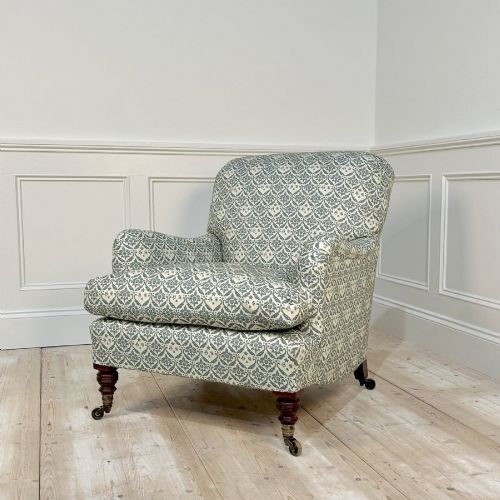
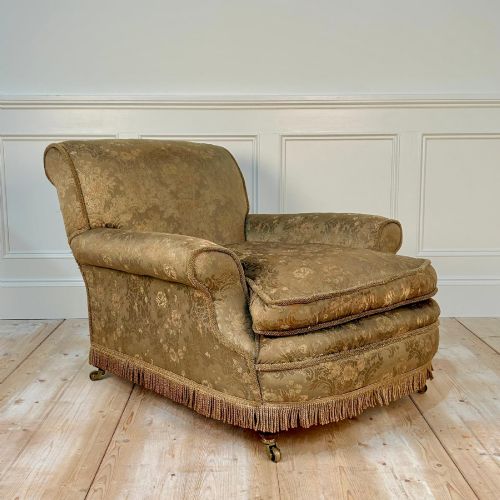
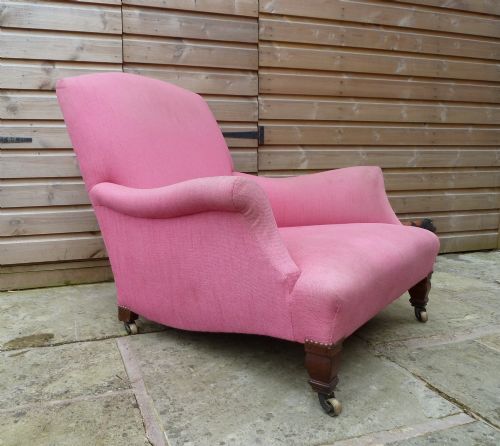
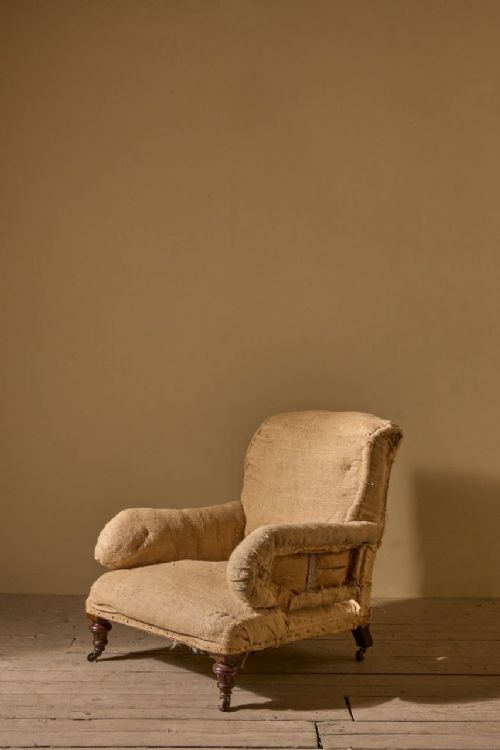



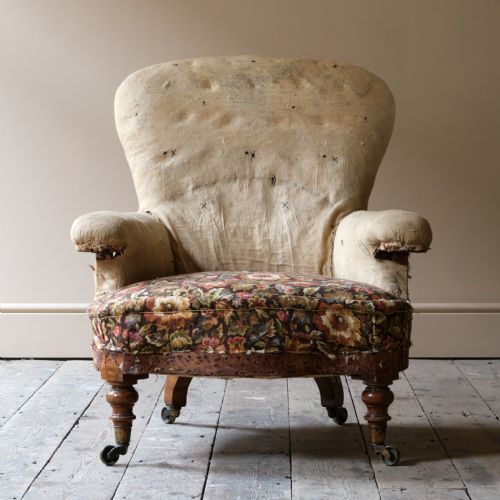


Howard Style Lounge Chair
A howard style lounge chair delivers deep seating comfort rooted in nineteenth century English country house tradition.
Howard Style Lounge Chair
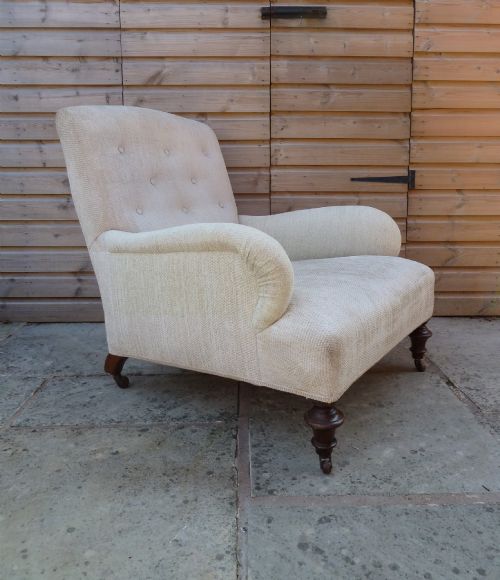
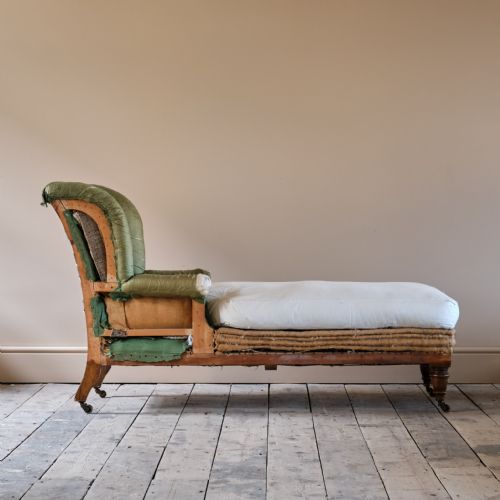
A howard style lounge chair represents the archetype of English country house comfort, designed primarily for deep relaxation and generous proportions. These seating pieces appear across Victorian, Edwardian, and later periods, often taking the form of club armchairs, daybeds, or open armchairs.
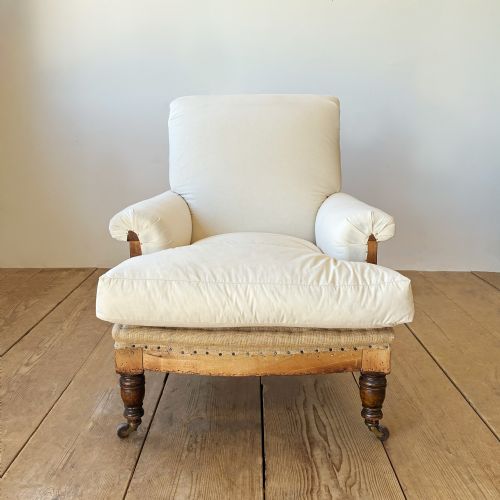
The versions most commonly met on this page date from the nineteenth century into the early twentieth century. They often feature low backs, scrolling arms, and substantial seat depth that invites prolonged sitting.
Many examples channel the specific aesthetic of Howard and Sons through related models such as the Grafton, the Ivor, and the Bridgewater. Their silhouettes range from standard upholstered armchairs to wing armchair variants and matching sets of sofas and chairs.
Materials and Construction
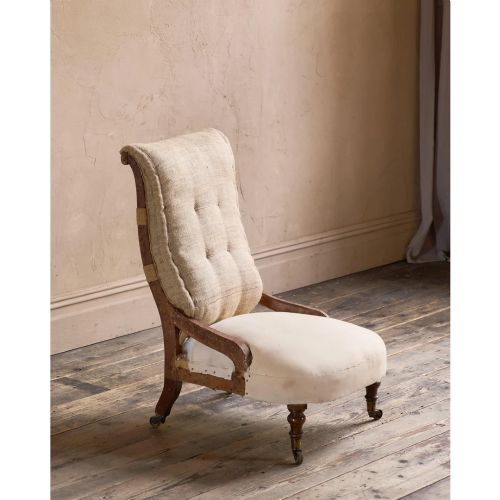
The structural framework relies on sturdy timber foundations typically constructed from walnut, mahogany, or general hardwood. These solid wooden frames provide the necessary rigidity to support deep upholstery and heavy daily use.
Traditional stuffing employs materials like hessian as a base layer for internal support and webbing. Upholstery choices span plain ticking fabrics, patterned kilim, pink velvet, and gold velvet, often supported by brass castors on the feet.
Howard Style Lounge Chair Retail Price Guide 2026
Typical asking prices for howard style lounge chair among the pieces listed under this phrase on Sellingantiques today, from the lower quarter to the upper quarter. They describe what is for sale here now, not the wider market.
Listings feature frames built from walnut, mahogany, and hardwood, upholstered in hessian, velvet, and ticking.
Distinctions in Quality
Quality rests significantly on the integrity of the underlying hardwood frame and the tautness of the traditional upholstery build. Finer examples exhibit robust joinery in walnut or mahogany that prevents structural wobble over decades of heavy sitting.
The refinement of the silhouette also dictates standing, where subtle curves in the armrests and correct lumbar proportion separate standard workshop output from superior maker execution.
Howard and Sons
The Howard Style Lounge Chair Glossary
- Ticking
- A tightly woven, durable cotton or linen fabric traditionally used for mattress covers and early upholstered lounge chairs. It provides a crisp, utilitarian aesthetic often associated with country house interiors.
- Bridgewater
- A specific armchair model characterised by low, rolled arms and a deep seat. This form offers relaxed proportions designed for domestic lounging.
- Grafton
- A named armchair variant sharing the low-slung, comfortable geometry typical of nineteenth-century English seating. It frequently appears alongside standard club chair designs.
- Hessian
- A coarse woven fabric, commonly called burlap, utilised as a foundation material for internal upholstery layers. It holds the stuffing securely within the wooden frame.
- Castor
- A small wheel fitted to the base of furniture legs, often rendered in brass. These allow heavy upholstered armchairs to be repositioned easily across a room.
Howard Style Lounge Chair: Frequently Asked Questions
What defines a howard style lounge chair?
A howard style lounge chair is characterised by its deep, accommodating seat, low back, and gently scrolled arms. These pieces were built for maximum comfort in nineteenth and twentieth-century English drawing rooms.
They often sit on low wooden legs equipped with brass castors, balancing generous upholstery with ease of movement across domestic spaces.
How do I identify a Victorian example?
Victorian examples generally show heavier internal timber construction utilising hardwoods like walnut or mahogany. The upholstery build relies on traditional stuffing methods contained by hessian webbing.
Clues also emerge through traditional fabric choices such as heavy ticking or patterned velvet, alongside maker signatures or stamps where present.
What fabrics are traditionally used?
Traditional upholstery frequently employs robust woven ticking in grey or neutral tones as seen on many country house pieces. Richer variations utilise coloured velvets or patterned textiles like kilim.
These materials were chosen for both tactile comfort and durability under regular household use.
Are these chairs suitable for daily use?
These lounge chairs were originally engineered precisely for heavy daily relaxation in country houses. Their solid hardwood frames and deep springing systems accommodate modern seating habits.
Placing one in a living space introduces historical character combined with functional ergonomics.