


Highback Reading Chair
A highback reading chair provides deep shelter and solid support, offering a quiet retreat designed for long hours with a book.
Highback Reading Chair
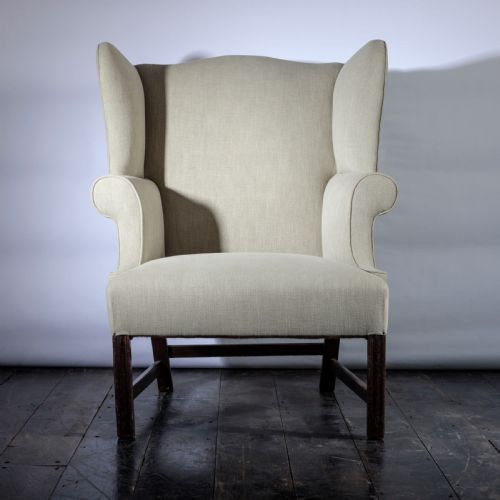
A highback reading chair combines protective side wings and an elevated back designed to block draughts and cradle the sitter. The selection centres on traditional forms, ranging from eighteenth-century examples to later Victorian, Edwardian, and twentieth-century interpretations.
Armchairs dominate the available forms, often appearing as wing armchairs, fireside easy chairs, or porters' chairs. Examples span the Georgian, Regency, and Art Deco styles, showing diverse aesthetic tastes across different centuries.
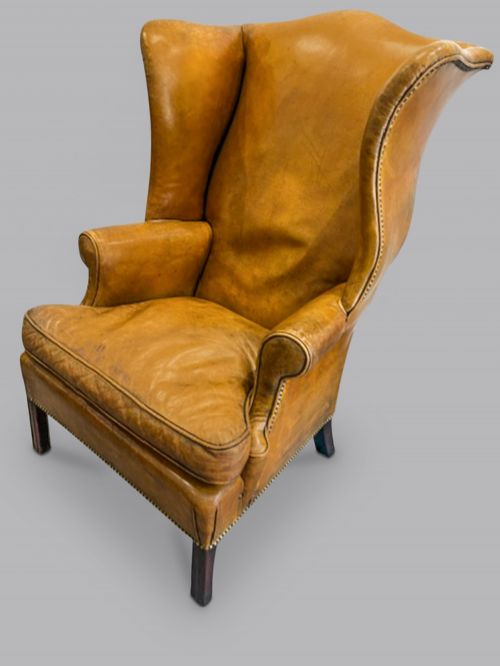
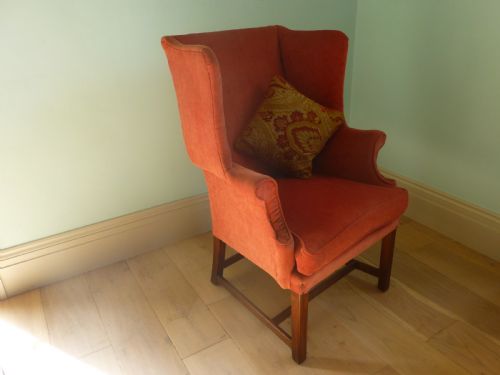
Buyers meet sturdy wooden frames paired with upholstered finishes in leather, velvet, chenille twill, fabric, and linen. These pieces originate primarily from British cabinet-making traditions, reflecting centuries of domestic seating design.
How they were made
Frames utilise solid hardwoods such as mahogany and general timber, providing structural integrity for heavy seating. Cabinet-makers shaped these sturdy timbers to form the high backs and characteristic side wings essential for draught exclusion.
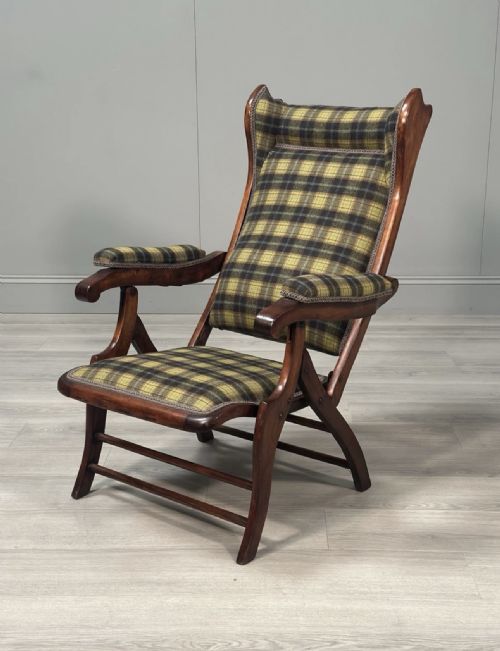
Upholstery techniques involve durable textiles including leather, velvet, linen, and fabric, secured with traditional methods. Brass hardware occasionally appears on campaign and specialised seating variants to reinforce joints and folding mechanisms.
The available armchair styles include Georgian, Regency, Victorian, Edwardian, and Art Deco forms.
What varies in quality
Quality rests in the proportional harmony of the frame and the integrity of the timber used for the high back and wings. Finer examples display confident lines in mahogany or hardwood, whereas simpler pieces utilise standard timber framing.
The choice and execution of the upholstery distinguish standard workshop output from exceptional examples. Supple leather and finely woven velvet or chenille twill elevate the tactile and visual presence of the chair.
The Highback Reading Chair Glossary
- Wing chair
- An armchair featuring side panels attached to the arms and high back designed to deflect cold draughts. This form became popular during the seventeenth and eighteenth centuries.
- Campaign armchair
- A portable folding chair designed for military officers and travel. These items often incorporate brass hinges and durable hardwood frames.
- Chenille twill
- A woven textile featuring a textured, caterpillar-like pile that adds softness and warmth to upholstery. It provides a durable surface for heavy-use seating.
- Porters armchair
- A fully enclosed hooded seat designed to keep drafts away from hall porters. Regency examples show grand proportions in brown leather.
Highback Reading Chair: Frequently Asked Questions
What is a highback reading chair?
A highback reading chair is an upholstered armchair featuring an elevated back and protective side wings designed for comfort and draught exclusion.
These chairs range from eighteenth-century wing chairs to twentieth-century Art Deco forms, built using timber, mahogany, leather, and fabric.
How do I date a reading chair?
Dating relies on stylistic markers, frame construction methods, and materials associated with specific periods like the Georgian era or Victorian times.
Evidence on this page spans the eighteenth century through the nineteen-thirties, showing shifts from mahogany frames to later fabric and leather upholstery.
What materials were used?
Makers constructed the frames using hardwoods like mahogany and general timber, supported by brass hardware where applicable.
Upholstery materials include leather, velvet, linen, chenille twill, and standard fabric chosen for durability and comfort.