
Victorian Animal Art
Victorian animal art captures horses, dogs, livestock and wild creatures in oil, watercolour and print across the nineteenth century.
Victorian Animal Art
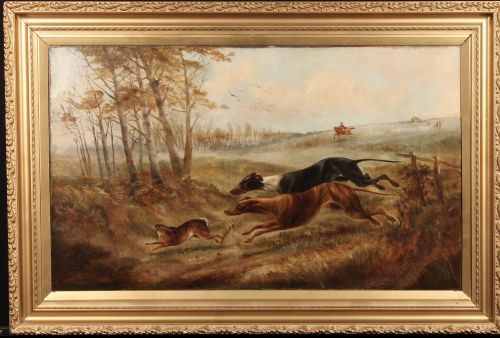
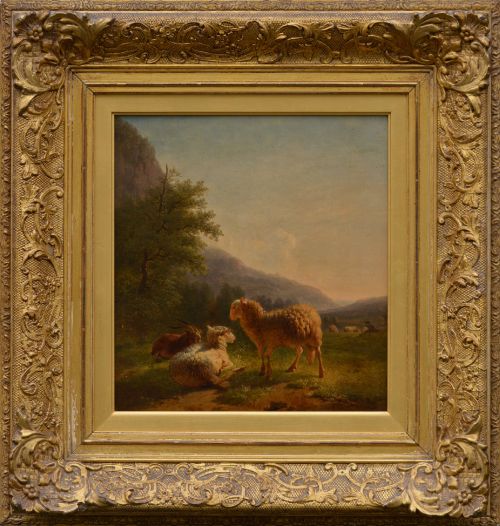
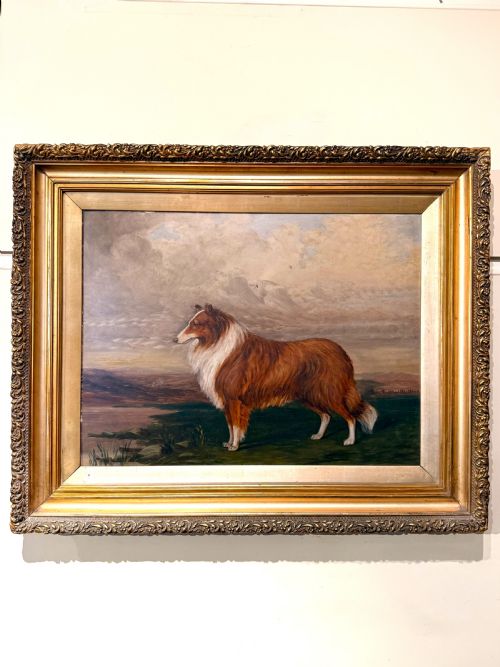
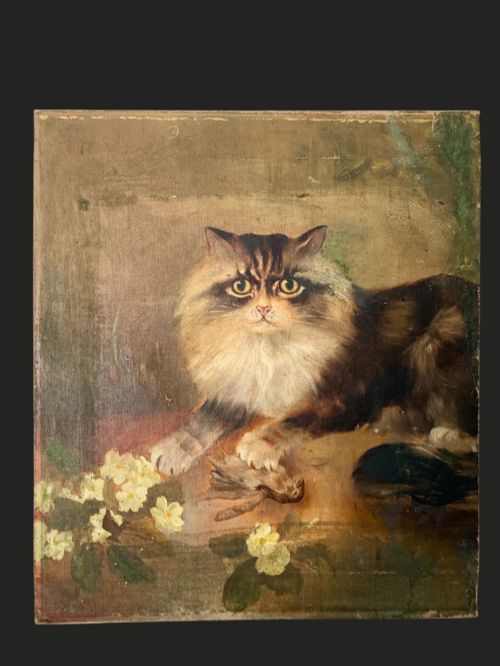
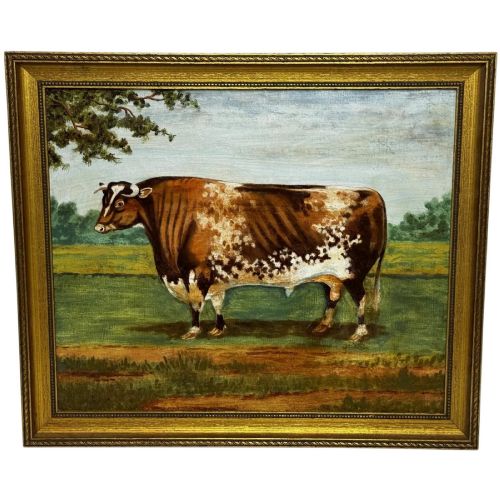
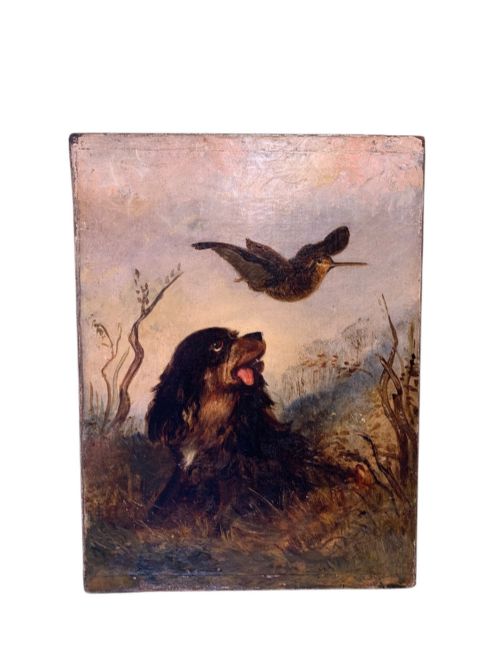
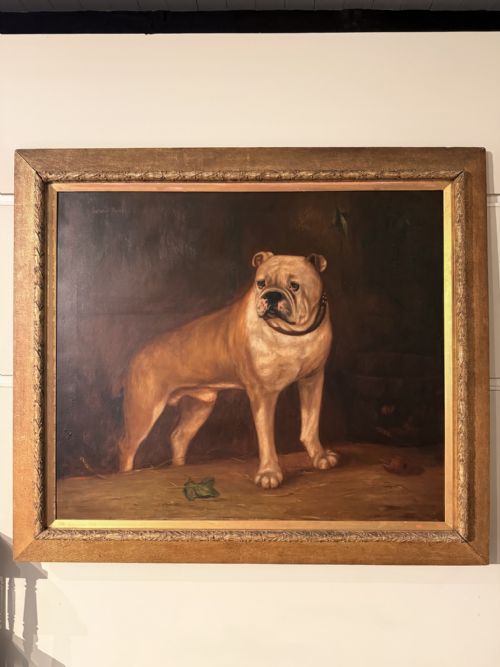
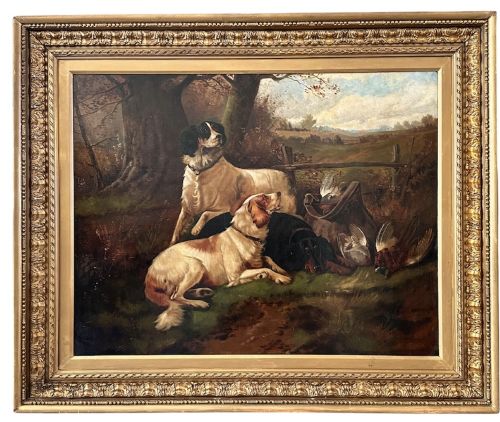
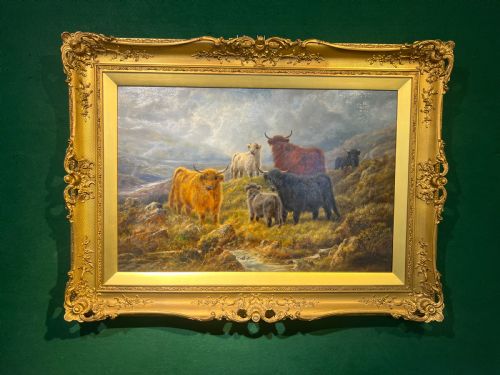
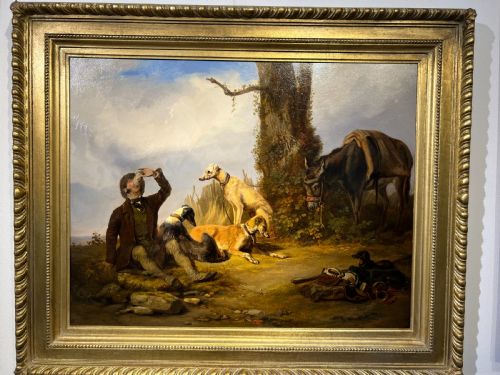
Victorian animal art encompasses oil paintings, watercolours, etchings, chromolithographs and folk art wool work depicting creatures large and small. Domestic pets, prized livestock, working farm animals and hunting dogs populate these compositions, reflecting nineteenth-century society's relationship with the natural and domestic world.
Oil paintings on canvas and board dominate the available selection, often presenting detailed portraits of individual dogs, horses or cattle. Alongside these formal canvases, graphic works on paper and detailed etchings offer alternative interpretations of animals in rural landscapes, stables and domestic interiors.
How they were made
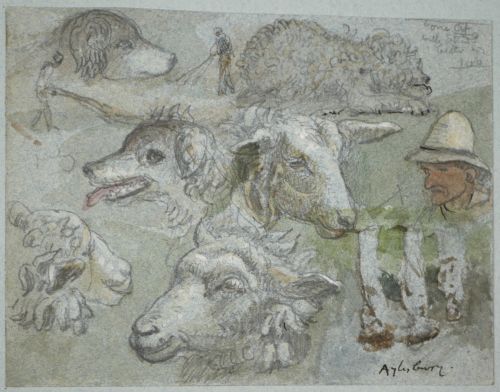
Artists utilised oil paint on stretched canvas or wooden panels, building rich textures to render fur, hides and feathers under varied light. Watercolours on paper and delicate etchings on vellum provided a medium for fine, linear draughtsmanship, particularly in animal studies and print editions.
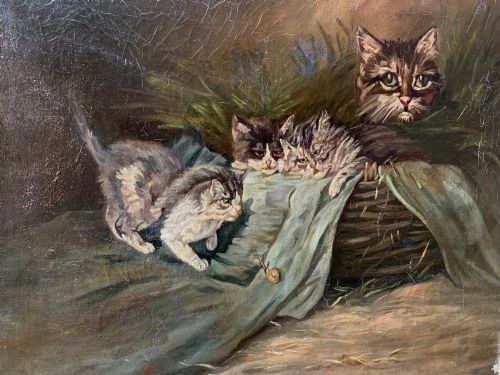
Giltwood frames frequently enclose the painted works, while support materials extend to glass, card and carved wood. Traditional printmaking techniques such as chromolithography enabled the reproduction of popular feline and canine subjects for broader audiences.
Wool work embroidery offered Victorian makers a tactile way to render a tiger in coloured threads.
What varies in quality
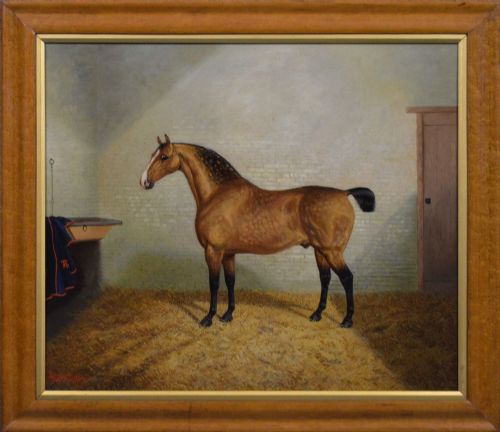
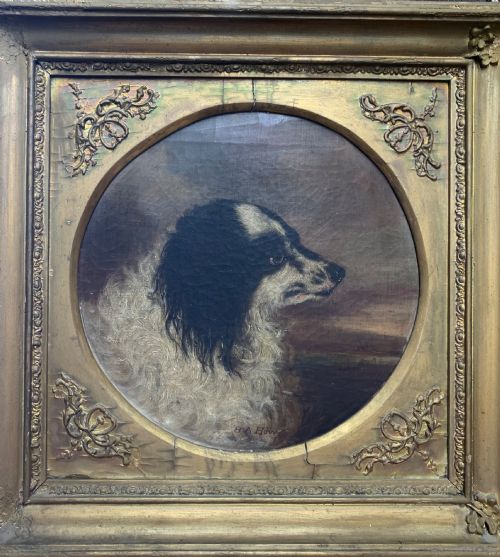
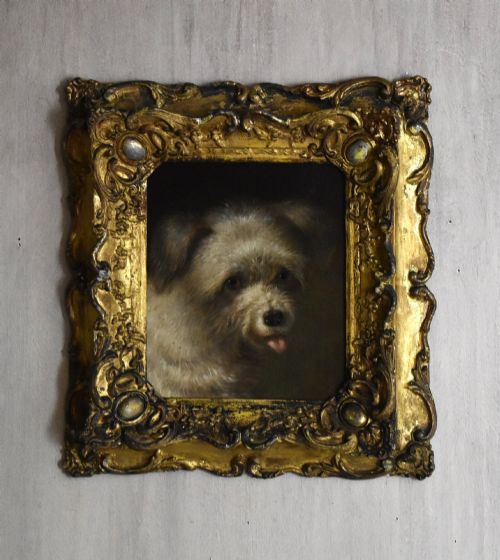
Anatomical precision and naturalism separate academic animal portraiture from more generic or naive compositions. The artist's ability to render light across a horse's coat or capture the distinct expression of a dog distinguishes the finest works.
Provenance and attribution to recorded nineteenth-century painters elevate individual pieces. Condition of the canvas, the original state of the pigment and the presence of period framing contribute to the overall standing of each work.
Eugène Verboeckhoven·James Smetham·Herbert Dicksee·Albert Clark·Martin Theodore Ward·George Augustus Holmes·John Sargent Noble·Sir Edwin Henry Landseer·Henry Barraud·Fred Fitzpatrick·Edgar Hunt·William Watson Jnr·Alfred Arthur Brunel de Neuville·Robert Watson·Horatio Henry Couldrey·Florence E Barlow·Henry Schouten·Claude Cardon·John Emms·Louis Wain·Henry Robinson Hall·Arthur Wardle·William Henry Mander
The Victorian Animal Art Glossary
- Chromolithography
- A multicolour planographic printing technique used to produce reproductions of paintings on paper. This method allowed affordable art prints of cats and dogs to enter Victorian homes.
- Etching
- A printmaking process where lines are incised into a metal plate with acid before ink is applied. Artists like Herbert Dicksee utilised this technique for detailed animal prints on vellum.
- Naive school
- An art style characterised by a childlike perspective and a lack of formal academic training. These rural paintings often depict livestock and pets with charming simplicity.
- Tyg
- A large ceramic drinking vessel with multiple handles, sometimes decorated with slipware animal motifs. Doulton Lambeth examples from this era showcase specialised stoneware craftsmanship.
- Equine portrait
- A specialised painting genre focused on horses, often commissioned by owners to record prized racehorses or hunters. These works typically name the specific animal and its stable.
Victorian Animal Art: Frequently Asked Questions
What animals appear most frequently in these works?
Dogs, horses, cattle and sheep dominate nineteenth-century compositions, reflecting their economic and domestic importance.
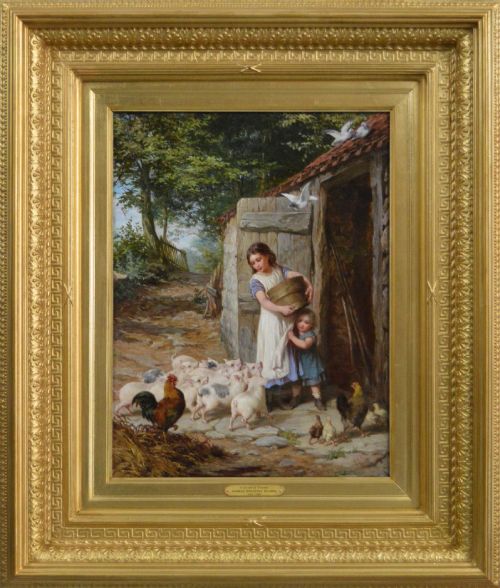
Artists frequently portrayed prized livestock, working farm animals and beloved pets within pastoral or stable settings.
How were these artworks displayed in Victorian homes?
Paintings were typically housed in heavy giltwood frames and hung prominently in reception rooms or studies.
Smaller prints and watercolours often decorated domestic hallways and bedrooms, sometimes arranged in pairs or series.
How can I identify the period of an animal painting?
Framing styles, canvas preparation and clothing styles of any human figures provide initial chronological clues.
Signatures, artist records and inscriptions on the reverse of the canvas or stretcher often confirm the exact decade.
What is the difference between academic and naive animal art?
Academic works prioritize correct anatomical proportions, subtle lighting effects and detailed textures in fur or hide.
Naive school pieces employ flatter perspectives and simpler brushwork, focusing on the direct charm of the subject rather than anatomical accuracy.