


Victorian Agricultural Scene Painting
Victorian agricultural scene painting captures the hard work of rural life on canvas and paper, bringing the timeless rhythm of the 19th-century countryside into a room.
Victorian Agricultural Scene Painting
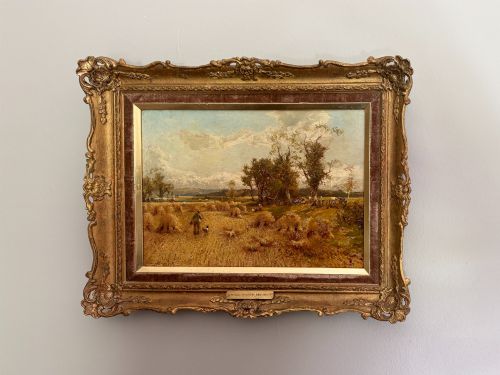
A victorian agricultural scene painting depicts rural life, featuring farmworkers, plough teams, haymaking, and livestock in pastoral settings. These works record the daily labour of the 19th-century countryside through the eyes of contemporary artists.
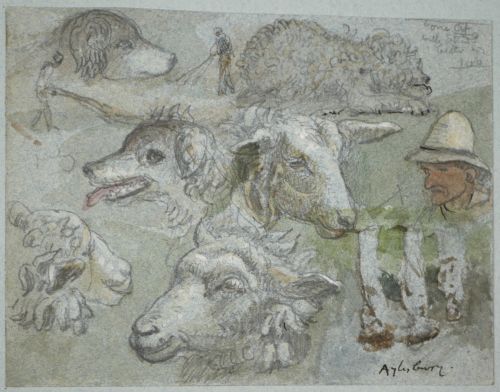
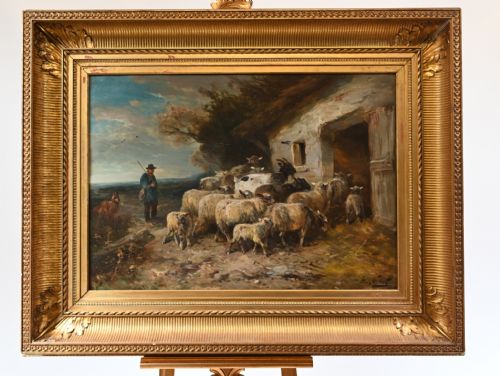
The selections available here range from detailed watercolours on paper to large oil paintings on canvas, often set within original giltwood frames. Landscapes featuring horses, sheep, and cattle dominate the subjects.
Originating predominantly from the 19th century and extending into the early 20th century, these fine art paintings reflect Victorian realism and British pastoral traditions.
How They Were Made
Artists worked primarily with oil paint on canvas or applied watercolour to paper, occasionally utilising graphite for preliminary sketches. These traditional materials allowed for careful observation of light across fields and farmyards.
Finished works were typically housed in wooden or giltwood frames that complemented the tonal depth of the rural subject matter. The combination of durable canvas and stable oil pigments has ensured the survival of these detailed pastoral scenes.
British realism and Victorian pastoral styles dominate the artistic approaches recorded across the available inventory.
What Varies in Quality
The fidelity of anatomical drawing in animals and figures distinguishes the more accomplished compositions from simpler folk art examples. Masterly handling of light and atmosphere elevates a standard farmyard study into a compelling work of art.
The integrity of the surface materials, including the preservation of the original paint layer and the condition of the support, influences the overall character of each piece. Surviving period frames also contribute to the completeness of the presentation.
Henry Schouten·James William Booth·Henry Bailey·Percival Glenfern·Thomas Sidney Cooper·Arthur Charles Dodd·Joseph Kirkpatrick·Joseph Paulman·Frederick William Jackson·Arthur Claude Strachan·Walter Duncan·George Cole·William Greaves·Charles James Adams
The Victorian Agricultural Scene Painting Glossary
- Oil on Canvas
- A painting medium where pigments suspended in oil are applied to a stretched woven fabric support. This technique allows for rich colour blending and textured brushwork.
- Watercolour
- A paint consisting of colour pigments suspended in a water-soluble vehicle, typically applied to paper. It yields transparent washes that capture delicate atmospheric effects.
- Giltwood Frame
- A wooden picture frame coated with a thin layer of gold leaf or gold paint. These ornate surrounds were standard for displaying fine art during the Victorian period.
- Victorian Realism
- An artistic movement focused on depicting everyday subjects truthfully without idealisation. In rural art, this meant showing farmworkers and livestock with accurate detail.
- Genre Painting
- The pictorial representation of scenes from everyday life. In this context, it describes the portrayal of agricultural activities and rural labourers.
Victorian Agricultural Scene Painting: Frequently Asked Questions
What subjects appear in these paintings?
The works focus on rural labour, including haymaking, ploughing teams, and farmworkers harvesting wheat. Animals such as sheep, cattle, and horses feature prominently alongside pastoral landscapes and farmyards.
These subjects reflect the deep economic and cultural importance of agriculture in the 19th-century British countryside. Artists recorded both the daily toil and the quiet rhythms of rural communities.
How should I care for a watercolour painting?
Watercolours on paper require careful placement away from direct sunlight to prevent the pigments from fading. Framing under glass with acid-free mount board protects the delicate paper from environmental damage.
Maintaining stable indoor humidity levels prevents warping or foxing on the paper surface. Proper framing preserves the integrity of the original medium for future years.
Are these works original period pieces?
The selections date primarily from the 19th and early 20th centuries, executed by contemporary artists of that era. Signatures, inscriptions, and characteristic painting techniques help establish their historical origins.
Materials such as older canvas supports and period giltwood frames further confirm the age of the pieces. Each work offers a direct visual link to the Victorian art market.
How do I choose between oil and watercolour?
Oil paintings on canvas offer robust textures and deep, saturated colours that suit larger wall spaces. Watercolours on paper present a lighter, more transparent quality that benefits from intimate viewing.
Consider the lighting and scale of your room when selecting between the heavier presence of oil and the delicate nature of works on paper. Both mediums capture the pastoral atmosphere effectively.