


Victorian Aesthetic Movement Art
Victorian aesthetic movement art brings together ebonised wood, brass, and refined glass to define a period of radical design reform.
Victorian Aesthetic Movement Art
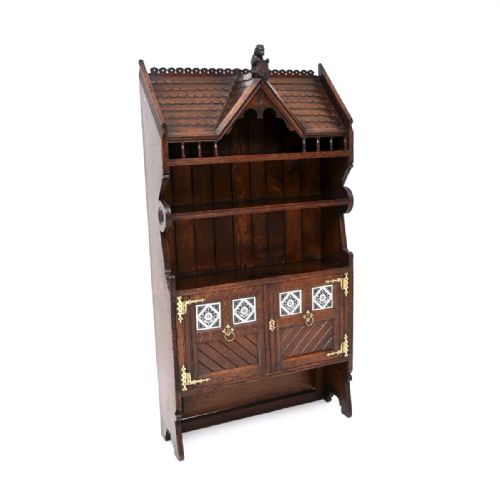
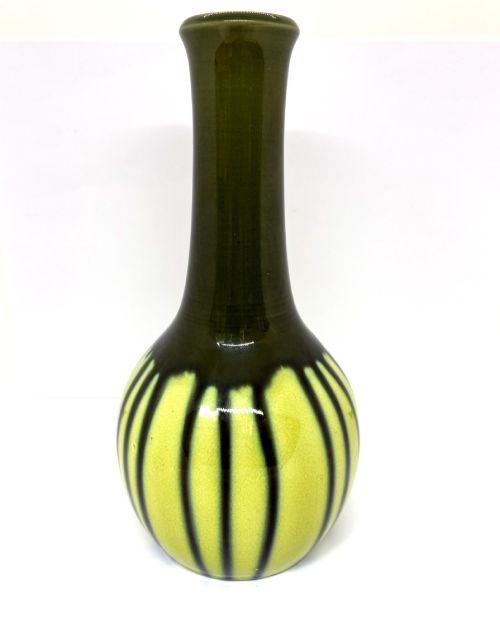
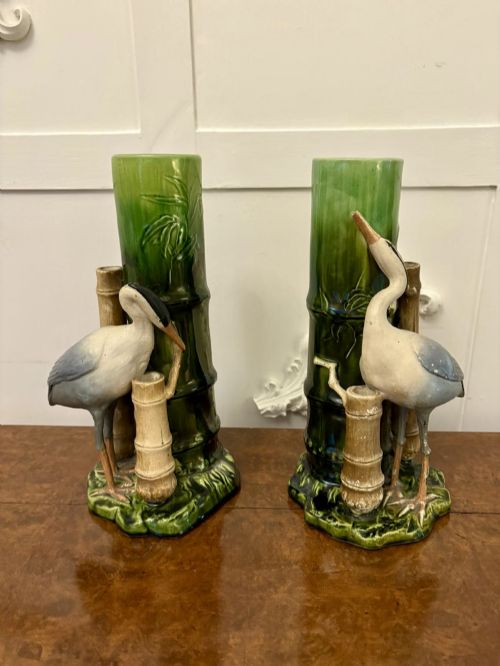
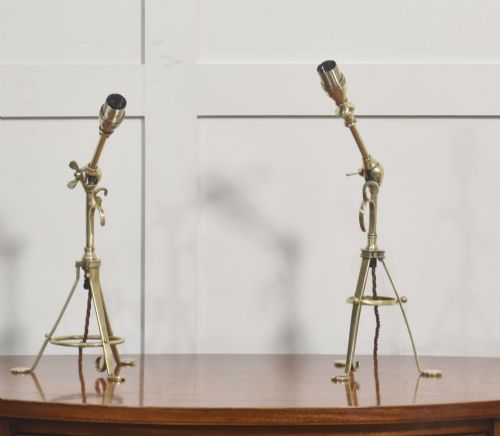
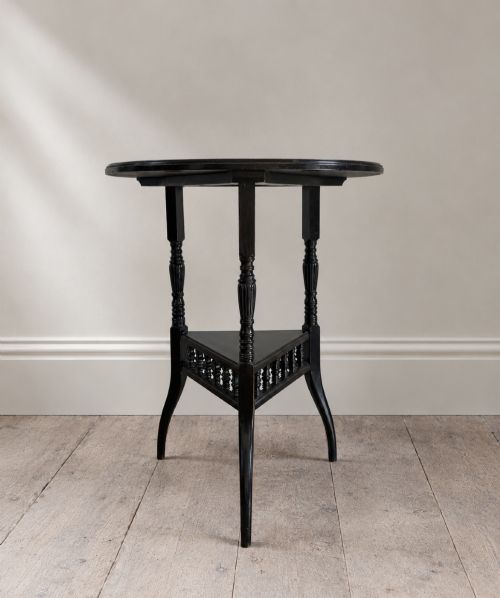
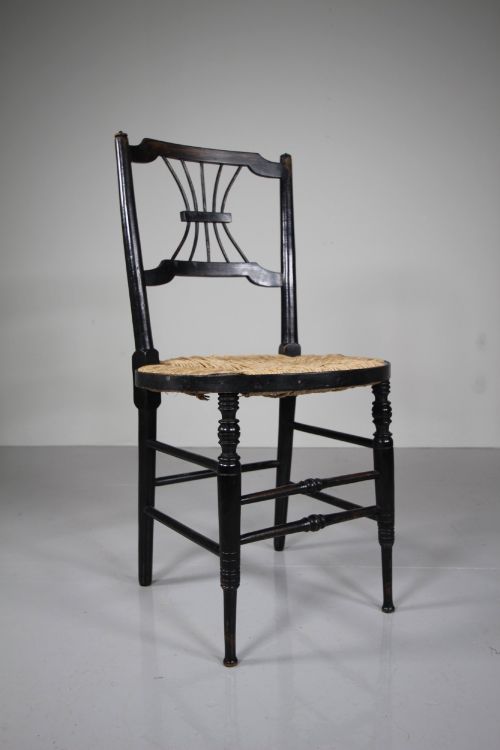
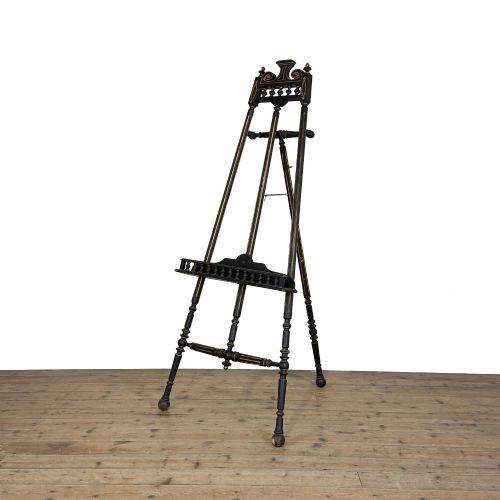
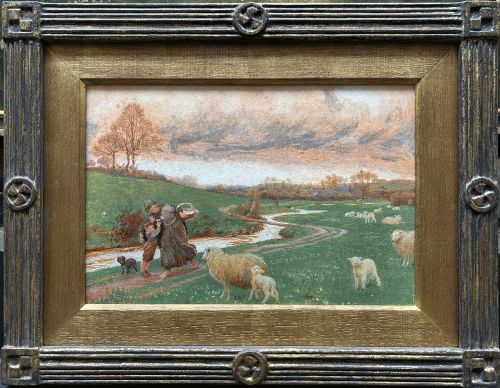
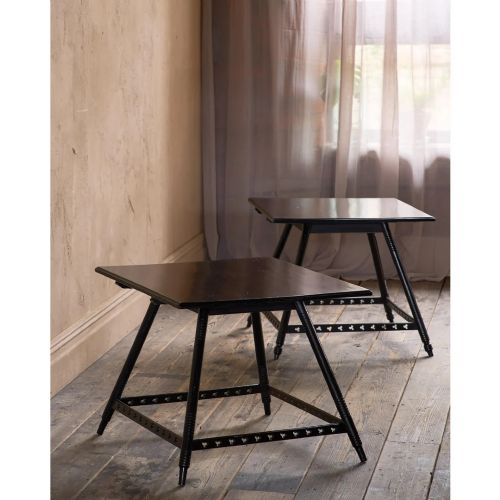
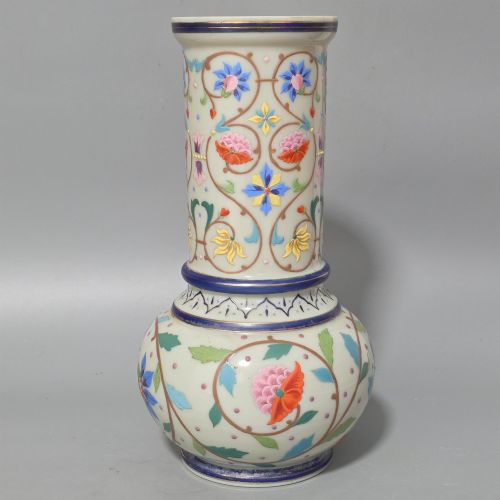
Victorian aesthetic movement art encompasses a diverse range of domestic objects, furniture, and works on paper created during the later decades of the nineteenth century. Buyers seek out these pieces for their deliberate departure from heavy Victorian historicism in favour of simpler lines, structural clarity, and artistic expression. The selection available here includes seating such as rush-seated chairs, occasional tables, decorative vases in glass and ceramic, floor-standing easels, and lighting fixtures.
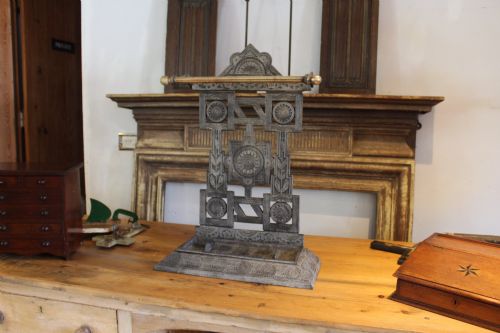
Seating and tables form a distinct portion of the inventory, often executed in ebonised wood or mahogany with slender supports and characteristic geometric profiles. Lighting and metalwork in brass, copper, and cast iron introduce utilitarian forms influenced by natural motifs like sunflowers, water plants, and peacock feathers. Glassware ranges from enamelled vessels to specialised patterns associated with major nineteenth-century makers and retailers.
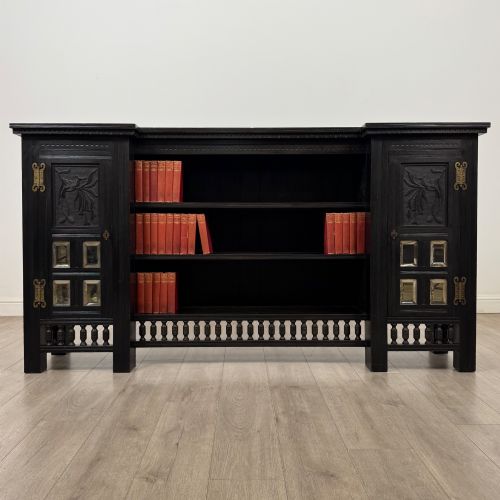
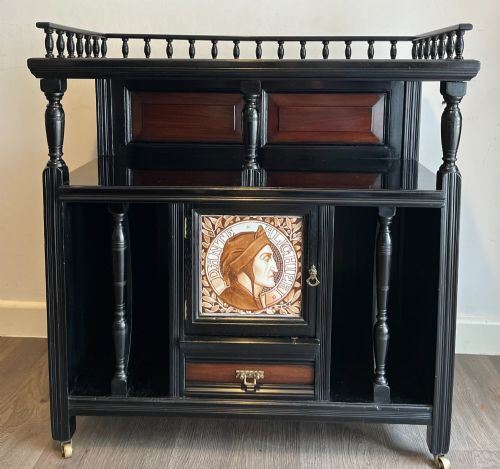
The objects bridge the transition between high Victorian production and the rising tide of the Arts and Crafts ethos. Domestic furniture often carries the specific influence of notable designers associated with the reform of decorative arts, appearing in both ambitious cabinet work and simpler utilitarian forms. These pieces suit interiors that favour intellectual design lineage, Japanned influences, and historical craftsmanship.
How they were made
Makers of victorian aesthetic movement art relied heavily on ebonised wood, mahogany, oak, and birch to construct furniture that emulated the sleek finish of Japanese lacquer. Surfaces were frequently darkened and polished to highlight structural joinery without relying on heavy carved ornamentation. Rush seating and turned wooden spindles appeared routinely on chairs and side tables to lend lightness and linearity to domestic spaces.
Metalwork involved the casting and manipulation of brass, copper, and cast iron into organic and geometric shapes, often incorporating sunflower motifs, stylized plant forms, and exposed rivets. Glass production utilised complex techniques including enamelling, Burmese glass coloration, and tapestries of pattern fused directly into the material. Silver and plated items utilised detailed chasing and engraved motifs that mirrored the graphic concerns of the wider movement.
Victorian Aesthetic Movement Art Retail Price Guide 2026
Typical asking prices for victorian aesthetic movement art among the pieces listed under this phrase on Sellingantiques today, from the lower quarter to the upper quarter. They describe what is for sale here now, not the wider market.
Form categories include side tables, easels, armchairs, hall stands, and decorative glassware spanning multiple British design schools.
What varies in quality
Quality in victorian aesthetic movement art rests on the integrity of the design attribution, the precision of the joinery or metal casting, and the preservation of original finishes. Pieces produced under the direct supervision of noted designers or manufactured by premier firms demonstrate superior proportion and material selection compared to anonymous commercial equivalents. The retention of original ebonising, unpolished brass patination, and authentic rush seats heavily influences the integrity of each item.
Fine cabinet work displays tight mortise and tenon joints, well-figured timber, and hardware cast with crisp botanical or geometric detail. Glassware and ceramics show sophistication through colour application, weight, and the distinct execution of hand-painted or enamelled motifs. Lesser examples often utilise generic factory turnings and softer secondary woods that lack the structural discipline of the best workshop output.
E W Godwin·William Morris·W.A.S. Benson·Thomas Jeckyll·William Tonks·Thomas Webb·Christopher Dresser·John Moyr Smith·Stuart for Liberty·Lambs of Manchester·Roberts and Belk·Ford Madox Brown·Harris Lebus·Daniel Cottier·Ellen E. Houghton·Martin Hall & Co
The Victorian Aesthetic Movement Art Glossary
- Ebonised wood
- Timber treated with a dark stain or finish to imitate ebony. This technique was frequently utilised to provide a stark, contrasting background for gilt details and brass mounts.
- Rush seating
- Woven marsh grass used to form lightweight, flexible chair seats. It appears frequently on reform seating influenced by traditional vernacular styles.
- Andirons
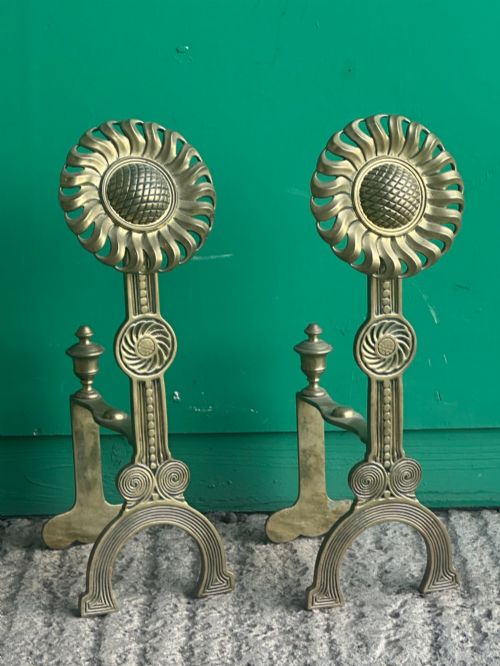
- Horizontal metal supports placed in a fireplace to hold logs. In this context, they often feature stylized botanical castings such as sunflowers.
- Escritoire
- A small writing desk fitted with drawers and pigeonholes. These items combine practical storage with decorative wood surfaces characteristic of late nineteenth-century interiors.
- Burmese ware
- A heat-sensitive art glass shading from pale yellow to pink. It was developed during the late nineteenth century and valued for its delicate gradient finish.
Victorian Aesthetic Movement Art: Frequently Asked Questions
What defines victorian aesthetic movement art?
Victorian aesthetic movement art embraces simplified forms, structural honesty, and design elements drawn from Japanese art and nature. It rejects heavy, ornate Victorian decoration in favour of clean lines and thoughtful craftsmanship.
Items from this movement frequently incorporate ebonised woods, exposed joinery, brass hardware, and stylized botanical motifs. The style spans furniture, metalwork, ceramics, and glassware created during the late nineteenth century.
How do I identify pieces by Christopher Dresser?
Christopher Dresser designs are recognised by their geometric rigour, stark utilitarianism, and inspiration from Japanese, Celtic, and ancient Peruvian art. His metalwork and ceramics often avoid superfluous ornament in favour of structural clarity.
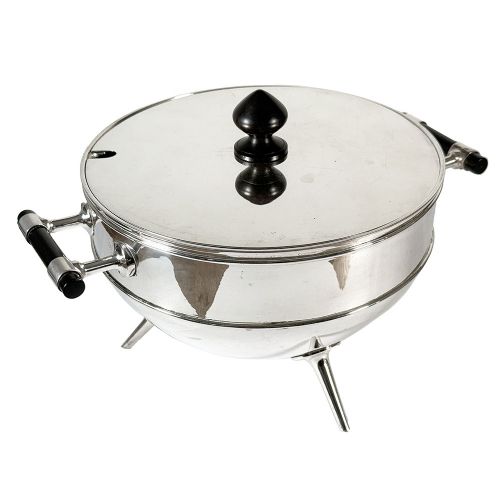
Look for pieces executed in brass, silver plate, or enamelled glass that emphasise functional geometry. Many authenticated examples bear maker marks from firms such as Hukin & Heath or Roberts and Belk.
Where were aesthetic movement chairs used?
Chairs from this period were designed for domestic spaces like drawing rooms, libraries, and bedrooms where refined, artistic decor was desired. Their lightweight construction made them easy to reposition.
Examples like the Sussex chair utilised rush seats and slender ebonised frames to blend vernacular tradition with modern artistic principles. They served as both functional seating and deliberate statements of aesthetic taste.
How should I care for ebonised wood furniture?
Ebonised wood requires gentle maintenance to preserve its dark, matte or polished surface finish. Avoid placing these pieces in direct sunlight or near heat sources that can dry out the timber and fade the dark stain.
Dust regularly with a soft, dry cloth and avoid harsh chemical cleaners or silicone polishes. Maintaining stable indoor humidity prevents the wood from moving and protects the original surface integrity.