


Victorian Adjustable Floor Lamp
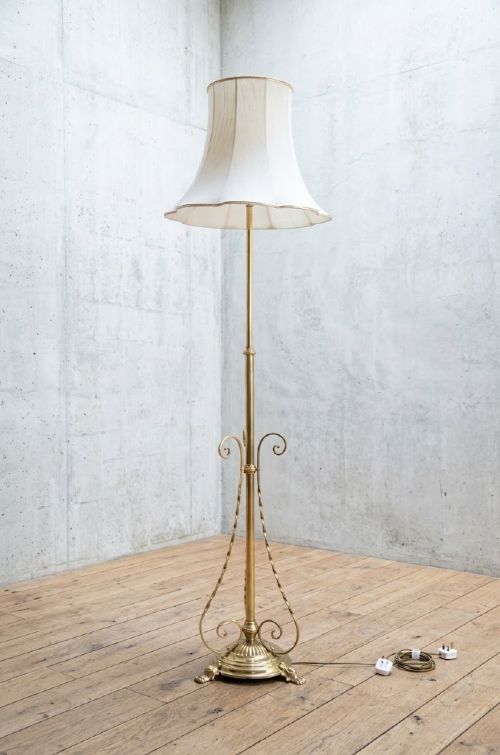
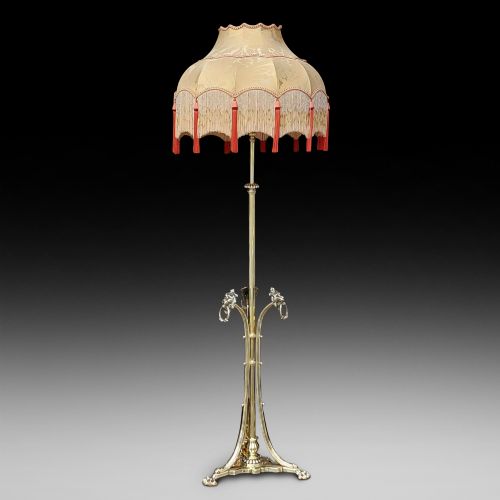
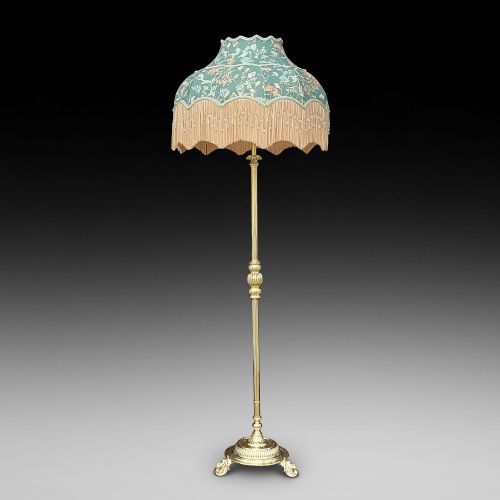
These Victorian adjustable floor lamps bring flexible height and warm illumination to a room, functioning as striking vertical pieces of period furniture.
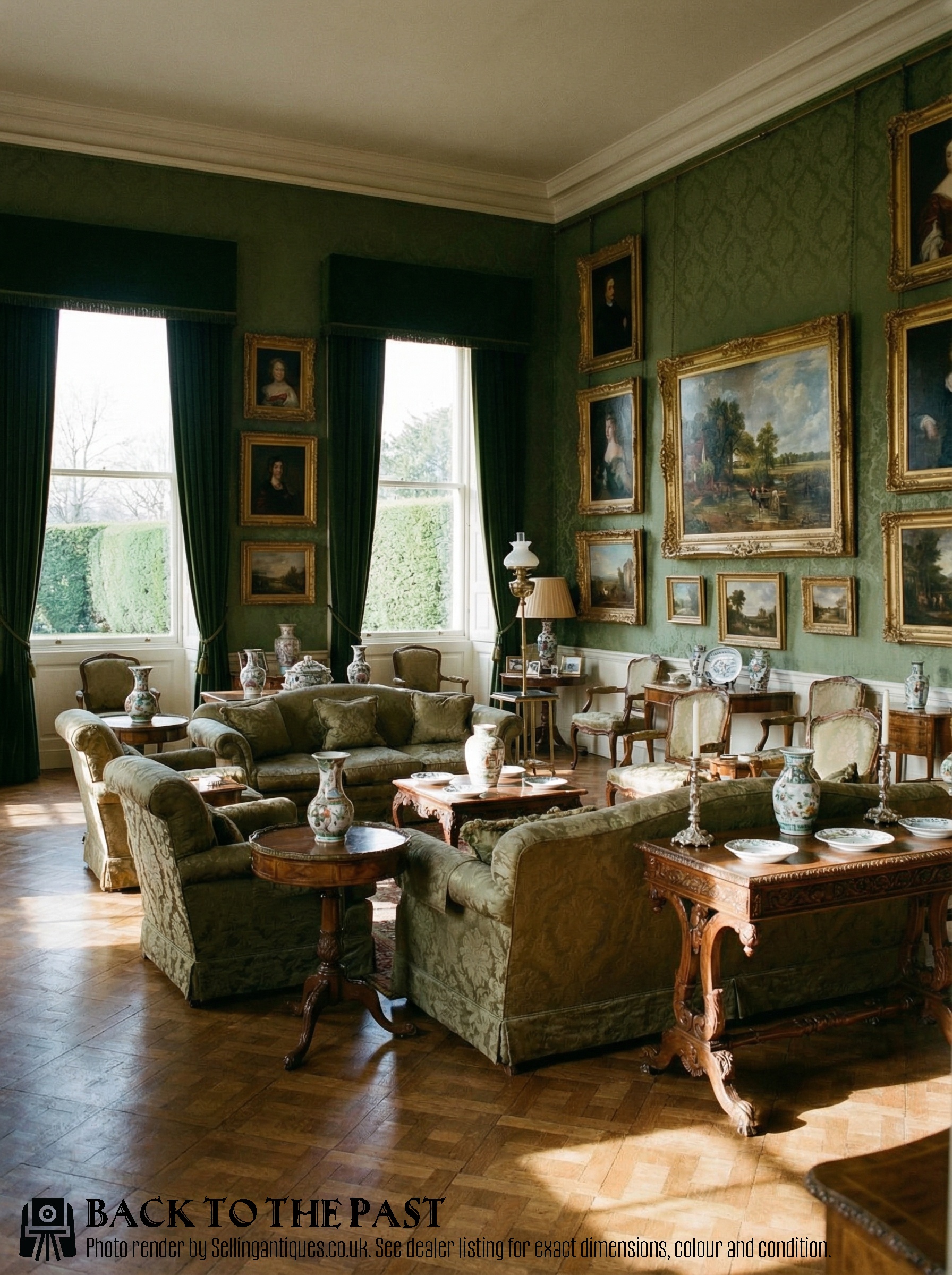
Victorian Adjustable Floor Lamp
A Victorian adjustable floor lamp combines tall vertical reach with a sliding telescopic mechanism to alter height, often originating from the conversion of period oil lamps to electric fittings. You encounter brass most frequently, alongside copper and wrought iron, standing on heavy bases that support the extended shaft.
The styles span standard Victorian designs, Arts and Crafts interpretations, and occasional Edwardian or Anglo-Burmese examples incorporating teak and padouk. Forms include Corinthian columns and simpler telescopic standards, some paired with onyx or marble columns.
Materials and construction methods
Makers utilised solid brass, copper, and wrought iron for the structural standards, employing telescopic inner rods that slide to adjust height. Bases often incorporate heavy cast weights, marble, or onyx to maintain balance when extended.
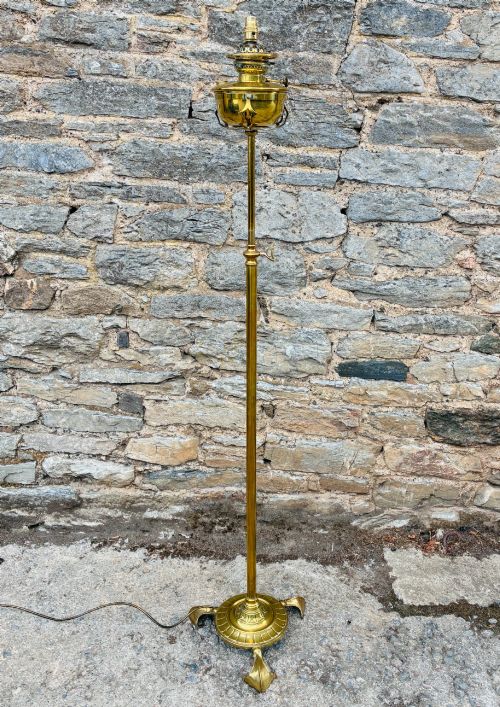
Many examples began life as oil lamps fitted with burners, later adapted for electricity, while shades involve materials like fabric, silk, and glass such as cranberry glass.
Periods represented span the Victorian era, 1880, 1890, 1900, Edwardian, and 1920.
Assessing quality in standard lamps
Quality rests on the weight and gauge of the metal used in the telescopic shaft and base, where heavier gauge brass and solid construction prevent swaying when fully extended. Finer examples display crisp casting details on Corinthian capitals or hand-hammered surfaces on Arts and Crafts copper.
The mechanism governing the rise and fall action distinguishes standard production from superior pieces, operating smoothly and holding its position securely without slipping.
A Hinks & Sons·W A S Benson
The Victorian Adjustable Floor Lamp Glossary
- Telescopic standard lamp
- A floor-standing lamp with a sliding inner shaft that alters the overall height. This mechanism allowed users to direct light downwards from various elevations.
- Corinthian column
- A classical architectural column form featuring ornate acanthus leaf capitals, frequently cast in brass for Victorian standards. It lent a formal neoclassical appearance to sitting rooms.
- Rise and fall
- An alternative description for an adjustable height mechanism. It refers to the vertical movement of the lamp body.
- Oil lamp standard
- A tall floor stand originally designed to hold an oil reservoir and burner before conversion to electricity. Many surviving examples retain this configuration with modern wiring.
- Anglo-Burmese
- A style reflecting British colonial influence, combining traditional forms with carved exotic timbers like teak and padouk. These pieces often feature detailed hand-carved decoration.
Victorian Adjustable Floor Lamp: Frequently Asked Questions
How do I adjust the height safely?
Most telescopic standards rely on a side thumbscrew or collar that you loosen to slide the inner shaft up or down. Support the weight of the upper section with one hand while adjusting the screw with the other.
Ensure the lamp is unplugged or switched off before moving the mechanism to protect older internal wiring, particularly on converted oil lamps.
Were these originally electric?
The majority of these tall standards started as oil lamps during the nineteenth century, featuring burners and reservoirs at the top. They were subsequently converted to run on electricity as domestic power became common.
Look for evidence of burner removal or adapted fittings near the top gallery, which indicates a period conversion rather than an original electric manufacture.
How do I clean brass standards?
Dust the metal regularly with a soft, dry cloth to prevent the buildup of grime in the detailed castings and fluted columns. Avoid harsh abrasive polishes that strip away the aged patina built up over decades.
If the metal requires deeper cleaning, use a mild, non-abrasive brass cleaner applied sparingly with a cloth, taking care not to stain surrounding fabric shades or onyx bases.
What shades suit these lamps?
Fabric and silk shades work well with traditional brass and copper standards, diffusing the light evenly across a room. Cranberry glass shades also appear on pieces from the turn of the century, adding colour and period accuracy.
Choose a shade with a proportional diameter and fitter size to match the weight and height of the specific standard lamp.