



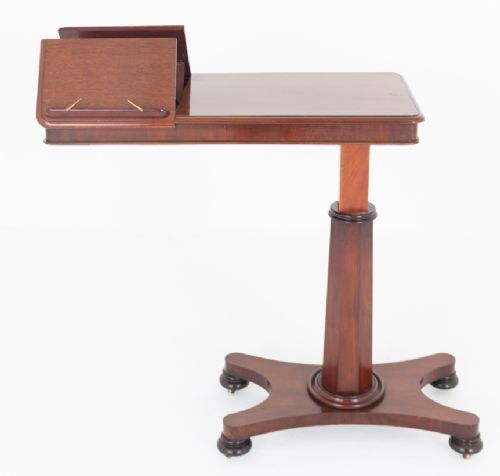
Victorian Adjustable Desk
A victorian adjustable desk offers a clever mechanical solution for reading, writing, and working across the nineteenth century.
Victorian Adjustable Desk
A victorian adjustable desk search brings together diverse reading stands, writing tables, and lamp fittings designed for individual utility. These pieces include mahogany library tables, rosewood music stands, and brass student lamps.
The materials span mahogany, walnut, oak, and rosewood, often paired with brass mechanisms for raising, lowering, or tilting. Many items date from the nineteenth century, including Victorian, William IV, and Regency periods.
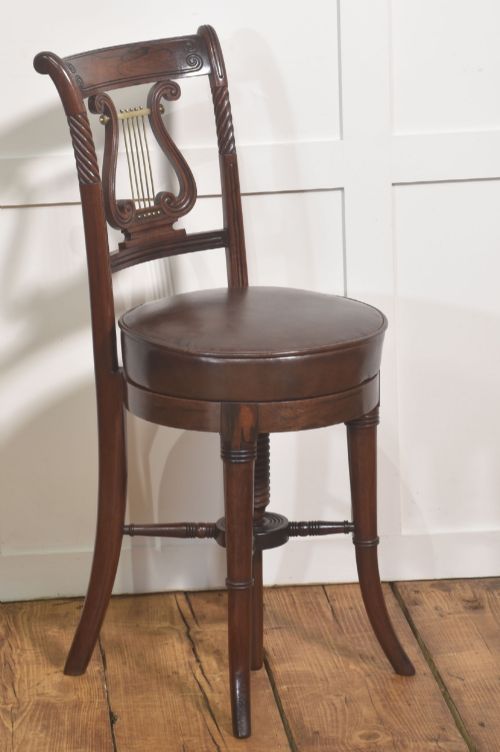
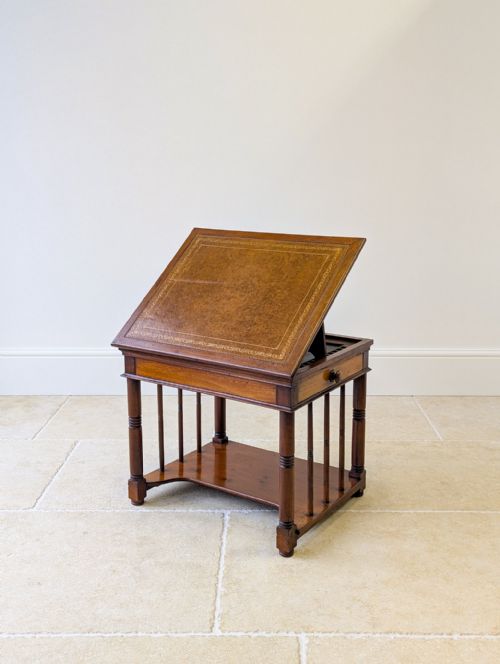
The standard configuration involves a timber top or book rest mounted on an adjustable column, or a metal desk lamp with a pivoting shade. Buyers frequently encounter reading tables and swivel chairs designed to adapt to the user.
Materials and construction
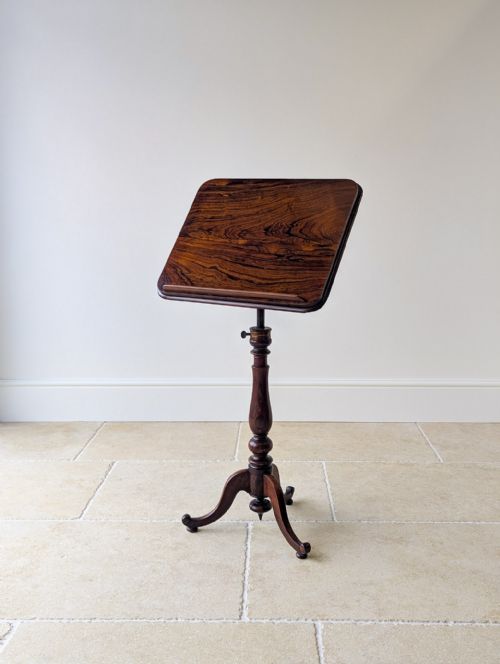
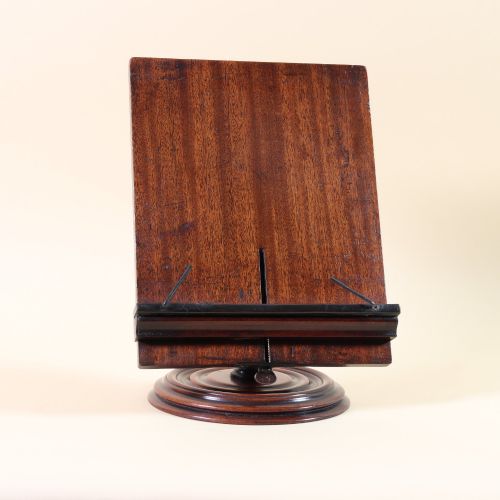
Makers utilised dense hardwoods like mahogany, rosewood, and oak for stable frames, book rests, and writing surfaces. These timbers were often polished or inlaid to highlight natural grain patterns.
Brass and cast iron provided the mechanical strength needed for ratchets, screws, and telescoping columns. Metal components allowed reading surfaces and lamps to swivel, rise, and fall with precision.
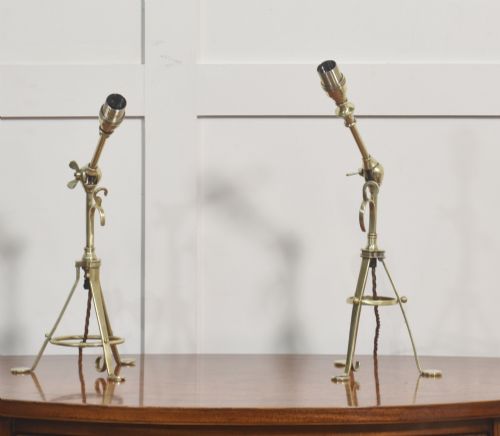
A tiny candle shade designed specifically for viewing microscope slides under artificial illumination.
Distinguishing quality
The sophistication of the brass mechanism and the tightness of its adjustment separate standard utility pieces from finer productions. Smooth movement in telescoping shafts and secure locking screws indicate superior workshop execution.
Timber selection and secondary detailing, such as burr walnut veneers, inlaid borders, or carved music frets, elevate certain reading stands and desks. Heavier cast iron bases and substantial bronze or brass fittings show greater investment in durability.
W.A.S. Benson·Wild And Wessel·M Pillischer·Carters Of London·Gillows
The Victorian Adjustable Desk Glossary
- Duet stand
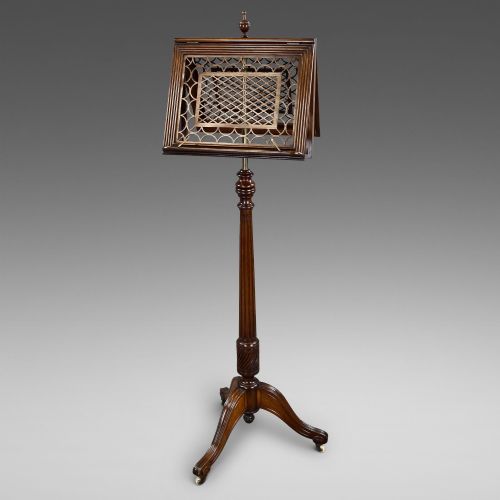
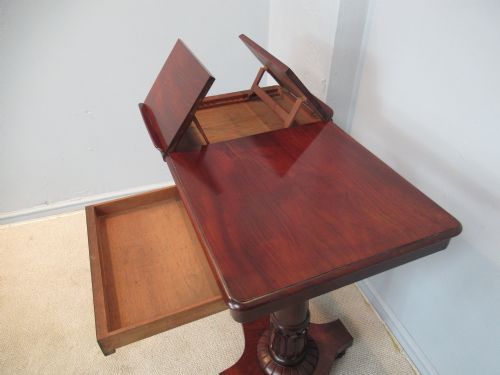
- A music stand or reading desk wide enough to hold two open scores side by side. These pieces often feature adjustable dual ledges.
- Reading table
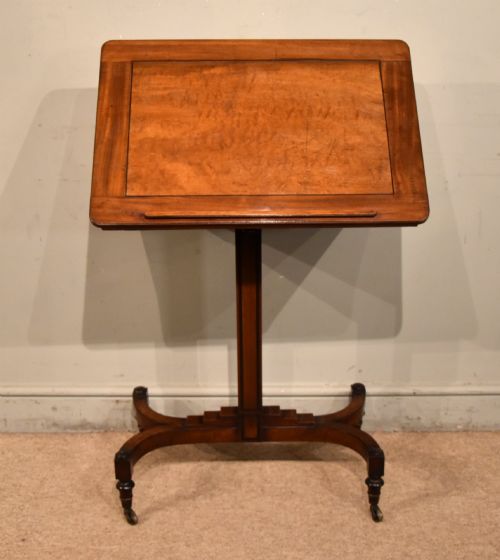
- A specialised occasional table with a tilting top designed to support books, folios, or writing materials at a comfortable angle.
- Swivel chair
- A desk chair featuring a central pivot mechanism, frequently paired with a rise and fall screw action for height adjustment.
- Ratchet support
- A toothed metal bracket mounted beneath a book rest that allows the reading angle to be set at various fixed positions.
Victorian Adjustable Desk: Frequently Asked Questions
How do these adjustable tables work?
Most pieces utilise a screw mechanism, sliding brass column, or ratchet bracket to alter height and angle. Users loosen a thumb screw or lift a catch to position the surface before locking it in place.
These functional elements allowed Victorian readers and writers to customise their workspace for comfort and lighting throughout the day.
Where were these pieces used?
Reading tables and adjustable desks appeared primarily in libraries, studies, and drawing rooms of large homes. They served scholars, musicians, and architects who required adjustable angles for books, folios, or sheet music.
Smaller examples, such as student lamps and bed tables, were designed for bedside reading or targeted desk illumination.
Are these items suitable for daily use?
Solid mahogany and oak construction makes many of these pieces robust enough for contemporary workspaces and reading corners. The mechanical parts generally remain functional after proper maintenance and gentle handling.
Care should be taken with antique brass screws and wooden ratchets to avoid stripping threads or stressing historical joints.
How can I tell the period?
Stylistic clues such as Regency curves, William IV rosewood grains, and Victorian cast iron bases help determine the era of manufacture. Patents, maker stamps, and specific brass fitting designs offer further chronological markers.
Earlier pieces often rely on hand-cut joinery and heavy brass, while later nineteenth-century examples introduce industrial cast iron components and refined swivel mechanisms.