


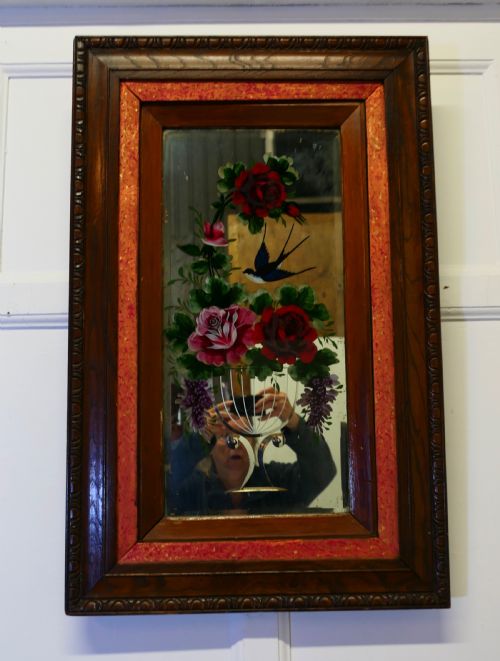


Verre Eglomise Frame
These verre eglomise frame pieces combine reverse-painted glass mounts and giltwood timber, offering distinct classical character for wall display.
Verre Eglomise Frame
A verre eglomise frame brings together reverse glass painting techniques and traditional wooden mouldings, typically housing period silhouettes, prints, or textiles. The pieces found here span the Georgian, Regency, and Victorian eras, presenting ornamental borders created by gilding and painting directly onto the reverse of the glass.
Most examples lean towards the Regency and Georgian styles, featuring pier mirrors and framed portraiture set within gilded or ebonised surrounds. Buyers encounter rectangular and oval formats designed to frame delicate works on paper, silkwork embroidery, or reverse glass engravings.
Originating as a revival of ancient cold-painting methods, these mounts elevate standard wall art through reflective borders and dark glass mats. They serve as focal points in period interiors, framing historical portraits and decorative prints with contrasting metallic lustre.
Materials and construction
Craftsmen utilised float or cylinder glass, applying gold leaf, silver leaf, and pigment to the reverse side before sealing the backing. This technique requires meticulous hand-painting and etching in reverse, ensuring the design appears correctly oriented when viewed through the front.
Mounts incorporate timber frames constructed from giltwood, ebonised wood, and plain wood, often finished with gesso and gold leaf applications. The glass panels are secured within these wooden rebates alongside silk, woolwork, or paper artworks.
Adhesive mixtures and paper backings stabilise the fragile painted glass layers within the wooden structure. The interplay between reflective metallic leaf and painted borders creates depth around the central artwork.
Listings feature works spanning the Georgian, Regency, and Victorian periods, utilising giltwood, ebonised wood, and reverse-painted glass.
Evaluating the standard
The precision of the reverse painting and the intactness of the gold leaf layer distinguish finer examples from standard production. Superior specimens display crisp brushwork and detailed etching on the glass, while lesser pieces show thinning leaf and clouded reserves.
The preservation of the original wooden frame and its matching gesso or gilding influences overall integrity. Pieces retaining their original backing materials and unblemished reverse glass panels demonstrate higher craftsmanship.
Artistic execution within the glass border or the central silhouette, print, or embroidery dictates the tier of the piece. Masterful hand-painted details and well-balanced proportions separate exceptional works from routine decorative items.
John Miers·Abraham Cooper·Henry Corbould·Bartolozzi
The Verre Eglomise Frame Glossary
- Verre eglomise
- A method of cold painting and gilding on the reverse side of glass to produce a mirrored, decorative border. It takes its name from Jean-Baptist Glomy, a French framer who popularised the technique in the eighteenth century.
- Giltwood
- Timber that has been coated with a thin layer of gold leaf over a prepared gesso ground. It provides a bright, reflective surface characteristic of formal period frames.
- Pier glass
- A tall mirror designed to hang on the wall space between windows. These mirrors frequently incorporate verre eglomise panels in their upper friezes.
- Silhouette
- A solid portrait profile filled in with a dark colour, often painted directly on glass or paper. Georgian and Regency examples are frequently paired with ecorched glass mats.
- Mezzotint
- A printmaking process that achieves tones through textured plates rather than lines. These prints appear frequently within dark glass and gilt surrounds.
Verre Eglomise Frame: Frequently Asked Questions
Where should I hang these frames?
Hang them on interior walls away from direct sunlight and excessive humidity to protect the delicate gilding and reverse painted glass. Stable indoor temperatures prevent the timber frames and backing papers from warping.
Position them at eye level where the reflective quality of the glass border can catch natural room light.
How do I date a verre eglomise frame?
Examine the construction of the wooden backing, the type of glass used, and the style of the inner artwork or silhouette. Georgian and Regency pieces typically show hand-beveled glass and older joinery techniques in the timber frame.
Compare the framing motifs, such as giltwood reeding or classical appliques, with documented furniture and mirror styles from the period.
Can I replace the glass?
Replacing the glass destroys the historical authenticity and the original hand-painted reverse decoration that defines the piece. The value rests primarily in the survival of the original decorated glass panel.
Consult a specialist restorer if the glass sustains damage rather than attempting a modern replacement.