
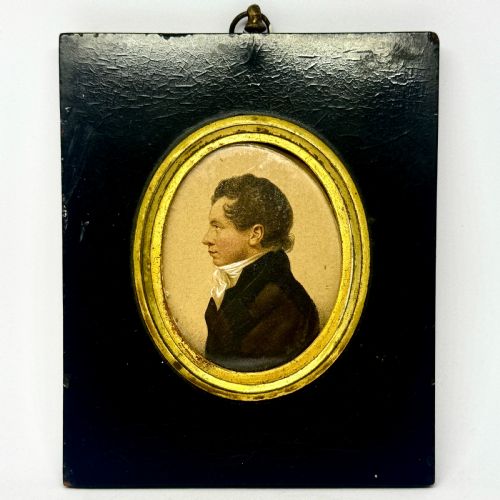


Black Painted Profile
A black painted profile captures a likeness with striking economy, offering an intimate glimpse into Georgian and Victorian lives through ink, glass and paper.
Black Painted Profile
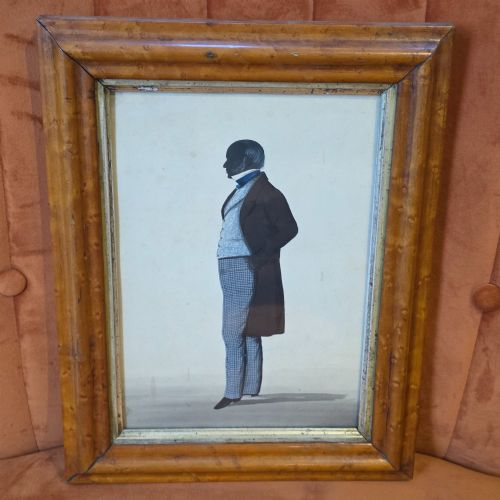
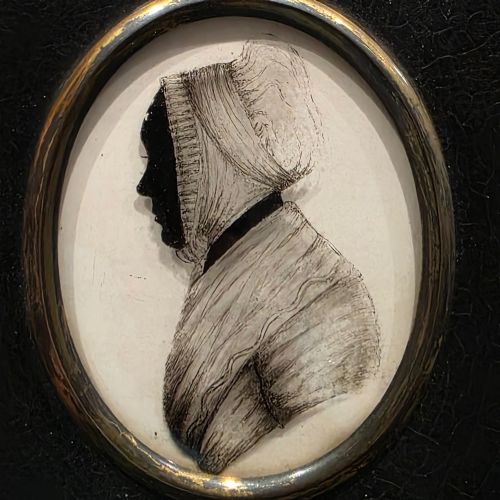
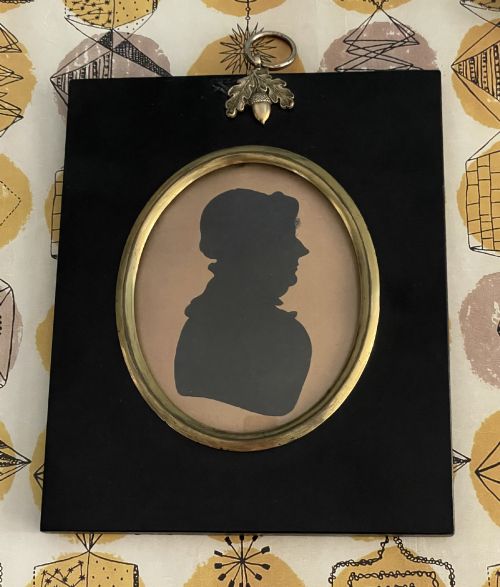
A black painted profile presents a strict human outline, usually showing a sitter from the side. These works form the core of what you encounter when searching for a black painted profile, spanning Georgian, Regency and Victorian periods.
The objects appear in various formats, ranging from framed wall art and miniature portraits to jewellery pieces and pendants. Many examples demonstrate intricate brushwork directly on glass, plaster or paper.
Makers recorded in the evidence range from notable practitioners like John Miers to vernacular folk artists. This mix provides both signed archival pieces and anonymous examples from the eighteenth and nineteenth centuries.
Materials and execution
Artists executed these works using ink, watercolour and paint on supports such as paper, card, plaster and glass. Reverse painting on glass remains a notable technique, creating a glossy finish that catches the light.
Frames and housings utilise wood, ebonised wood, brass and gold, sometimes incorporating materials like pearl and enamel for jewellery pieces. Hand-cut paper silhouettes also appear alongside direct brushwork.
The mounting often included convex glass to protect the delicate painted surface underneath. Backings frequently consisted of card or plaster, providing a stable ground for the silhouette.
Object types range from wall art and framed portraits to miniature paintings and gold jewellery pendants.
Determining quality
The preservation of the original framing, whether rosewood or brass, contributes significantly to the integrity of the piece. Intact glass and unblemished painted surfaces elevate the overall standard.
Provenance and signature attribution distinguish exceptional works from standard examples. Pieces bearing the mark of recognised practitioners demonstrate superior execution and historical value.
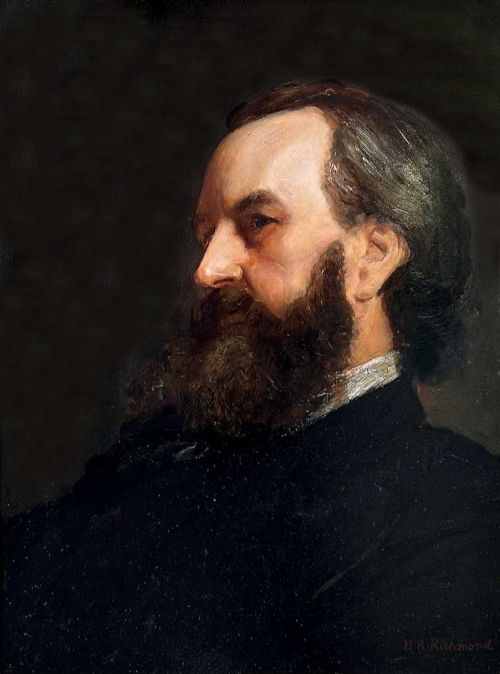
John Miers·John Smith of Edinburgh·J. Deacon·William Blake Richmond·Leo Klin
The Black Painted Profile Glossary
- Silhouette
- A portrait represented as a solid shape of a single colour, usually black, showing the profile of a subject. This form gained immense popularity in the eighteenth and nineteenth centuries before photography.
- Reverse painting on glass
- A technique where the artist paints directly onto the reverse side of a glass panel so the image is viewed through the front. This method imparts a distinctive depth and sheen to the portrait.
- Portrait miniature
- A small-scale painting designed for private contemplation or wear as personal adornment. These works required immense skill to capture fine details in a restricted compass.
- Ebonised wood
- Timber treated to resemble ebony, providing a dark, uniform border that contrasts with the lighter background of a portrait. It was a common framing choice for silhouettes.
- Folk art
- Artistic work created from a cultural tradition rather than academic training, often displaying a charming naivety. Such pieces rely on direct observation rather than formal proportion.
Black Painted Profile: Frequently Asked Questions
How do I date a black painted profile?
Dating relies heavily on the style of dress, hair and bonnet depicted in the portrait. Framing materials and mounting techniques also offer reliable clues to the period.
Ebonised wood frames and convex glasses often point towards the Georgian or Regency eras. Documentation or signatures on the reverse provide definitive chronological markers.
Were these profiles painted or cut?
Both methods were common, with artists frequently combining hand-cutting with painted embellishments. Some makers specialised entirely in delicate brushwork on glass or plaster.
Painted examples showcase fine ink or watercolour application to delineate lashes, hair and cravats. Cut paper silhouettes rely solely on precise scissor work mounted against a contrasting background.
How were these miniature portraits displayed?
Many were framed for hanging on parlour walls, often clustered in groups to form family galleries. Their modest scale suited intimate domestic spaces.
Others were constructed as jewellery, such as pendants designed to be worn close to the heart. These wearable pieces frequently featured gold mounts and protective glass covers.
What is reverse painting on glass?
Reverse painting involves applying pigment to the back of a glass sheet so the finished image is viewed through the front. This technique protects the paint from dust and damage.
The glass imparts a glossy finish that catches ambient light, giving the black silhouette a subtle luminous depth. It requires steady hand control as errors cannot be easily corrected.