
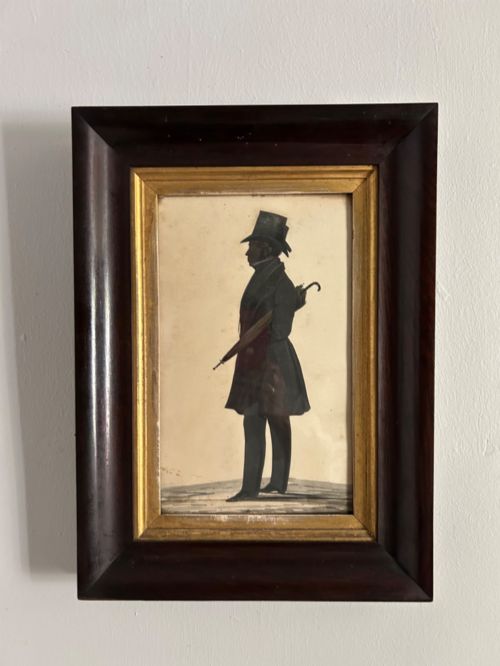


Georgian Shade Portrait
A georgian shade portrait captures a likeness in miniature, offering an intimate glimpse into the past through the stark contrast of ink or paper.
Georgian Shade Portrait
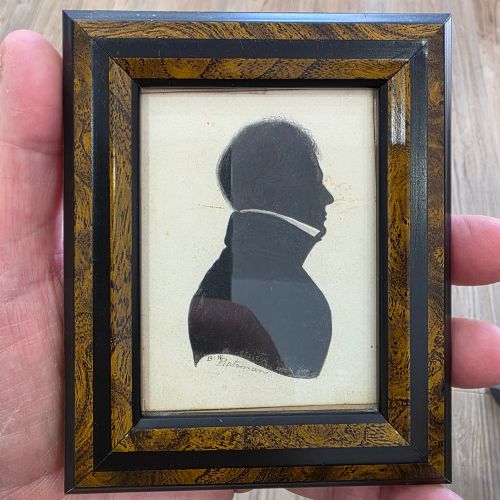
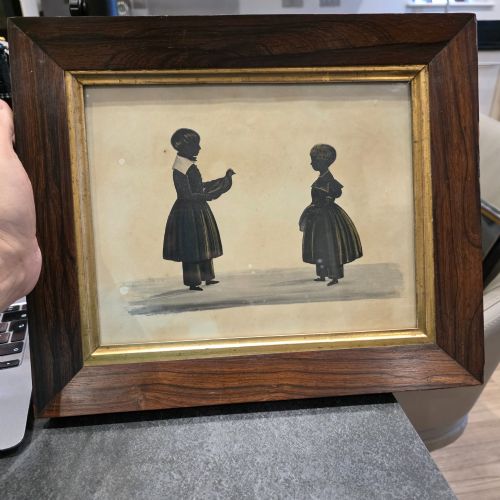
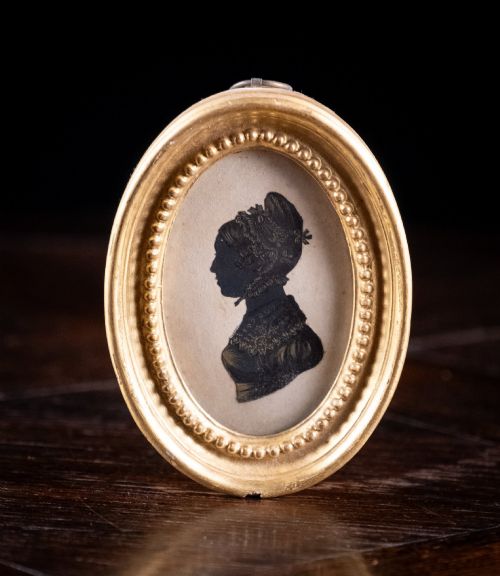
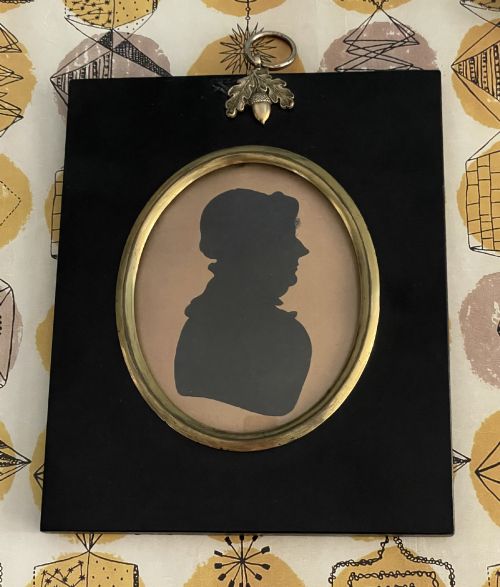
When you search for a georgian shade portrait, you are looking at framed wall art that records human or animal likenesses from the eighteenth and nineteenth centuries. These silhouette portraits appear in various forms, including individual profile miniatures and larger compositions depicting multiple figures.
The versions you are most likely to meet on this page date from the Georgian, Regency, and early Victorian periods. They take the shape of miniature portraits housed in timber frames, often set against pale backgrounds to emphasise the dark profile.
How They Were Made
These works rely on paper as the primary medium for the silhouette cut or painted likeness. Artists mounted this paper within frames of ebonised wood or rosewood, frequently incorporating glass to protect the delicate surface.
One listed silhouette captures a dog rather than a human, proving that cherished pets also sat for portrait artists.
What Varies in Quality
The quality of the framing and mounting also influences the overall merit. Superior examples utilise rich rosewood or ebonised surrounds complemented by fine gold leaf embellishments rather than plain, unadorned borders.
Bateman·James Gillespie·Hubard Gallery·Augustin Edouart·George Atkinson·John Smith of Edinburgh·Miers
The Georgian Shade Portrait Glossary
- Silhouette
- A portrait represented as a solid shape of a single colour, usually black, showing the profile of a subject. This form gained immense popularity before the widespread adoption of photography.
- Ebonised wood
- Timber treated to resemble ebony, providing a deep black finish commonly used for picture frames. This material offers a sharp contrast to the pale background of the portrait.
- Gold leaf
- Gold beaten into extremely thin sheets used for gilding and adding decorative highlights to portraits. Artists applied this to accentuate clothing details and frame bezels.
- Regency
- An English architectural and decorative style spanning the early nineteenth century. Pieces from this era often display refined elegance and classical restraint.
Georgian Shade Portrait: Frequently Asked Questions
How were silhouette portraits displayed?
Owners typically hung these small framed artworks on parlour walls, often grouping multiple family members together.
Their compact size also allowed them to be placed on mantelpieces or kept on small tables for intimate viewing.
How do I identify a Regency silhouette?
Regency examples often feature distinct period attire, such as high-waisted dresses for women and specific cravats for men.
Artists of this era frequently added fine gold leaf highlights to enhance the dark profile against the background.
What materials are used in these frames?
Frames are commonly constructed from ebonised wood or rosewood to provide a dark, contrasting border around the artwork.
Many incorporate brass bezels, hangers, and convex glass to protect the delicate paper surface within.