



Vernacular Wooden Panel
A vernacular wooden panel embodies centuries of domestic utility, carved or joined from local timber by regional hands.
Vernacular Wooden Panel
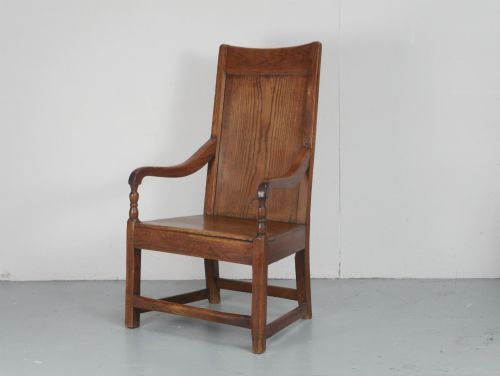
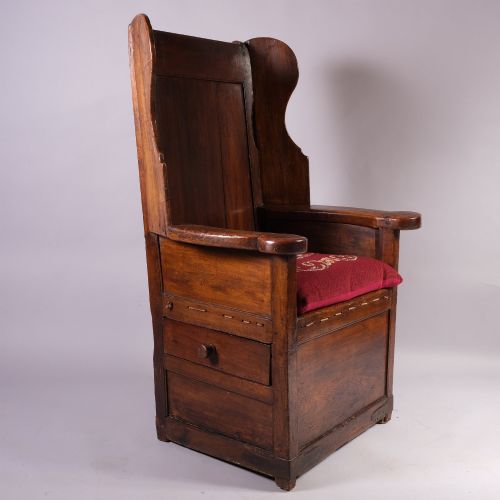
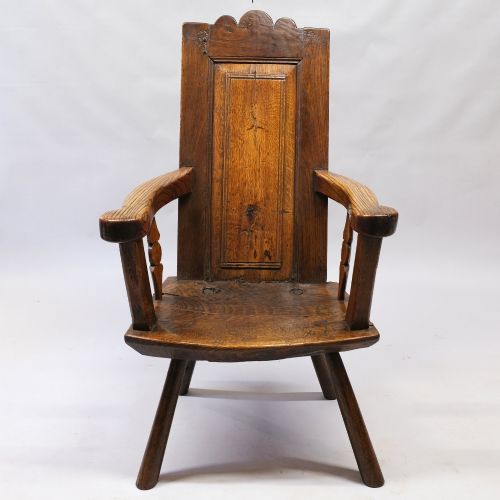
The version most frequently met on this page is robust oak or elm furniture, often hailing from Welsh, English, or Scottish workshops. Such items frequently display structural modifications or panel-backed designs suited to keeping out drafts in stone and timber cottages. They carry the marks of centuries of domestic use, showing honest repairs and surfaces mellowed by time.
How they were made
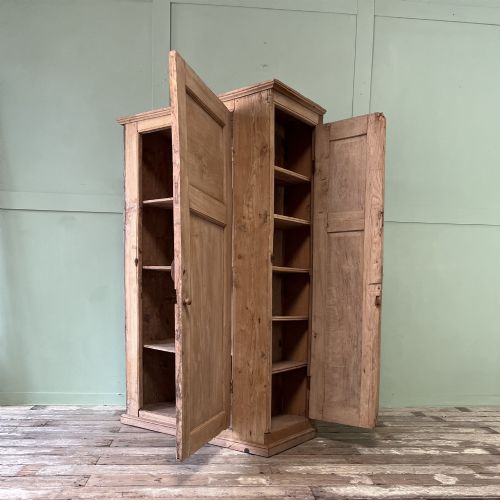
Makers relied primarily on native timbers such as oak, elm, ash, and pine, selected for local availability and functional strength. Joinery methods relied on mortise and tenon joints secured with wooden pegs, allowing unyielding structures to expand and contract with seasonal changes in humidity. Iron and brass hardware appeared sparingly for hinges, latches, and plates where additional reinforcement was necessary.
Surfaces were often left bare to acquire a natural patina through handling, though occasional examples preserve historical finishes like original blue paint or early coatings. Panels were hand-cleaved or sawn, resulting in slight irregularities that distinguish pre-industrial carpentry from later machine-made production.
Vernacular Wooden Panel Retail Price Guide 2026
Typical asking prices for vernacular wooden panel among the pieces listed under this phrase on Sellingantiques today, from the lower quarter to the upper quarter. They describe what is for sale here now, not the wider market.
Several armchairs retain evidence of long winter evenings spent by the hearth, with carved panel backs designed specifically to block errant drafts.
What varies in quality
The character of the timber and the depth of the resulting patina distinguish the finer examples from simpler work. Well-figured oak and dense elm show subtle grain patterns that have deepened over generations of careful maintenance. The survival of original surfaces, such as early paintwork or untouched timber, elevates the standing of a piece.
Proportion and structural integrity also dictate the calibre of these items. Pieces that retain their original boards, feet, and ironwork without excessive timber replacement demonstrate better preservation. The skill of the regional joiner shows in the balanced proportions of settles, cupboards, and armchairs.
The Vernacular Wooden Panel Glossary
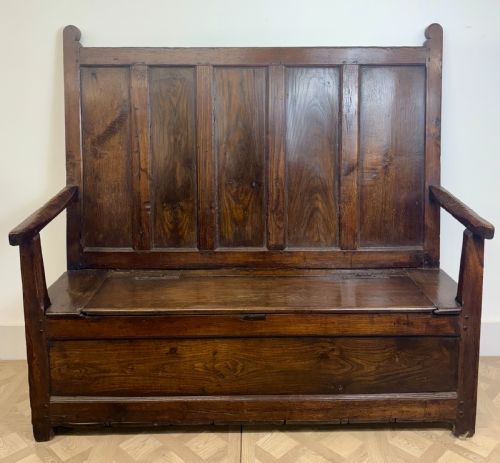
- Box settle
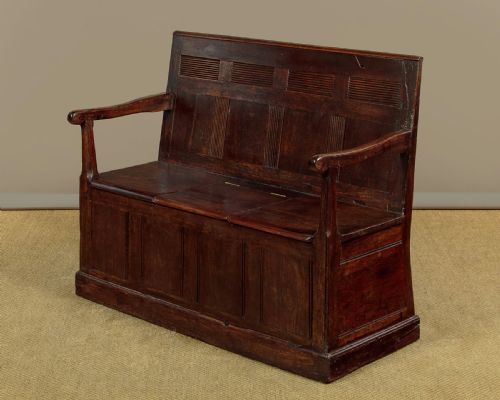
- A high-backed wooden bench featuring a compartment beneath the seat for storage. This form kept drafts away from the hearth while providing secure domestic storage.
- Coffer bach
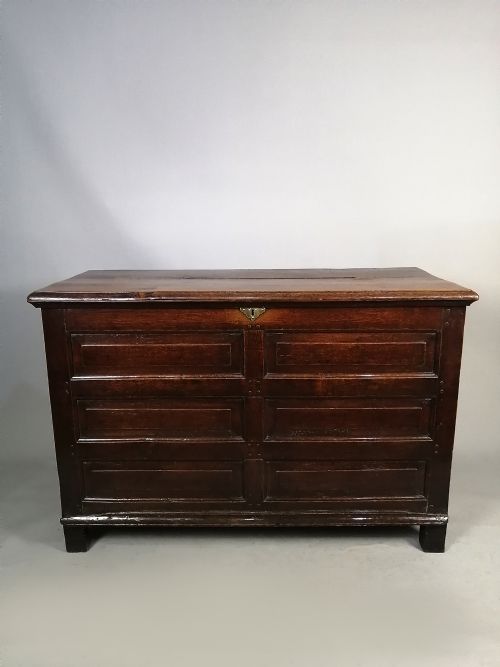
- A small Welsh storage chest used for documents or valuables. These miniature coffers display the same dovetail and panel construction as their larger counterparts.
- Grain ark
- A large storage chest traditionally used for holding grain or meal in agricultural dwellings. These robust pieces were built with thick timber walls to deter pests.
- Threshing board
- A flat wooden board studded with flint or metal fragments used in agricultural processing. Surviving examples reflect the rural working life of the eighteenth century.
- Patina
- The deep surface sheen developed on wood through decades of handling, polishing, and exposure to light. It serves as an indicator of age and historical care.
Vernacular Wooden Panel: Frequently Asked Questions
What is a vernacular wooden panel?
A vernacular wooden panel is a section of timber construction found within regional furniture and rural interiors. These elements formed the backs and sides of seventeenth and eighteenth-century settles, cupboards, and seating.
They reflect local building traditions and the practical design choices of country artisans using native woods.
How do I care for antique oak furniture?
Maintain antique oak and elm by keeping pieces away from direct heat sources and sudden temperature fluctuations. Regular application of traditional beeswax helps nourish the dry timber and preserves the historical surface sheen.
Avoid modern silicone polishes, which can penetrate open grain and alter the natural patina permanently.
Where did these regional pieces originate?
The pieces originate primarily from rural regions across Wales, England, and Scotland, with occasional European examples. Local craftsmen utilised available timber such as oak, elm, and pine to construct functional household goods.
Characteristics often link specific forms to distinct geographic areas like Snowdonia or the Fair Isle.
How can I date an 18th-century settle?
Dating relies on examining the construction joints, tool marks, and timber shrinkage patterns visible across the panels. Hand-sawn boards and pegged mortise and tenon joints point towards eighteenth-century or earlier manufacturing methods.
Original hardware and surface wear provide additional clues regarding the chronological timeline of the piece.