




Venetian Painted Side Table
A venetian painted side table brings distinct Italian character to a room, offering surface space and traditional painted decoration.
Venetian Painted Side Table
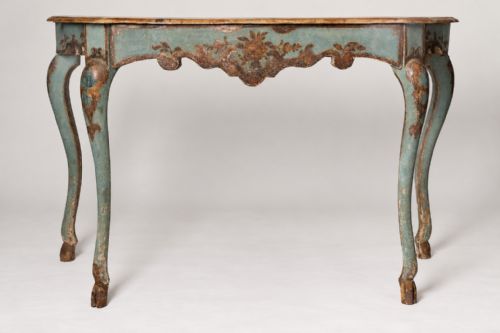
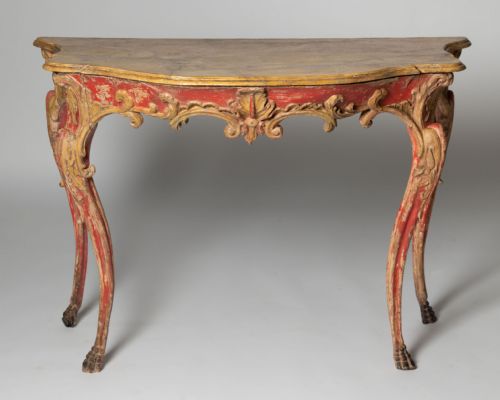
A venetian painted side table encompasses forms such as console tables, side cabinets, occasional tables, and bedside tables originating across the eighteenth, nineteenth, and early twentieth centuries. These tables frequently display Italian Rococo, Venetian Rococo, Venetian Revival, and Italian Rococo Revival styles, alongside French Chateau influences.
The versions most commonly met on this page range from nineteenth-century pieces to items dated around nineteen thirty, reflecting diverse periods from the eighteenth century onwards. They serve practical functions as lamp tables, tray top tables, and side cupboards while maintaining ornamental painted surfaces.
How they were made
Maker construction relies on wood as the primary substrate, shaped into forms such as serpentine consoles and occasional tables. Surfaces receive preparation in gesso before application of paint, polychrome decoration, and gold leaf or giltwood accents.
Some examples incorporate mirror glass and marble elements to complement the painted woodwork. Craftsmanship follows traditional Italian and Venetian joinery and decorative techniques associated with workshop production.
Venetian Painted Side Table Retail Price Guide 2026
Typical asking prices for venetian painted side table among the pieces listed under this phrase on Sellingantiques today, from the lower quarter to the upper quarter. They describe what is for sale here now, not the wider market.
Some tables come in matched pairs, perfect for those who prefer symmetry in their bedside arrangements.
What varies in quality
Quality differences emerge in the execution of the painted and polychrome decoration, where finer brushwork and more detailed ornamentation elevate a piece above simpler variants. The depth and handling of gesso work and gilding also distinguish superior examples.
The sophistication of the stylistic interpretation, whether leaning into elaborate Venetian Rococo curves or restrained revival forms, dictates the standing of an individual table within its period.
Pauly et Cie
The Venetian Painted Side Table Glossary
- Gesso
- A plaster mixture applied to wood surfaces to prepare them for painting or gilding. It provides a smooth base for intricate decorative details.
- Giltwood
- Wood that has been coated with gold leaf or gold paint. This technique adds metallic highlights to carved furniture elements.
- Serpentine
- A curved shape featuring a convex centre flanked by concave sides. It appears frequently on the front edges of console tables.
- Polychrome
- The practice of decorating furniture with multiple colours of paint. It defines the vibrant surfaces seen on many Venetian pieces.
- Console table
- A table designed to be fixed against a wall, often supported by decorative brackets or legs. These pieces provide surface display space.
Venetian Painted Side Table: Frequently Asked Questions
What is a venetian painted side table?
A venetian painted side table is a decorative furniture piece originating from Italy, featuring painted or polychrome surfaces. These tables take forms such as consoles, occasional pieces, and bedside cabinets.
They combine utility with traditional Venetian design motifs, often reflecting historic revival styles from the nineteenth and early twentieth centuries.
How were these tables used originally?
Historically, these tables functioned as ornamental furniture in grand interiors, serving as consoles against walls or as side supports in reception rooms. Their surfaces held decorative objects, lighting, or everyday items.
Smaller variants also served as bedside tables or lamp tables within domestic spaces.
How do I date a painted side table?
Dating relies on examining construction methods, wood types, and the ageing of the gesso and paint layers beneath the surface. Stylistic indicators, such as Rococo curves or revival details, provide further clues to the period of origin.
Evidence from nineteenth and early twentieth-century examples helps distinguish older craftsmanship from later revival interpretations.
How do I live with a painted table?
Living with these pieces involves placing them in settings where their painted surfaces can be appreciated without exposure to direct sunlight or moisture. They function effectively as accent pieces in hallways, living rooms, or bedrooms.
Careful placement preserves the delicate gesso and polychrome finishes over time.