
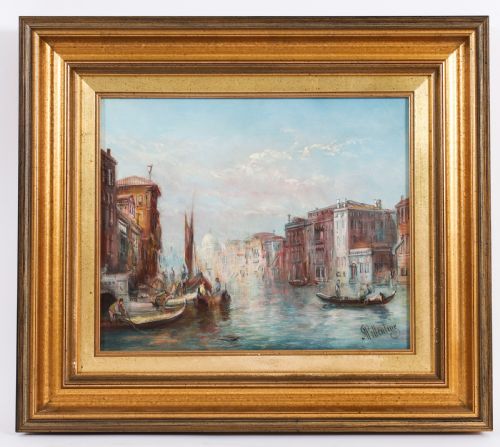
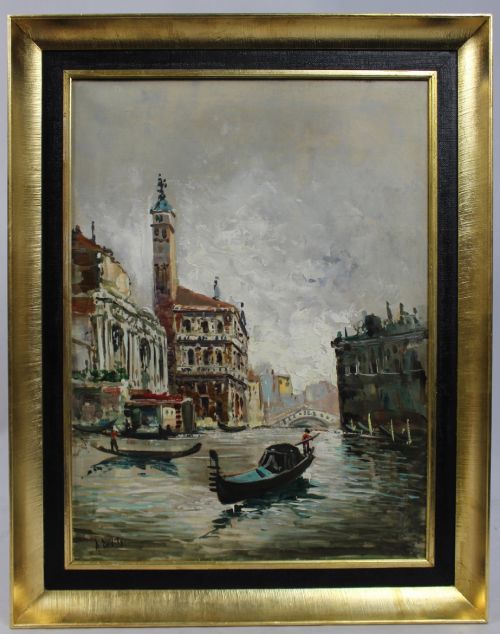
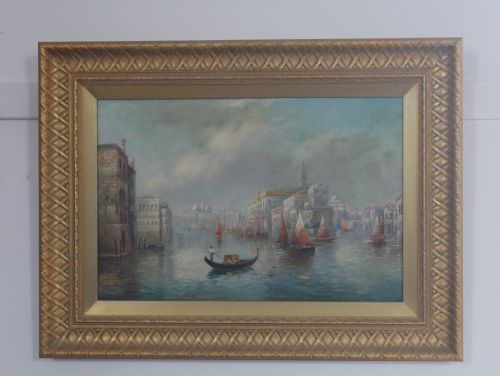


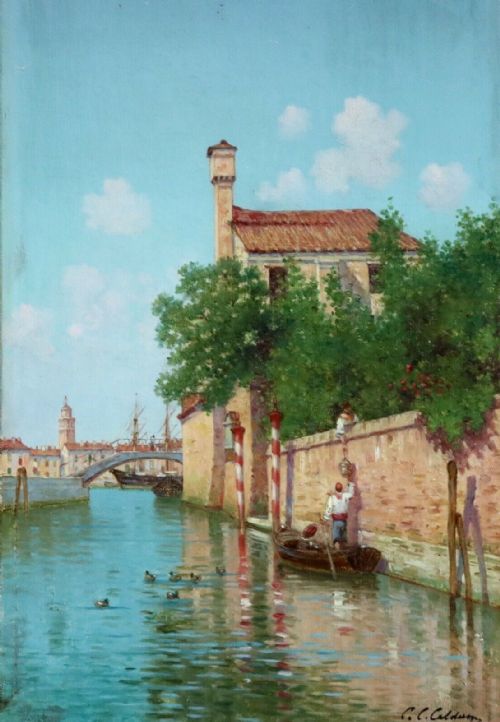
Venetian Gondola Oil Artwork
These venetian gondola oil artwork pieces capture the atmospheric canals and lagunar light of Italy, bringing historic Venetian romance directly into your interior.
Venetian Gondola Oil Artwork
A venetian gondola oil artwork presents painted scenes of canals, palaces, and waterways using traditional pigments on woven supports. These paintings capture historic vistas of the Grand Canal, the Bridge of Sighs, and the open lagoon under varying atmospheric conditions.
The selections available span from Victorian and nineteenth century romanticism through to mid-century impressionism. Works frequently depict local gondolieri navigating the historic waterways past recognizable Venetian landmarks and palaces.
Makers and painters represented include Alfred Pollentine, Antonio DeVity, F.D. Campo, Marc Aldine, Antoine Bouvard Senior, Jane Vivian, Liner, and Charles Clement Calderon. These creators record the architectural grandeur and watery expanses of Venice across different decades.
How they were made
Artists apply oil paint directly onto canvas supports stretched over wooden frames, building up rich layers of colour and texture. This technique allows painters to manipulate light and shadow across water surfaces and ancient masonry.
Many of these canvases sit within period frames constructed from wood and embellished with gilt, giltwood, or gilded wood finishes. The reflective properties of the gold leaf enhance the luminous qualities of the painted Venetian light.
Countless gondolieri have navigated these painted canals without ever getting their felt hats wet.
What varies in quality
The handling of light and the depth of atmospheric perspective distinguish finer canvases from simpler topographical recordings. Master painters achieve a translucent quality in the rendering of lagoon water and evening skies.
The condition of the original oil pigment and the preservation of the canvas determine the visual integrity of the composition. Framing also varies from simple timber mouldings to ornate gilded wooden frames that complement the painting.
Alfred Pollentine·Antonio DeVity·F.D. Campo·Marc Aldine·Antoine Bouvard Senior·Jane Vivian·Charles Clement Calderon
The Venetian Gondola Oil Artwork Glossary
- Oil on Canvas
- A painting medium where pigments suspended in drying oils are applied to a woven fabric support. This combination offers flexibility and longevity for the artist.
- Giltwood
- Wood that has been coated with a thin layer of gold leaf or gold dust. It provides a decorative and protective border for traditional paintings.
- Impressionism
- An art style characterised by relatively small, thin, yet visible brush strokes and an emphasis on accurate depiction of light. It informs many of the landscape and cityscape views.
- Grand Canal
- The main waterway of Venice, lined with major Renaissance and Gothic palaces. It serves as a primary subject for painters recording the city.
Venetian Gondola Oil Artwork: Frequently Asked Questions
How do I date a Venice painting?
Dating relies on stylistic shifts from nineteenth-century romanticism towards mid-century impressionism, alongside artist signatures and biographical records. Frame construction and canvas preparation methods also offer clues to the era of creation.
Examining the stretcher bars and the type of canvas weave helps confirm whether a piece originates from the Victorian period or later twentieth-century decades.
Where should I hang these canvases?
These artworks suit reception rooms, studies, or hallways where natural light can illuminate the painted water and gilded frames. Avoid placing them in areas with high humidity or direct, harsh sunlight.
Pairing the canvas with traditional interior decor allows the rich oil pigments and historic subject matter to become a natural focal point.
What is nineteenth century romanticism?
This artistic approach prioritises emotional intensity, dramatic lighting, and the sublime grandeur of nature and architecture. In Venetian scenes, it manifests as moody skies and glowing architectural highlights.
Painters working in this style sought to evoke a sense of awe regarding the historic fabric of the floating city.
How do I care for oil paintings?
Maintain a stable room temperature and humidity level to prevent the canvas from slackening and the oil paint from cracking. Dust the surface and frame gently with a soft, dry brush.
Avoid using liquid cleaners or chemical solvents on the painted surface or the gilded wood frame to protect the historic materials.