



19th Century Venetian View
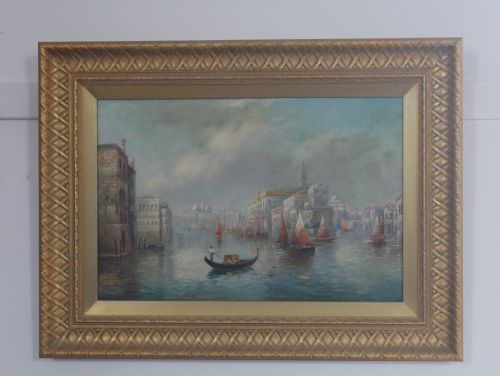
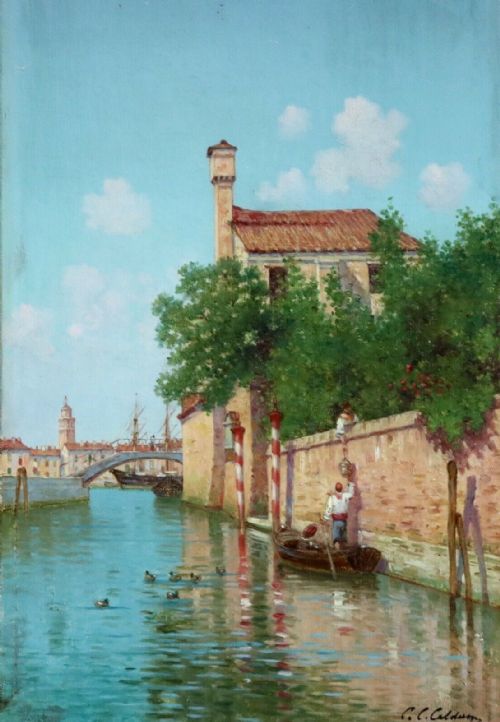
These 19th century venetian view paintings capture the light, canals and architecture of Venice through oil and watercolour.
19th Century Venetian View
A 19th century venetian view brings the distinctive architecture and waterways of Venice into domestic spaces through paintings created during the Victorian era and the decades spanning the nineteenth century. Buyers seek these works to capture the romantic atmosphere of the Grand Canal, the Lagoon and landmarks such as the Doge's Palace and Santa Maria della Salute.
The pieces appearing on this page take the form of framed oil paintings and watercolour paintings. Canals, townscapes and lagoon scenes dominate the selection, portraying famous sights like the Grand Canal and San Simeone Piccolo.
Makers and artists working in styles ranging from British Impressionism to 19th century Romanticism produced these depictions. The selection includes works by named painters such as Alfred Pollentine, Jane Vivian, William Raymond Dommersen, Hercules Brabazon Brabazon, Charles Clement Calderon and F.D. Campo.
How these works were made
Artists painted these Venetian scenes primarily using oil on canvas or watercolour on paper. The application of pigment captures the specific atmospheric light and water reflections characteristic of the Venetian lagoon.
Many of these artworks retain their original framing materials, utilising wood, gesso, giltwood and gold leaf. The decorative frames enhance the visual impact of the canvas and paper works.
One mournful canal scene captures a Grand Canal funeral, proving Victorians liked their Venetian tourism with a side of drama.
What varies in quality
Quality in a 19th century venetian view depends upon the dexterity of the brushwork and the artist's ability to render the distinctive light and architecture of Venice. Finer works demonstrate a confident handling of water, sky and stone.
The condition and execution of the surrounding frame, whether constructed from giltwood, gesso or gold leaf, also influence the overall character of the piece.
F.D. Campo·Jane Vivian·Alfred Pollentine·William Raymond Dommersen·Hercules Brabazon Brabazon·J. Yates·Charles Clement Calderon·Arthur Severn
The 19th Century Venetian View Glossary
- Oil on canvas
- A painting technique where pigments suspended in drying oils are applied to a stretched fabric support. This method allows for rich colour blending and textured brushwork.
- Watercolour painting
- A medium where coloured pigments are suspended in a water-soluble vehicle, typically applied to paper. It produces translucent washes of colour.
- Giltwood
- Wood that has been treated with a thin layer of gold leaf or gilt. It provides an ornate and reflective border for nineteenth-century fine art.
- Townscape
- A genre of art depicting a city urban landscape, focusing on architectural structures and street or canal scenes. These works document historic cityscapes.
- Lagoon
- A stretch of salt water separated from the sea by a low sandbank or coral reef. In these artworks, it refers specifically to the body of water surrounding Venice.
19th Century Venetian View: Frequently Asked Questions
What subjects do 19th century venetian view paintings show?
These artworks depict iconic Venetian landmarks including the Grand Canal, the Doge's Palace, Santa Maria della Salute and the lagoon. Artists captured the daily life and architecture of the city.
Scenes range from wide townscapes to specific architectural studies, reflecting the enduring appeal of the Venetian cityscape to nineteenth-century travellers and artists.
How were these paintings framed originally?
Many works are housed in frames constructed from wood, gesso and giltwood, often finished with gold leaf. These decorative surrounds complement the artistic style of the period.
The combination of oil paintings or watercolours with period frames preserves the historical presentation of the artwork.
Which artists painted these Venetian scenes?
The selection includes works by notable nineteenth-century painters such as Alfred Pollentine, Jane Vivian, William Raymond Dommersen and Hercules Brabazon Brabazon. Other contributors include Charles Clement Calderon, Arthur Severn and F.D. Campo.
Each artist brought a distinct perspective to the city, working within traditions like British Impressionism and nineteenth-century Romanticism.
How do I care for an oil painting on canvas?
Keep oil paintings away from direct sunlight and fluctuating humidity levels to protect both the canvas and the giltwood or gesso frame. Gentle dusting with a soft, dry brush maintains the surface.
Avoid using liquid cleaners on the canvas or the gold leaf surrounds to prevent damaging the historical materials.