
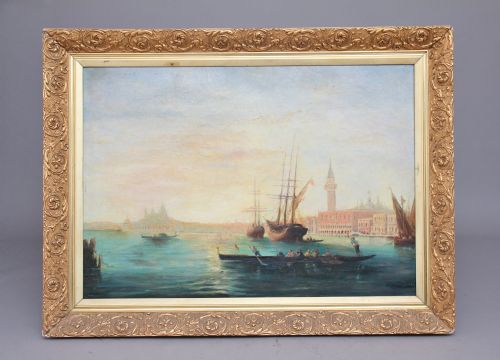


Antique Venice Cityscape
An antique venice cityscape captures the enduring romance of the lagoon through the hands of painters drawn to its palazzos and waterways.
Antique Venice Cityscape
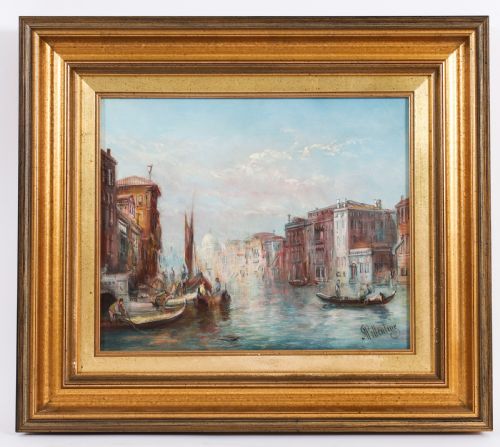
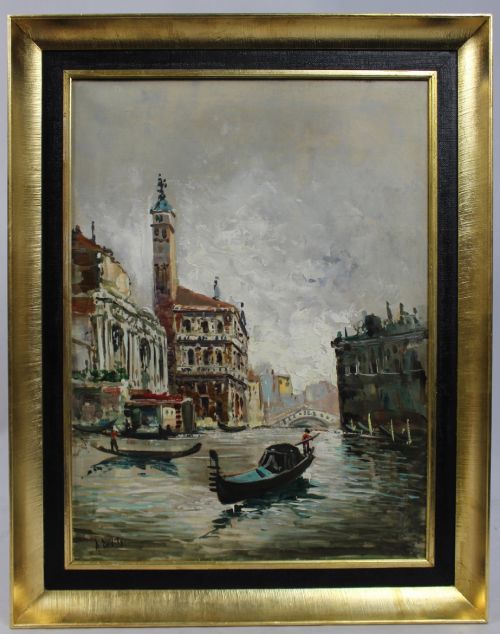
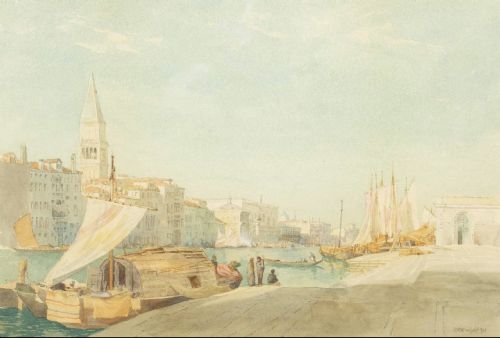
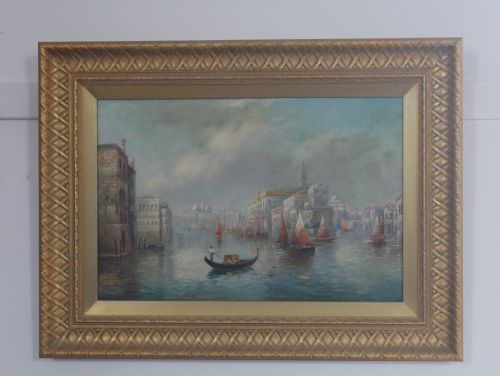
An antique venice cityscape brings the light and architecture of the lagoon into an interior through oil paintings and watercolours. These works record famous landmarks such as the Grand Canal, the Doge's Palace, and the Bridge of Sighs.
Most examples date from the nineteenth and early twentieth centuries, spanning periods from Victorian fine art to impressionist interpretations. Buyers encounter oil on canvas, oil on board, and watercolour works framed in wood or giltwood.
The compositions range from bustling scenes of gondoliers beneath bridges to atmospheric depictions of old mansions and quiet canals. Each piece reflects the enduring British and European fascination with Italian travel and topography.
Materials and Technique
Painters applied oil paint or watercolour to canvas, board, or paper to capture the changing light on the Venetian lagoon. Pigments were worked with brush and sometimes supplemented with pastel, gouache, or ink pen to build texture and detail.
Finished works were housed in frames constructed from wood, often finished with gesso and gilded details to complement the art. These frames range from simple wooden surrounds to ornate moulded profiles consistent with their period.
Venetian subject matter centres heavily on the Grand Canal, the Doge's Palace, the Dogana, and Santa Maria della Salute.
Assessing Quality
The strength of an antique venice cityscape depends upon the artist's ability to render light, water reflection, and architectural perspective convincingly. Works by recorded painters who specialised in Italian topography display a tighter command of proportion and atmosphere.
Medium and preservation also shape the standing of a piece. Well-preserved surfaces retain their original pigment depth and show minimal intervention, while the quality of the surrounding wooden or gilt frame adds to the presentation.
Alfred Pollentine·Richard Henry Wright·Claude Jousset·Antonietta Brandeis·Antoine Bouvard Senior·Jane Vivian·William Raymond Dommersen·Vittore Zanetti Zilla·David Law·Henry Wimbush·John D Walker·Helen Donald Smith
The Antique Venice Cityscape Glossary
- Grand Canal
- The main waterway threading through Venice, lined with historic palazzos and crossed by major bridges. It serves as the primary subject for nineteenth-century topographical painters.
- Giltwood
- Wood carved and coated with a thin layer of gold leaf or gold paint. This material is common for the frames housing traditional oil paintings.
- Gesso
- A plaster-like mixture applied to wooden frames as a base for gilding or moulding. It provides a smooth surface for decorative details.
- Gondolier
- A traditional oarsman guiding a flat-bottomed Venetian boat through the canals. Figures of gondoliers frequently populate these townscapes.
- Lagoon
- The shallow body of water surrounding Venice that protects the city from the open sea. Its distinct light heavily influences impressionist renderings of the cityscape.
Antique Venice Cityscape: Frequently Asked Questions
How do I date an oil painting of Venice?
Dating relies on the stylistic markers of the period, the construction of the canvas support, and the framing materials. Victorian works often carry specific academic or romantic traits, while later pieces adopt impressionist brushwork.
Signatures, exhibition labels, and historical records of the painter provide further confirmation of the decade in which the work was produced.
Where should I hang a Venetian townscape?
These works suit traditional drawing rooms, studies, or hallways where their architectural detail and warm palettes can be appreciated at close range. They pair well with period interiors and classic wooden furnishings.
Avoid placing them in direct sunlight or damp spaces to protect the canvas, paper, and giltwood frames from environmental damage.
What is the difference between oil and watercolour views?
Oil paintings on canvas or board offer deeper pigment saturation, visible brush texture, and greater durability over time. They are typically heavier and housed in more substantial wooden or gilt frames.
Watercolours on paper provide a lighter, more translucent quality, capturing the atmospheric light of the lagoon with delicate washes and fine ink or pencil lines.
Who were the main artists painting Venice?
A mix of British, French, and Italian painters travelled to Venice during the nineteenth and early twentieth centuries to record its unique architecture. Artists such as Alfred Pollentine and Jane Vivian produced numerous topographical views for the British market.
Continental painters like Antonietta Brandeis and Antoine Bouvard Senior brought local perspectives and impressionist techniques to the Venetian scene.