




Victorian Topographical Landscape
These Victorian topographical landscape works capture recognisable British and overseas views through watercolour, oil, and print, offering a direct window into nineteenth-century geography and travel.
Victorian Topographical Landscape
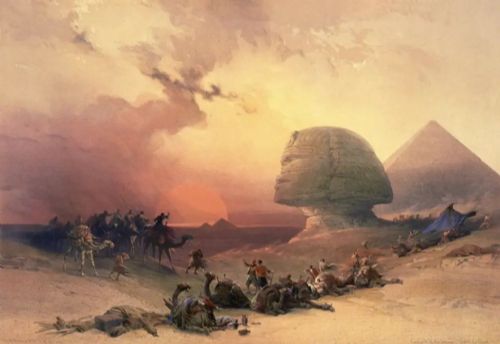
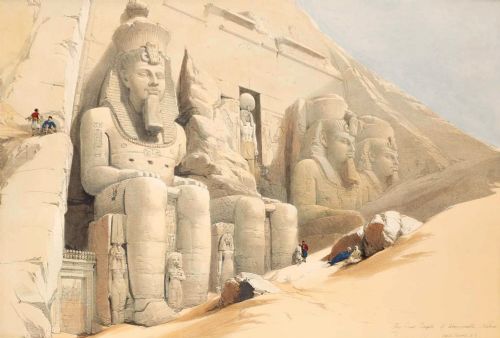
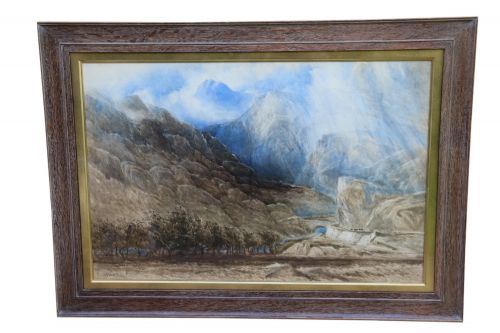
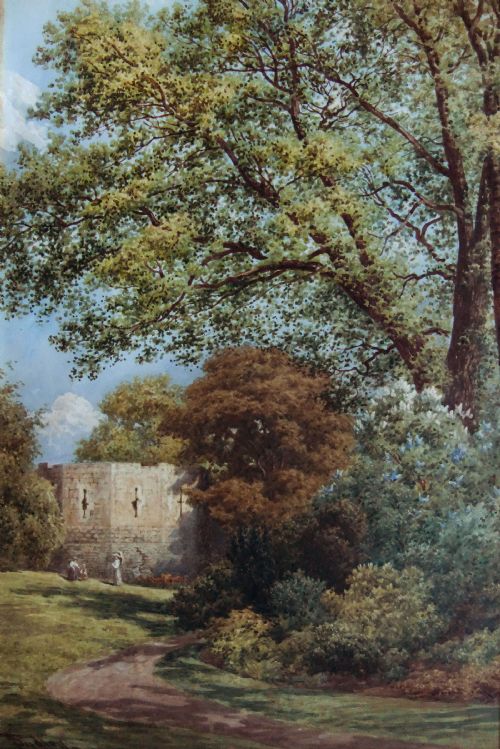
A Victorian topographical landscape records specific named locations, ranging from British architectural views like Nottingham Castle and Norwich Cathedral to scenes along the River Thames and Welsh mountain passes. These works take the form of original watercolour paintings, oils on board, and hand-coloured engravings or etchings.
Many examples branch into Victorian Orientalism, depicting Middle Eastern scenes such as the desert of Geezah and Aboo-Simbel alongside European townscapes like Venice. The most frequent formats on this page are framed waterpaintings and prints created across the nineteenth and early twentieth centuries.
Materials and Technique
Artists executed these topographical works primarily using watercolour pigment and ink on paper or board, occasionally working in oil on board or producing hand-coloured etchings and engravings. Detail was applied with fine brushes to define architectural masonry, geological formations, and figures within the landscape.
Works on paper required protective framing behind glass, frequently complemented by gilt mounts and wooden frames that preserved the delicate pigments from light damage and atmospheric moisture.
Listings feature works spanning the Victorian period through to the mid-twentieth century, utilising watercolour, oil, ink, and glass.
Variations in Quality
Quality in these topographical works rests upon the precision of the draughtsmanship and the artist's command of perspective, particularly when rendering complex architectural structures such as cathedrals, castles, and bridges. Finer examples demonstrate confident brushwork and atmospheric depth rather than stiff, mechanical copying of the view.
The choice of medium and the preservation of the pigment also distinguish the range, with stronger works retaining their original colour saturation without excessive fading or damp staining across the paper and board supports.
David Roberts·Henry Martin Pope·Thomas Cooper Moore·T.A Prior·A. G. Hayward·Tom Dudley·Jane Vivian·William A. Macdonald·George De Paris·Herbert John Finn·JOSEPH WILLIAM CAREY
The Victorian Topographical Landscape Glossary
- Watercolour
- A paint consisting of pigment suspended in a water-based solution, applied to paper or board to create translucent washes of colour. It was the primary medium for field sketches and finished British landscapes.
- Etching
- A printmaking technique where lines are bitten into a metal plate with acid before being inked and pressed onto paper. Hand-coloured etchings received their pigment by hand after the printing process.
- Orientalism
- The artistic representation of Middle Eastern and North African subjects by Western artists. In this context, it covers topographical views of Egypt and the Levant.
- Board
- A stiff paper-based or wood-pulp substrate used as a rigid alternative to stretched canvas or loose paper. It provided a stable surface for watercolours and oil paintings.
Victorian Topographical Landscape: Frequently Asked Questions
How do I hang watercolour art safely?
Watercolour paintings on paper are sensitive to ultraviolet light and damp environments. They should be hung away from direct sunlight to prevent the pigments from fading.
Ensure the frame is properly sealed behind glass with acid-free backing to protect the paper from atmospheric moisture.
What is the difference between an etching and a painting?
An etching is a print created by biting lines into a metal plate with acid and transferring the ink to paper, which allows multiple impressions to be made. A painting is a unique, one-off creation applied directly to the surface by hand.
Many prints from this period were also hand-coloured after printing to add vibrancy.
Where were these landscape views typically made?
The views span domestic British locations such as York, Nottingham, Wales, and London, alongside international subjects including Venetian canals and Middle Eastern monuments. Artists often travelled extensively to record these scenes on location.
These field sketches were later worked up into finished paintings or translated into published prints.