




Antique Venice Landscape Artwork
These antique venice landscape artwork pieces capture the light, canals, and historic palazzos of the lagoon through 19th-century and early 20th-century eyes.
Antique Venice Landscape Artwork
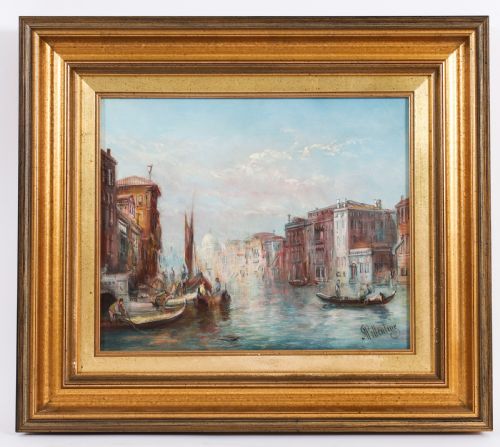
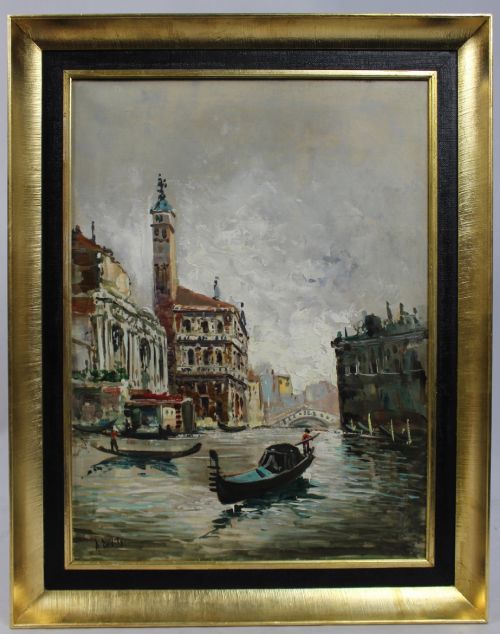
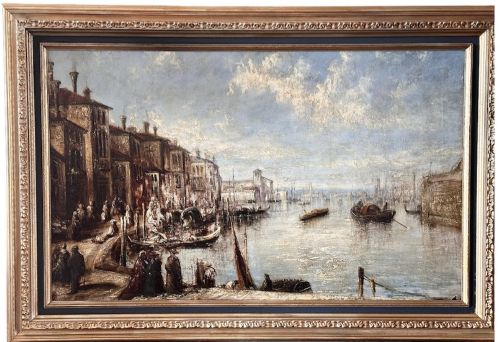
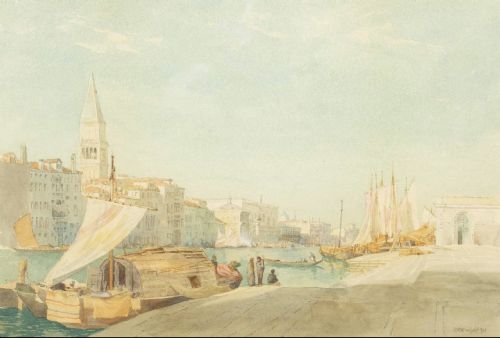
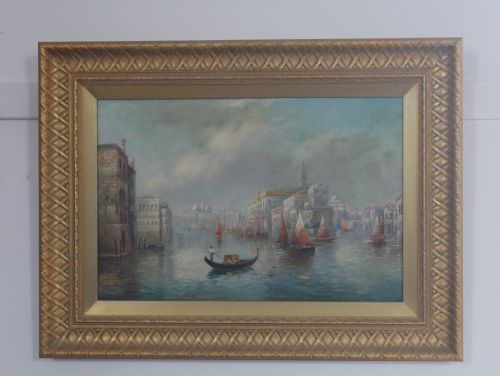
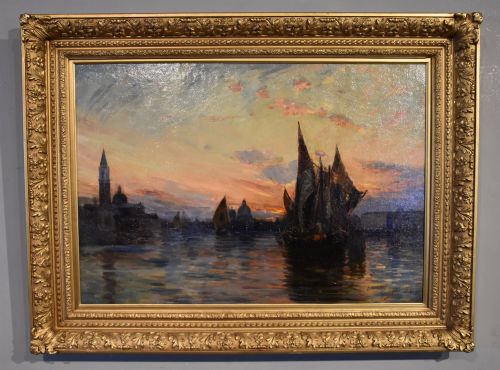
These works depict the famous sights of the lagoon, including the Grand Canal, the Doge's Palace, and Santa Maria della Salute. Collectors encounter these scenes rendered primarily as framed oil paintings and watercolours on paper or canvas.
The selection spans from the Victorian and Edwardian eras into the early decades of the twentieth century. Artists focused on townscapes, bustling waterways, and quieter canals with gondolas.
Most examples originate from British and European painters who travelled to Italy to record the unique atmosphere. They range from intimate watercolour studies to large oil canvases designed for prominent display.
Materials and techniques
Painters used oil paint on canvas or board to build rich textures and deep tones for grand architectural scenes. Watercolours on paper offered a lighter medium well-suited to capturing the bright, reflective light of the lagoon.
Materials recorded across the selection include oil paint, watercolour, gouache, pastel, and gilded wood frames.
What determines quality
Quality rests on the artist's ability to handle the characteristic light and atmosphere of the lagoon rather than merely recording architectural details. Stronger works demonstrate confident brushwork and a balanced composition that brings depth to the water and buildings.
The harmony between the painting and its period frame influences the overall integrity of the piece. Well-preserved surfaces retain their original colour intensity without heavy restoration or craquelure that obscures the artist's hand.
Thomas Ellison·Alfred Pollentine·Francis Moltino·Richard Henry Wright·Thomas Hodgson Liddell·F J Aldridge·Claude Jousset·F.D. Campo·Antonietta Brandeis·Marc Aldine·Antoine Bouvard Senior·E. Perez Senet·Clara Montalba·Jane Vivian·William Raymond Dommersen·Hercules Brabazon Brabazon·Frank Wasley·David Law·William Knox·George Stanfield Walters·Wilfred Knox·Henry Wimbush·John D. Walker
The Antique Venice Landscape Artwork Glossary
- Oil on Canvas
- A painting technique where oil paint is applied to a stretched canvas support. This combination allows for rich blending of colours and durable longevity.
- Watercolour
- A painting method where water-soluble pigments are suspended in a water-based solution on paper. It creates transparent washes of light and colour.
- Giltwood
- Wood that has been coated with a thin layer of gold leaf or gilt powder. It is commonly found on traditional frames surrounding Victorian and Edwardian art.
- Gouache
- An opaque water-based paint that includes a binding agent and white pigment to create solid blocks of colour. Artists often combined it with watercolour or pastel.
- Townscape
- A visual depiction of urban scenery, streets, and canals. These works focus on architectural elements alongside human activity.
Antique Venice Landscape Artwork: Frequently Asked Questions
How do I date a Venice painting?
Dating relies on stylistic clues, artist signatures, and framing materials typical of the Victorian and Edwardian periods. Examining the canvas preparation and stretcher construction also helps establish the age.
Many works include inscribed dates or artist biographical records that place them securely within the nineteenth or early twentieth century.
Were these painted in Venice?
Many British and European artists travelled to Italy during the nineteenth century to paint the lagoon firsthand. They produced on-site watercolours and oil sketches that often served as the basis for larger studio works.
Local views captured changing light conditions directly from the canals, bridges, and the Molo.
How should I frame and hang these?
Historic oil paintings and watercolours require stable indoor environments away from direct sunlight and excessive humidity. Preserving original giltwood frames maintains the historical context of the artwork.
Ensure proper wall fixings support the weight of heavy wooden frames, particularly for large canvas pieces.
What subjects are most common?
Views of the Grand Canal, the Doge's Palace, and Santa Maria della Salute appear frequently across these nineteenth-century works. Artists also favoured quieter waterways featuring gondolas and bridge crossings.
Townscapes often highlight the interplay between historic palazzos and the reflective waters of the lagoon.