


Venetian Gilt Table
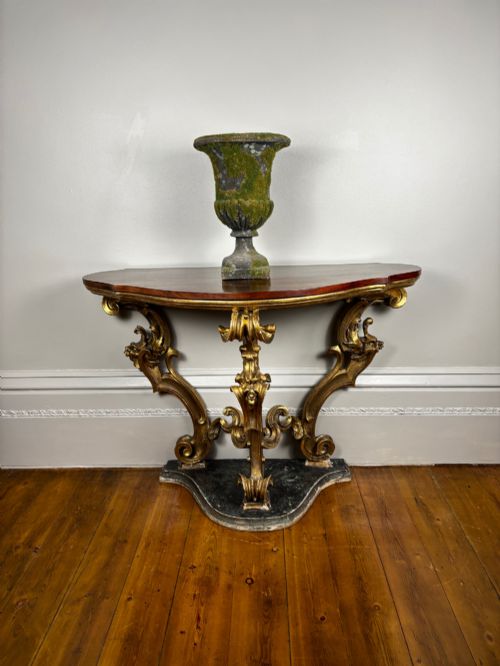
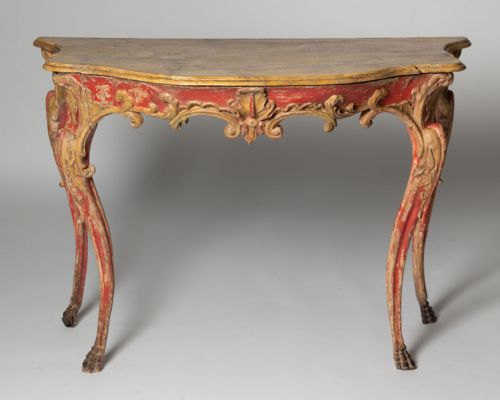
These venetian gilt table selections bring carved Rococo flourish and gilded warmth into a room, offering functional surfaces layered with historic Italian character.
Venetian Gilt Table
A venetian gilt table brings distinct Italian flair to a room, drawing on centuries of craftsmanship from the lagoon city and surrounding mainland workshops. When you search for a venetian gilt table, you encounter a variety of forms ranging from grand 18th Century console tables to later 20th Century occasional and coffee tables.
The selection on this page relies heavily on 18th Century originals alongside 19th Century interpretations, Venetian Revival pieces, and later vintage examples from the 1920s and 1930s. Alongside traditional console and side tables, the evidence includes related forms such as tray top tables, travel bureaux on stands, and side cupboards.
Most pieces lean into the theatrical aesthetic of Italian Rococo and Neoclassical Venetian styles, often combining carved timber with painted elements or parcel-gilt finishes. Whether you seek an ornate console for a hallway or a smaller painted side table, these items reflect a enduring taste for gilded domestic furniture.
How they were made
Makers constructed these tables using timber carcasses, applying layers of gesso to create a smooth, responsive ground for subsequent decoration. Artisans then applied gold leaf, silver gilt, or liquid gilt to achieve the signature reflective surfaces associated with Venetian interiors.
Carving formed an integral part of the process, particularly in Rococo and Revival pieces where organic scrolls, floral motifs, and structural flourishes required skilled handwork. Paint and polychrome finishes frequently accompanied the gilding, sometimes imitating faux marble or adding soft pastel tones to the wooden structure.
The listings span the 18th Century, 1900s, 1920s, and 1930s, uniting original Rococo pieces with later Venetian Revival and vintage interpretations.
What varies in quality
The standard of carving sets the baseline for a piece, distinguishing fluid, deeply undercut manual work from softer, flatter execution found in later revival items. Crisp details in the gesso and wood denote a more accomplished hand during the initial shaping phase.
The application and preservation of the gold leaf or paint layer dictate visual depth, as finer gilding ages gracefully with a warm, subtle patina rather than flat uniformity. Original surfaces and period structural integrity hold greater weight among collectors than heavily reworked or later repainted examples.
The Venetian Gilt Table Glossary
- Giltwood
- Timber carved and subsequently covered with thin sheets of gold leaf over a prepared gesso ground. This technique creates a rich, metallic exterior characteristic of formal European furniture.
- Gesso
- A plaster mixture applied to wood surfaces to prepare them for gilding or painting. It provides a smooth base that artisans could carve and polish before applying gold leaf.
- Console Table
- A wall-mounted or freestanding table designed to stand against a vertical surface, frequently featuring an ornate front supported by legs. These pieces often served decorative functions in grand reception rooms.
- Parcel-Gilt
- A finishing method where only specific carved details, edges, or motifs receive gilding while the remaining surface displays paint or bare wood. This creates a contrasting two-tone effect.
- Venetian Rococo
- An Italian stylistic iteration of the mid-18th century defined by asymmetrical scrolls, shell motifs, and dynamic, curving lines. It often appeared in brighter, more theatrical palettes than its French counterpart.
Venetian Gilt Table: Frequently Asked Questions
Where should I place a console table?
Console tables sit naturally against flat walls in entrance halls, living rooms, or dining spaces where floor space is limited. Their shallow depth allows them to function as decorative display surfaces beneath mirrors or artwork without obstructing walkways.
Pairing a gilded console with complementary lighting or objects enhances its architectural presence within a room scheme.
How do I clean gilded wood surfaces?
Giltwood requires delicate handling because moisture and abrasive materials can easily lift the gold leaf from its gesso base. Dust the surface gently using a soft, dry brush or a clean microfibre cloth.
Avoid chemical polishes, oils, and damp cloths entirely, as these substances degrade historical finishes over time.
What is the difference between original and revival pieces?
Original pieces date from periods like the 18th century, reflecting the prevailing design standards and construction methods of their contemporary makers. Revival pieces, such as those from the 1920s or 1930s, reinterpret those earlier historical styles using the tools and materials of their own era.
Both categories offer distinct aesthetic qualities, though originals carry direct historical provenance.
How do I identify Italian Rococo style?
Italian Rococo design relies on exaggerated curves, asymmetrical cartouches, and spirited floral carving that breaks away from strict architectural symmetry. The Venetian interpretation frequently incorporates bright paintwork or intricate gilding to maximise light reflection in dim interiors.
Look for dynamic silhouettes and organic motifs rather than straight lines or rigid geometric layouts.
Can I use a tray top table for daily use?
Vintage tray top tables provide practical, portable surfaces that work well for serving drinks or holding small decorative objects in a sitting room. Their raised edges help contain items safely while moving about.
Consider the sturdiness of the folding or fixed base alongside the condition of the painted or gilded tray surface before subjecting it to heavy daily wear.