


Eighteenth Century Console
An eighteenth century console brings architectural form and refined proportion to a hallway, drawing room or salon.
Eighteenth Century Console
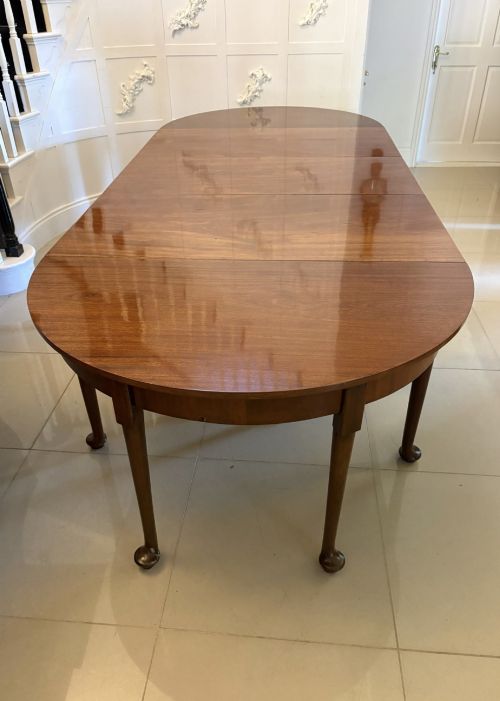
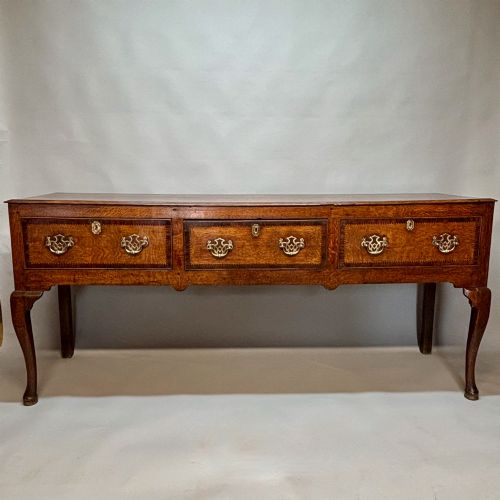
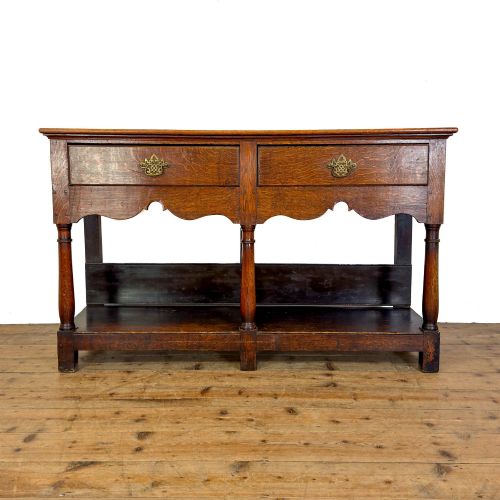
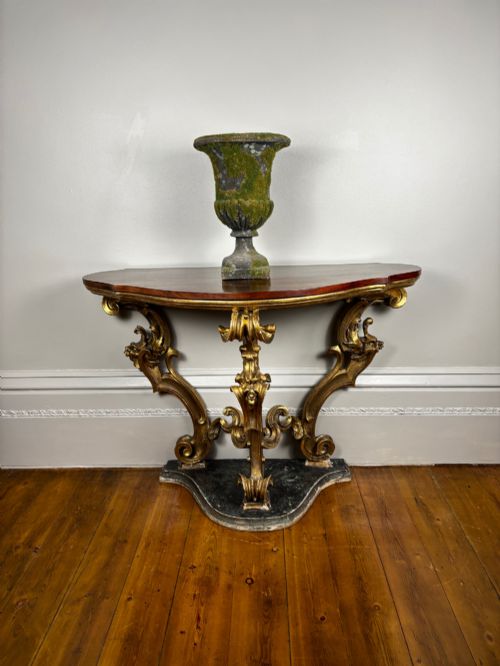
An eighteenth century console takes various architectural forms, including side tables, low dressers, and games tables, often designed to stand flat against a wall. The selection ranges from English and Welsh country oak to sophisticated continental examples from Italy and France.
Georgian and George III mahogany pieces appear frequently alongside Italian giltwood and painted wood designs. These tables span the eighteenth century and into the nineteenth century, reflecting both country vernacular traditions and grand urban interiors.
Materials and construction
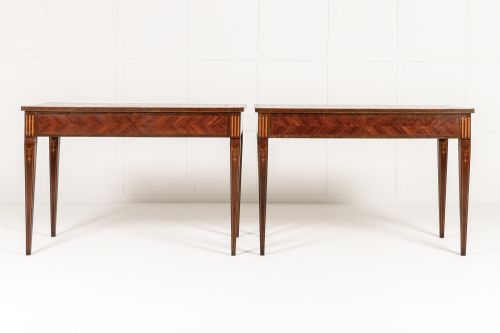
Cabinet makers utilised dense hardwoods such as mahogany, walnut, and oak, often pairing them with secondary woods like pine. Surface decoration relies on boxwood inlay, marquetry, and carved gesso upon giltwood.
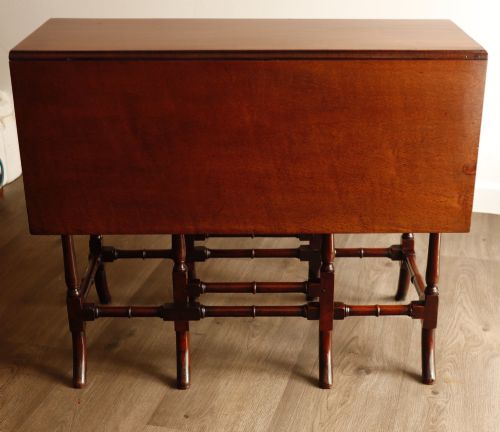
Tables feature folding tops, single drawers, and distinct leg forms including spider legs and column supports. Italian and Venetian pieces showcase painted finishes and carved details that distinguish them from simpler English country pieces.
Card tables often retain hidden counter wells for wooden markers, built for quiet evenings of eighteenth century wagers.
Judging execution and finish
Quality rests in the crispness of carved details, the choice of timber figure, and the precision of boxwood inlay. Superior examples display careful timber selection for prominent surfaces, particularly on demi-lune and card table tops.
The integrity of original painted or gilded surfaces distinguishes finer decorative consoles from later re-finishes. Structural harmony between the top and the supporting frame marks the work of skilled period workshops.
The Eighteenth Century Console Glossary
- Demi-lune
- A half-moon shape used for the tops of card and tea tables designed to sit flush against a wall. This format became popular during the Georgian period for smaller spaces.
- Giltwood
- Timber that has been coated with fine gold leaf over a prepared gesso ground. This finish appears frequently on Venetian and continental console tables.
- Marquetry
- The art of applying pieces of veneer to a structure to form decorative patterns. Craftsmen utilised contrasting woods like boxwood and mahogany to create geometric or floral motifs.
- Lowboy
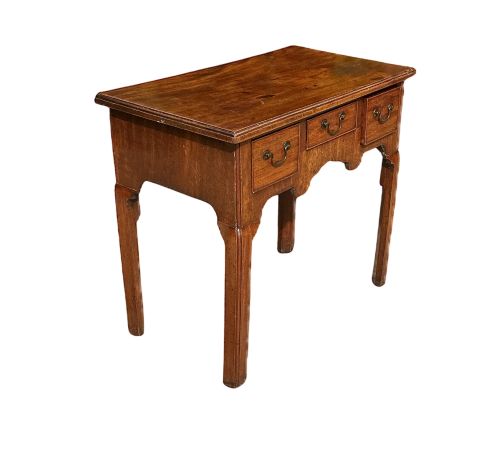
- A small table with one or more drawers, standing on relatively tall legs. These pieces served various domestic functions in eighteenth century interiors.
Eighteenth Century Console: Frequently Asked Questions
Where do you put an eighteenth century console?
These tables find a natural home in hallways, entrance passages, or against a blank wall in a drawing room. Their shallow depth allows them to sit comfortably without obstructing floor space.
Pairs of consoles often flank a fireplace or a large mirror in formal reception rooms. Smaller variants work effectively as lamp tables or occasional surfaces.
How do you use a demi-lune table?
A demi-lune table functions primarily as a side table or console against a wall when closed. The hinged top unfolds to create a full surface for card games or tea.
Many examples feature counter wells or baize-lined interiors intended for card play. When not in use, folding the top reduces the footprint significantly.
What is the difference between an oak dresser base and a console?
An oak dresser base originates from country workshops, featuring robust construction with cupboards or drawers for practical household storage. These heavy pieces reflect vernacular English and Welsh traditions.
A console typically offers a lighter, more decorative architectural presence, often produced in mahogany, walnut, or giltwood for formal reception rooms.
How do you date a mahogany console table?
Dating relies on timber characteristics, construction methods, and stylistic cues such as the evolution from Queen Anne cabriole legs to straight George III supports. Cuban mahogany indicates an eighteenth century origin due to trade patterns of the period.
Inlay techniques, such as delicate boxwood stringing, help narrow down the period to the later decades of the eighteenth century. Secondary woods inside drawers also offer clues to regional origin and date.