

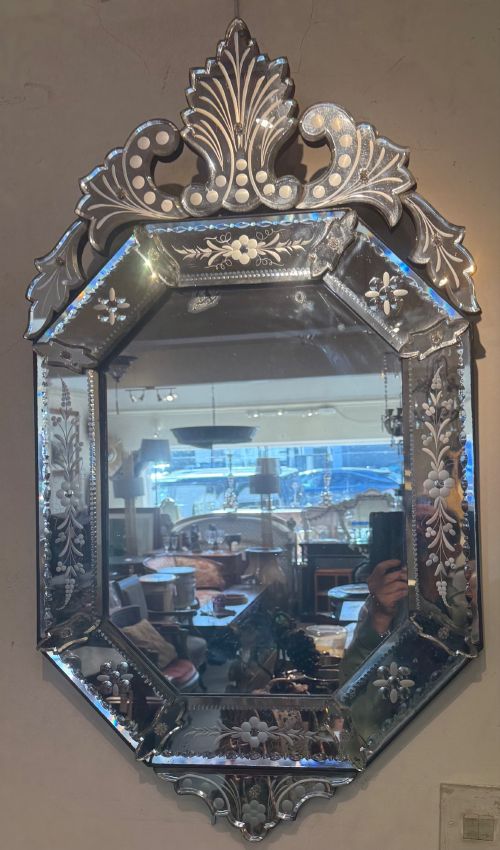
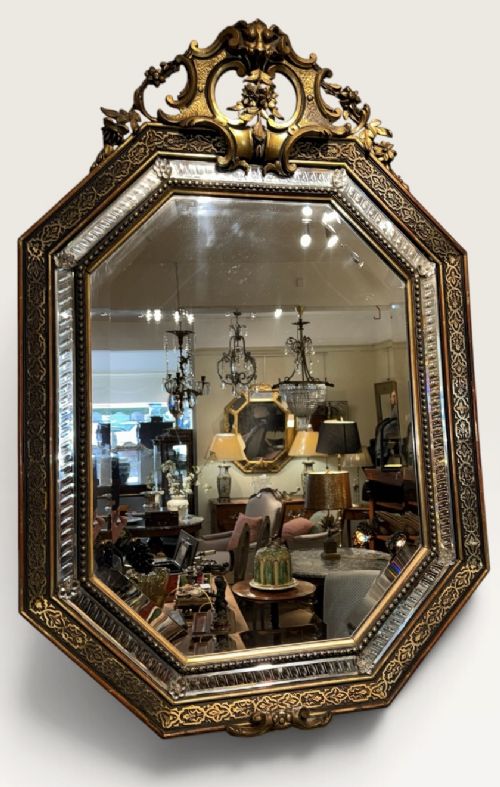
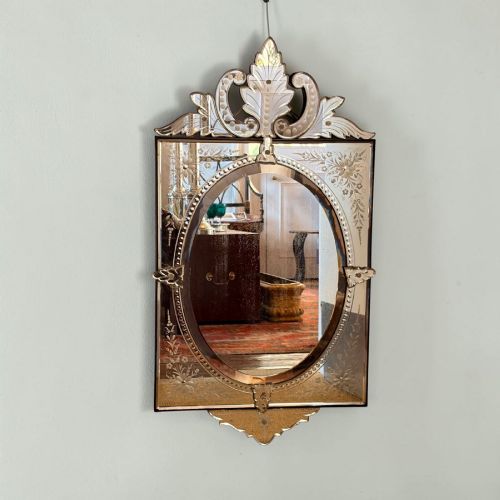
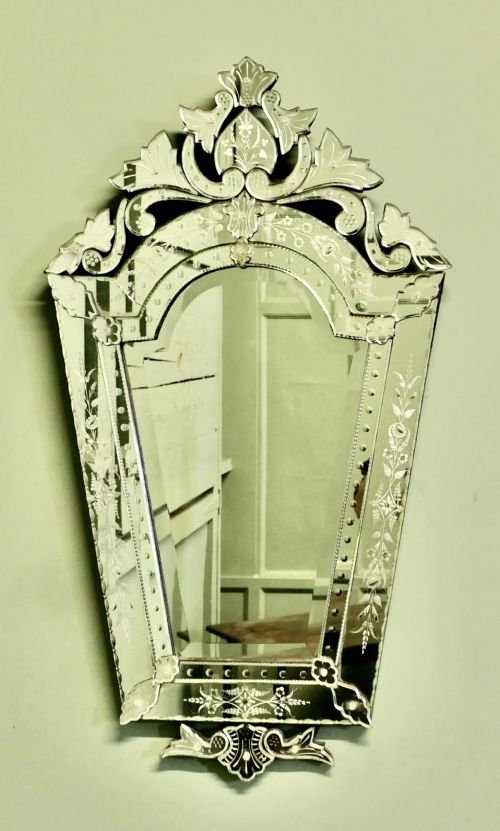
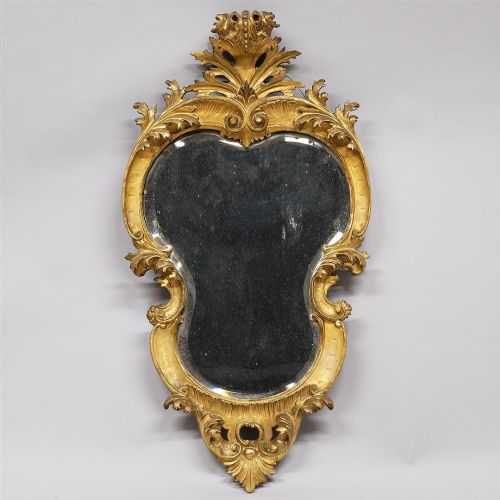

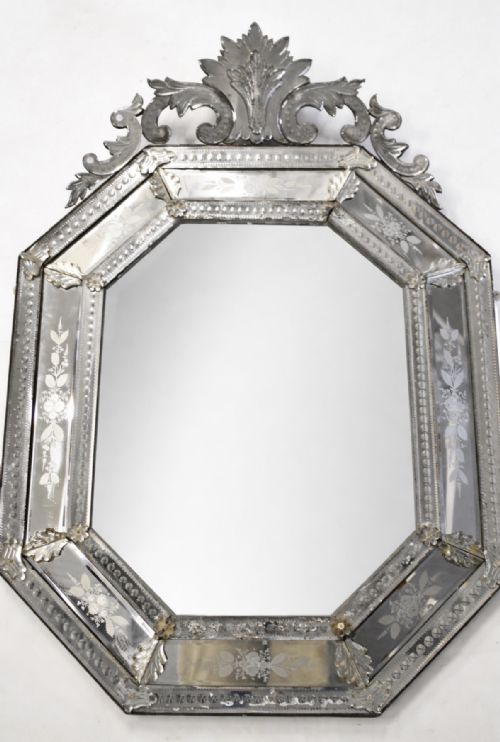
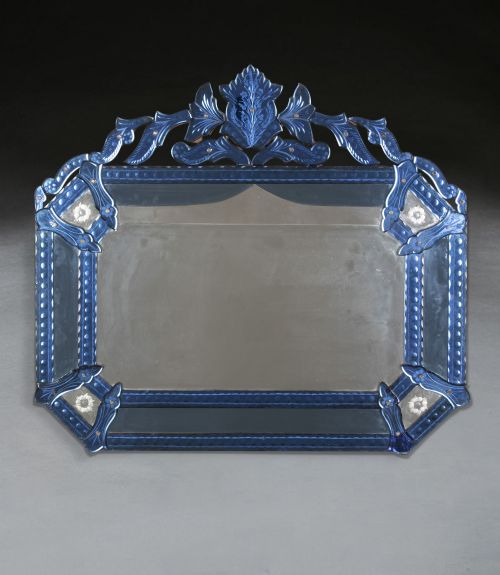


Venetian Crest Wall Mirror
A venetian crest wall mirror brings theatrical Italian glasswork and ornate frames into a room, offering both light and dramatic presence.
Venetian Crest Wall Mirror
When you search for a venetian crest wall mirror, you encounter decorative Italian looking-glasses dating from the eighteenth century through the mid twentieth century. These pieces combine elaborate crests with shaped glass plates to create striking wall ornaments.
The selections available here span numerous periods including the nineteenth century, Edwardian era, and Art Deco years. You will frequently find pieces framed entirely in cut and etched glass or mounted on wooden structures.
Forms range from simple rectangular wall mirrors to grand cushion mirrors and pieces with ruby red borders. Many examples showcase classic Rococo Revival flourishes or restrained Italian styling suited to period interiors.
Materials and construction
Glass and mirrored glass form the core of these objects, often enhanced by silvered glass plates and elaborate cut or etched ornamentation. Craftsmen mounted these fragile elements onto wooden or metal backings.
Gilt and paint frequently enrich the surfaces, with giltwood and polychrome painted finishes appearing across nineteenth-century examples. Artisans also utilised ebonised wood alongside blue glass and ruby red glass borders.
Venetian Crest Wall Mirror Retail Price Guide 2026
Typical asking prices for venetian crest wall mirror among the pieces listed under this phrase on Sellingantiques today, from the lower quarter to the upper quarter. They describe what is for sale here now, not the wider market.
Some mirrors sport ruby red glass borders that make reflections look delightfully theatrical.
Markers of distinction
Quality in these looking-glasses rests upon the crispness of the glass cutting and the complexity of the etched motifs adorning the frame. Superior examples display intricate hand-etching and well-preserved silvering on the primary plate.
The construction of the crest and the depth of the wooden or glass framework dictate the overall refinement of the piece. Substantial proportions combined with undamaged coloured glass borders elevate the character of the mirror.
The Venetian Crest Wall Mirror Glossary
- Cushion mirror
- A looking-glass featuring a curved or bowed frame profile that projects outward from the wall. This convex arrangement helps catch and reflect light from multiple angles.
- Giltwood
- Timber treated with a thin layer of gold leaf or gold paint. It provides a luminous finish common on nineteenth-century frames.
- Polychrome
- Decoration employing several colours painted onto the surface. This technique brings vibrant hues to Italian frames.
- Foxed
- Aged glass exhibiting dark spots or a mottled appearance caused by degradation of the backing. Collectors often appreciate this natural sign of age.
- Pediment
- The decorative structure crowning the top of a mirror frame. It often takes an architectural or scrollwork shape.
Venetian Crest Wall Mirror: Frequently Asked Questions
Where should I hang a venetian crest wall mirror?
These decorative glasses suit prominent locations where their reflective qualities and ornate crests can catch natural light.
Position them above a fireplace mantel or in a hallway to create an immediate focal point in the room.
How do I date a venetian mirror?
Dating relies upon examining the construction methods, the condition of the glass plate, and the framing materials.
Nineteenth-century examples often display heavy wooden backings and hand-cut glass, while later pieces incorporate distinct period styling like Art Deco geometry.
Are these mirrors fragile?
The combination of thin glass frames and wooden structures requires careful handling during placement and maintenance.
Secure wall fixings suited to the weight of the piece are essential for safe hanging.