

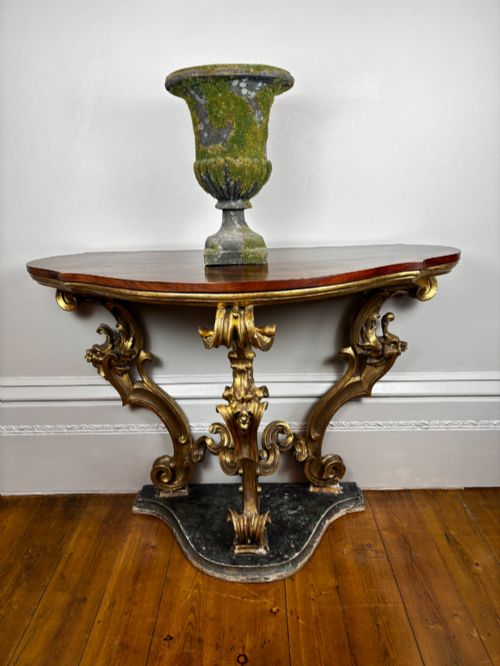
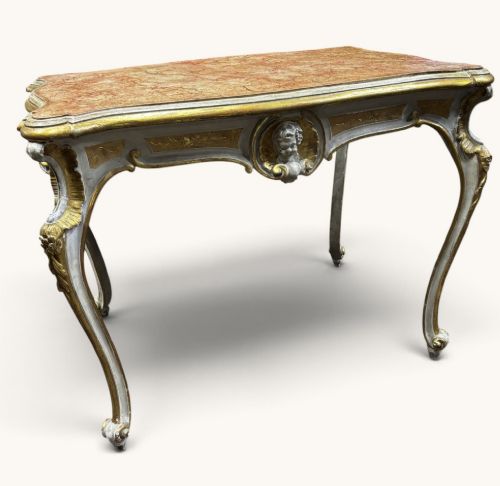

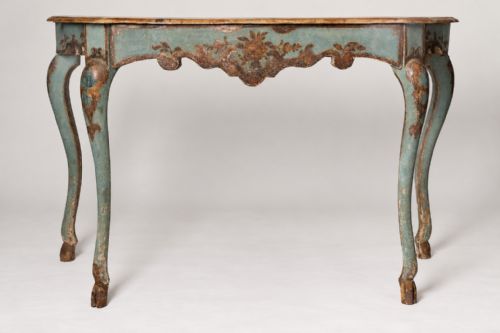
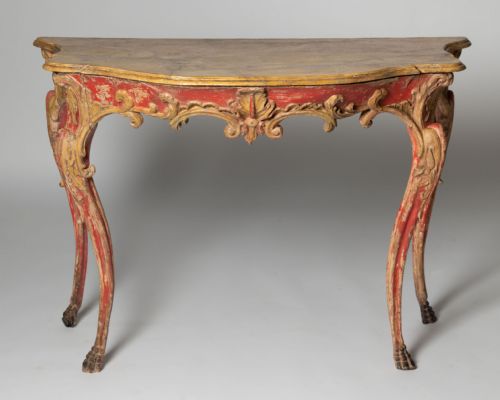


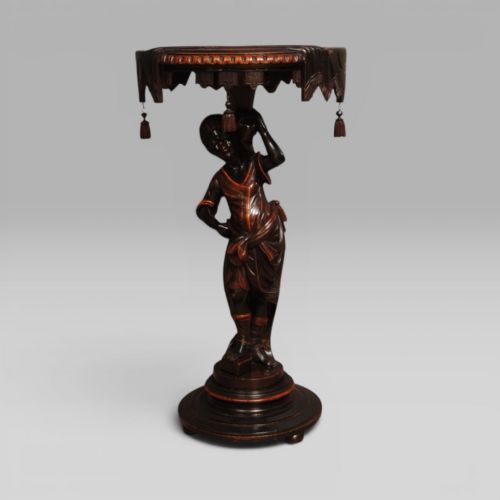


Venetian Carved Side Table
A venetian carved side table brings theatrical Italian Baroque flair to a hallway or drawing room.
Venetian Carved Side Table
A venetian carved side table encompasses grand console tables, painted centre pieces, and figurative stands originating from Italy over several centuries. Buyers searching this phrase encounter elaborate furnishings designed to make an immediate visual statement in interior spaces.
The inventory on this page ranges from substantial eighteenth century gilt wood console tables to nineteenth century polychrome painted figures and twentieth century tray top tables. These pieces combine sculptural carving with traditional paint, gesso, and leaf finishes.
Forms vary from serpentine console tables placed against walls to freestanding centre tables and pedestal stands. Many items reflect Venetian Rococo, Baroque, and Revival styles with deep carving and decorative surface detail.
How they were made
Makers shaped these tables from solid wood, applying thick layers of gesso to create smooth surfaces for intricate relief carving. Artisans then finished the timber using gold leaf, parcel-gilt highlights, or polychrome paint.
Surfaces frequently feature hand-painted decoration alongside applied giltwood details. Figure stands and Blackamoor supports demonstrate complex figurative carving executed by skilled hands.
Venetian Carved Side Table Retail Price Guide 2026
Typical asking prices for venetian carved side table among the pieces listed under this phrase on Sellingantiques today, from the lower quarter to the upper quarter. They describe what is for sale here now, not the wider market.
The listings span from the eighteenth century through to the 1930s, featuring materials such as marble, giltwood, and polychrome paint.
What varies in quality
The distinction between ordinary and exceptional pieces lies in the crispness of the wood carving and the depth of the gesso application. Master carvers achieved fluid, dynamic movement in scrolls and figures that lesser workshops rendered stiffly.
Surface preservation significantly influences the character of each piece. Original layered paint and untouched gold leaf carry an authenticity that heavy restoration or later repainting alters.
The Venetian Carved Side Table Glossary
- Console table
- A table designed to stand against a wall, frequently supported by ornate legs or brackets rather than four freestanding posts. These pieces often feature serpentine or shaped marble tops.
- Giltwood
- Timber coated with a thin layer of gold leaf over a prepared gesso ground. This technique creates a luminous metallic finish characteristic of high-status Venetian furniture.
- Serpentine
- A curved line that bends alternately concave and convex, frequently defining the front edge of eighteenth century console tables. This silhouette creates a sense of movement in heavy timber.
- Parcel-gilt
- A finish where portions of an object are gilded while other areas show painted or natural wood surfaces. This contrast highlights specific carved details.
Venetian Carved Side Table: Frequently Asked Questions
Where should I place a console table?
These tables traditionally anchor entrance halls or sit beneath large mirrors in formal reception rooms. Their shallow depth allows them to occupy narrow circulation spaces without blocking pathways.
Because many feature finished backs or serve as architectural focal points, they also function effectively in open living areas or dining rooms.
How do I care for painted wood?
Keep painted and gilded surfaces away from direct sunlight and steady heat sources to prevent the gesso from cracking. Dust gently with a dry, soft cloth without applying liquid polishes.
Moisture and modern chemical cleaners can damage aged polychrome paint and delicate gold leaf. Maintain stable indoor humidity to preserve the underlying timber.
What defines Venetian Baroque style?
Venetian Baroque design emphasises dramatic movement, theatrical forms, and rich surface ornamentation. Carvings often feature deep scrolls, expressive figures, and complex asymmetrical curves.
This aesthetic prioritized visual impact and luxury, utilising reflective gold leaf and bold paint to catch candlelight in grand interiors.
How can I tell older tables apart?
Eighteenth century examples rely on substantial carved timber, traditional gesso layers, and hand-applied gold leaf. Later nineteenth and twentieth century pieces often incorporate revival styles or lighter tray top constructions.
Examine the construction methods and the wear patterns on the finish to understand the age and origin of each piece.