



Veneered Art Deco Cabinet
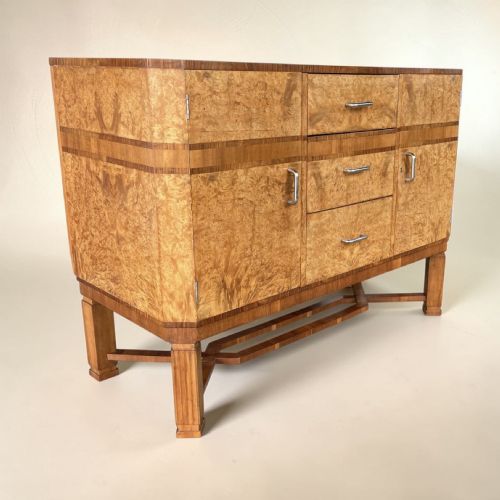
A veneered art deco cabinet brings striking twentieth-century grain patterns and geometric forms into a room.
Veneered Art Deco Cabinet
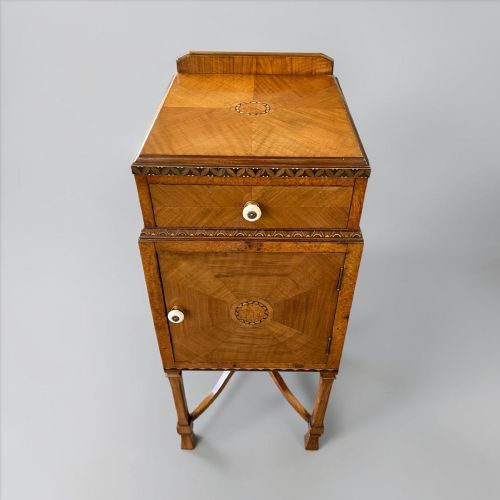
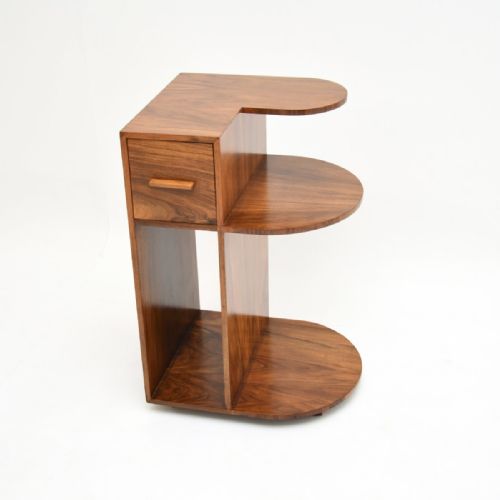
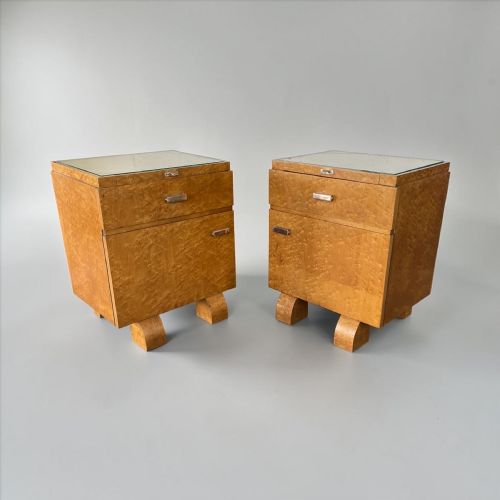
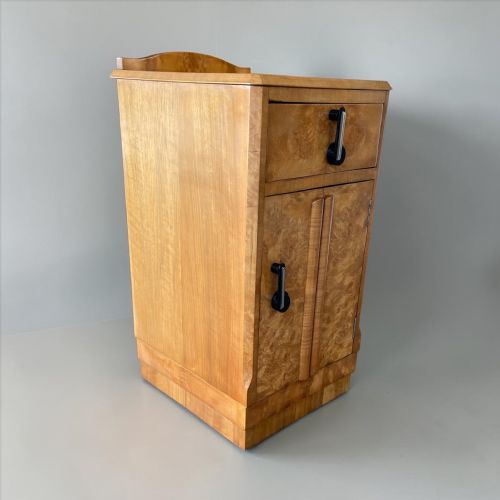
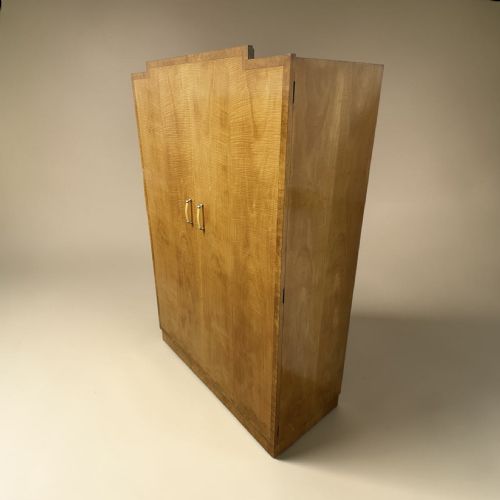
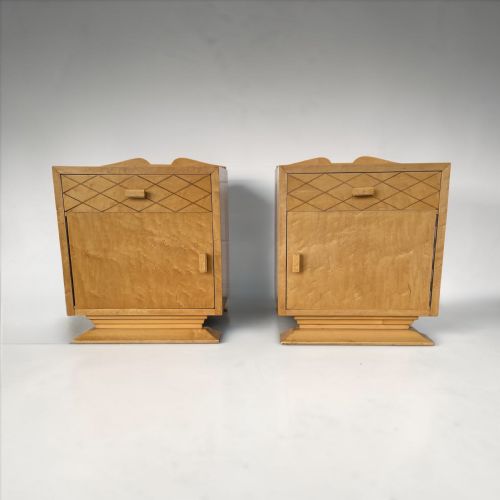
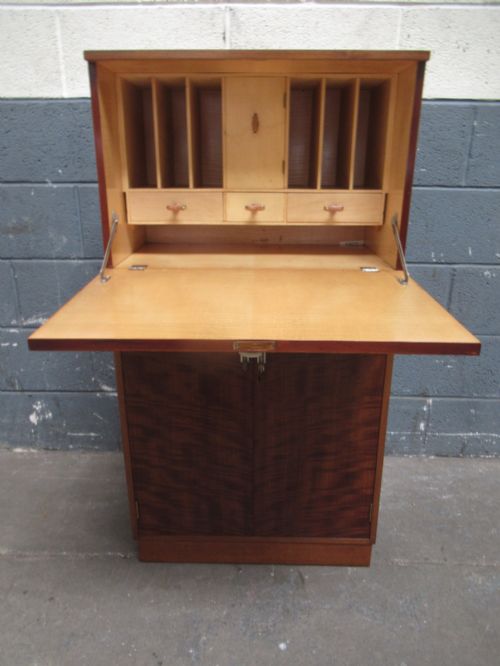
A veneered art deco cabinet represents the practical side of twentieth-century design, serving as bedside tables, sideboards, wardrobes, and tallboys. Buyers seeking a veneered art deco cabinet find items primarily originating from nineteen thirty, alongside earlier examples.
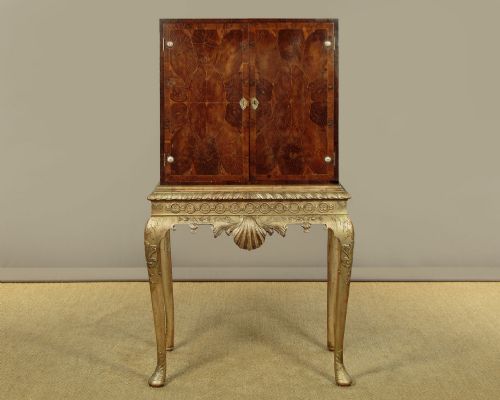
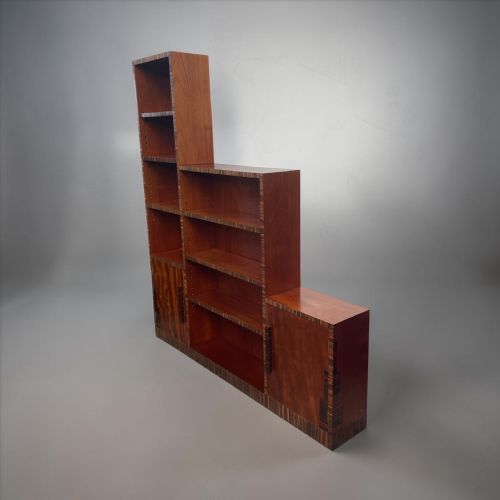
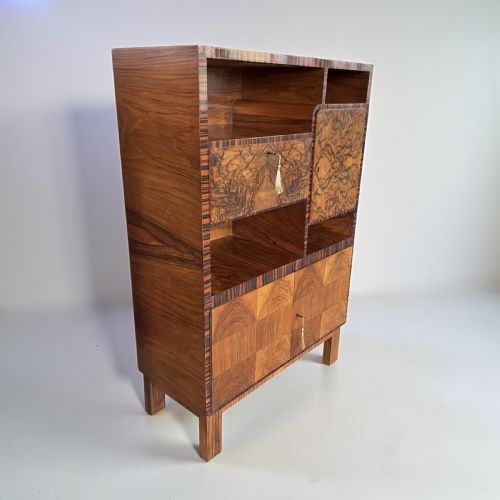
The selection ranges from small bedside cabinets to large sideboards, credenzas, and bookcases. These forms utilise figured timbers to create strong visual impact in modern interiors.
How they were made
Construction relies heavily on walnut veneer, burr walnut, and cloud walnut applied over solid timber cores to display dramatic grain figures. Materials such as glass, brass, chrome, and bakelite provide structural contrast and functional hardware.
Joinery techniques focus on smooth, geometric surfaces that highlight natural wood patterns without excessive carving. Surfaces are finished to emphasise the depth of the veneer.
One exceptional bookcase carries hand sign-written details specifically for the British Broadcasting Company.
What varies in quality
Quality depends on the selection and matching of the wood veneer across the doors and drawers. Superior pieces show symmetrical grain patterns that wrap cleanly around corners.
The choice of secondary materials, including chrome or brass handles and glass inserts, dictates the overall refinement of the piece. Craftsmanship in the underlying cabinetwork determines durability.
Bath Cabinet Makers·Maurice Adams·Bowman Brothers·Sandberg & Co
The Veneered Art Deco Cabinet Glossary
- Veneer
- A thin layer of figured wood applied to a base structure to create decorative surfaces. It allows makers to utilise striking grain patterns that would be unstable in solid timber.
- Burr walnut
- A prized timber harvested from tree growths, producing swirling, intricate grain patterns. It forms the primary visual draw on many twentieth-century storage pieces.
- Bakelite
- An early form of synthetic plastic used for handles, knobs, and decorative accents. It provides a tactile, durable contrast to polished wood surfaces.
- Sideboard
- A long storage unit traditionally used for dining rooms, featuring cupboards and drawers. These forms often display the most ambitious geometric veneer work.
Veneered Art Deco Cabinet: Frequently Asked Questions
How do I style a cabinet?
Place the piece against a neutral wall to let the geometric grain patterns stand out as the primary focal point of the room.
Keep surrounding furniture simple to maintain the clean lines characteristic of the period.
What rooms suit these cabinets?
Bedside cabinets and small chests fit well in bedrooms, while larger sideboards and bookcase cabinets suit living rooms or hallways.
Their substantial storage capacity makes them practical for everyday modern use.
How do I clean the surfaces?
Dust regularly with a soft, dry cloth to protect the polished wood veneer from micro-abrasions.
Avoid silicone-based polishes and keep the timber away from direct heat sources to prevent cracking.
How do I identify the period?
Look for characteristic geometric forms, stepped outlines, and the extensive use of walnut veneer combined with chrome or bakelite details.
Most items date from around nineteen thirty, reflecting the height of the style.