


Curved Walnut Bedside Tables
Curved walnut bedside tables bring striking geometric lines and rich figuring to the bedroom, offering compact bedside storage with undeniable presence.
Curved Walnut Bedside Tables
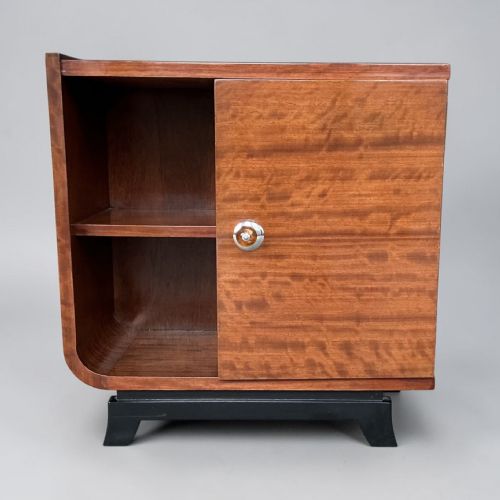
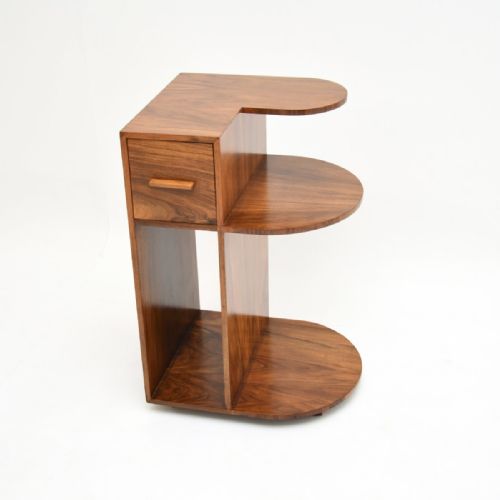
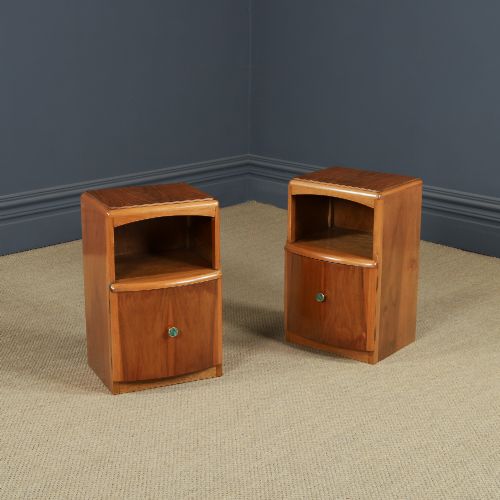
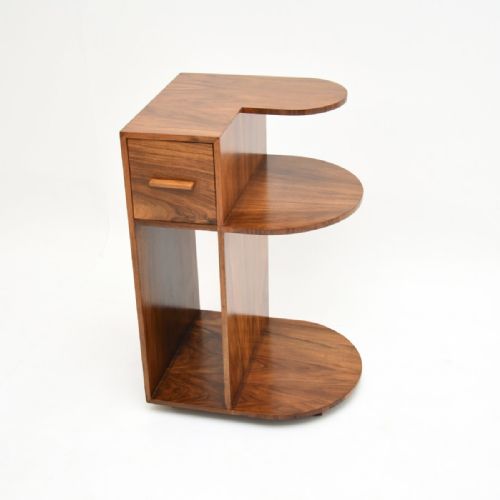
Curved walnut bedside tables most frequently appear as French, English, and Italian pieces from the nineteen thirties. These examples take the form of compact side cabinets, nightstands, and drum-shaped bedside tables designed with fluid, rounded contours.
The selection also includes pairs of bedside cabinets and integrated headboards with attached units, all adhering to the dominant Art Deco aesthetic. Occasionally, related forms such as sofa tables and lamp tables appear alongside these bedroom pieces.
Originating predominantly from the nineteen twenties and nineteen thirties, these items showcase the era's fascination with curved woodwork and practical bedside storage. They provide surfaces for lamps and nighttime essentials while doubling as decorative focal points.
How they were made
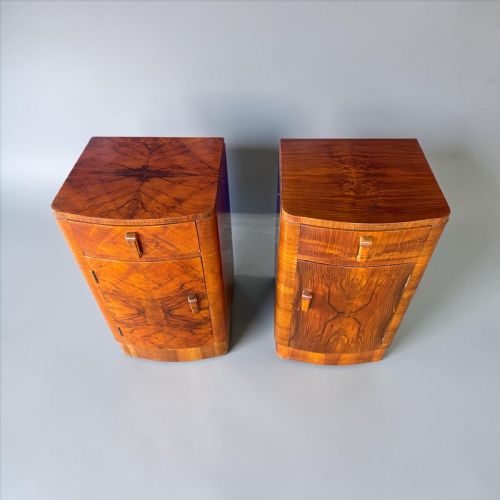
Cabinet makers utilised walnut, walnut veneer, burr walnut veneer, and figured walnut to achieve rich grain patterns across the curved surfaces of these tables. Ebonised wood often appears as a contrasting material, highlighting structural details and framing the primary timber.
Techniques relied on bending wood and applying carefully selected veneers to curved carcases, particularly on drum-shaped bodies and rounded cabinet doors. This veneer work required precision to ensure the grain patterns flowed seamlessly around tight radiuses.
Some tables double as illuminated top sofa tables, proving that nineteen twenties designers understood the absolute necessity of reading in the dark.
What varies in quality
Quality depends upon the selection and matching of the veneer, with highly figured burr walnut commanding greater visual impact than plain timber surfaces. The complexity of the construction, seen in drum shapes and integrated headboard combinations, also distinguishes finer examples.
The handling of the curves dictates the overall sophistication of the piece, where smooth, unbroken lines reflect superior cabinet making. Hardware integration and the condition of the veneered surfaces further separate standard production from more ambitious workshop output.
Maurice Adams
The Curved Walnut Bedside Tables Glossary
- Art Deco
- A design style spanning the nineteen twenties and nineteen thirties characterised by streamlined forms, geometric symmetry, and rich materials. It remains the defining aesthetic for these curved bedside pieces.
- Burr Walnut
- A specialised wood cut from tree growths that produces intricate, swirling grain patterns. This veneer is prized for its decorative depth on cabinet doors and tabletops.
- Veneer
- A thin slice of superior wood applied over a secondary timber carcase to provide a decorative exterior. It allows makers to utilise striking grain figures efficiently across curved structures.
- Ebonised Wood
- Timber treated to resemble ebony, providing a deep black finish. It is typically utilised for contrasting trims and feet on walnut furniture.
- Drum Table
- A circular table featuring a cylindrical body containing storage compartments or drawers. This shape offers compact utility and smooth lines.
Curved Walnut Bedside Tables: Frequently Asked Questions
What periods do these pieces date from?
The available selection primarily dates from the nineteen thirties, representing the height of the Art Deco period. Earlier pieces from nineteen ten and nineteen twenty also appear.
These dates reflect the dominant manufacturing eras for curved walnut furniture and coordinated bedroom suites.
Are pairs commonly available?
Many listings consist of matching pairs of bedside tables and cabinets designed to flank a bed symmetrically. Single tables also feature.
Pairs offer a cohesive look for the bedroom, maintaining identical wood grain and curvature.
What materials are used?
Walnut is the primary timber, frequently utilised in veneer, burr walnut veneer, and figured walnut variants. Ebonised wood occasionally provides contrast.
These materials deliver the distinctive grain patterns and rich brown tones characteristic of the era.
How do I care for walnut veneer?
Keep the wood away from direct sunlight and excessive heat sources to prevent the veneer from drying or fading. Dust gently with a dry cloth and avoid harsh chemical polishes.
Maintaining stable room humidity protects the underlying wood and preserves the finish.