


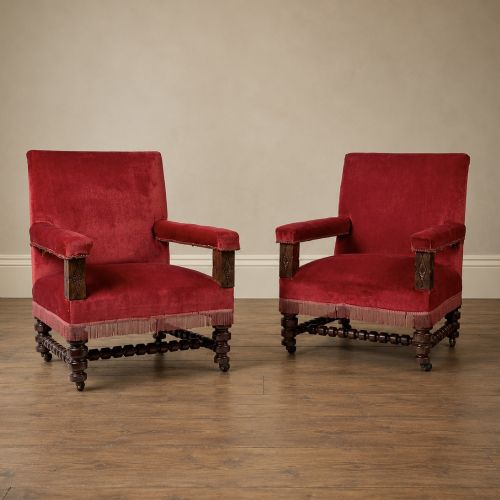
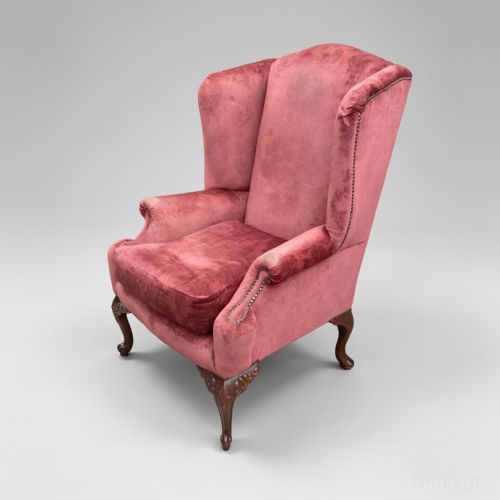
Velvet Fireside Chair
A velvet fireside chair brings warmth and tactile richness to a room, offering deep seating paired with soft textile upholstery.
Velvet Fireside Chair
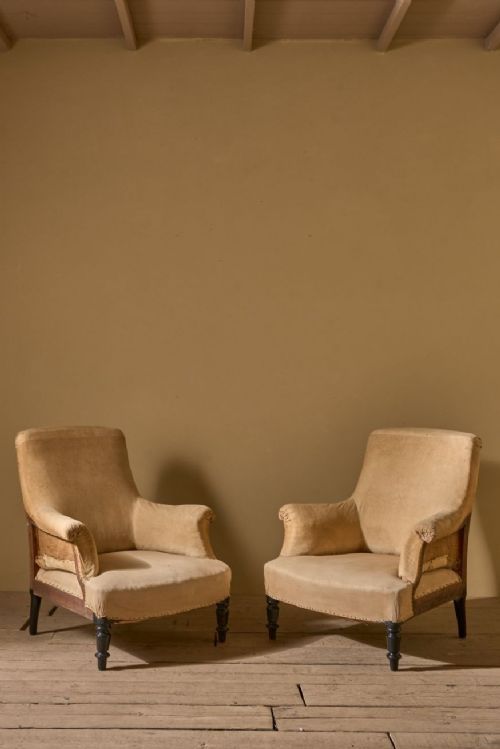
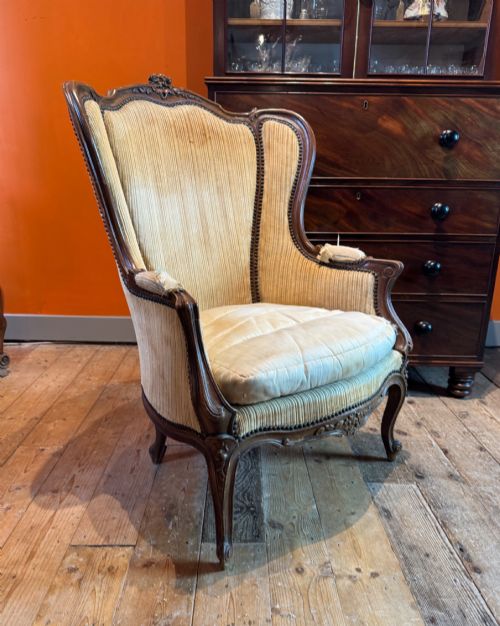
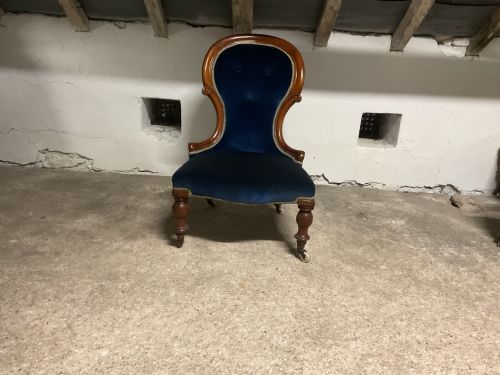
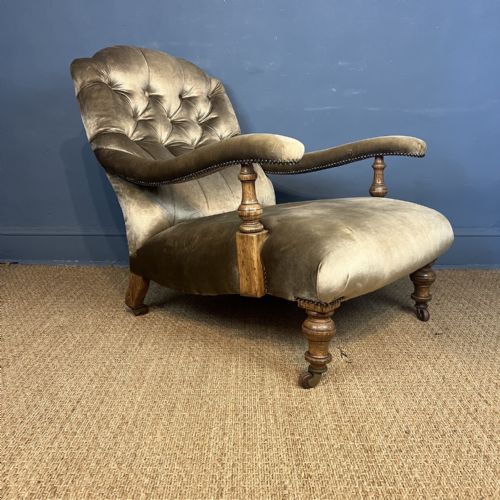
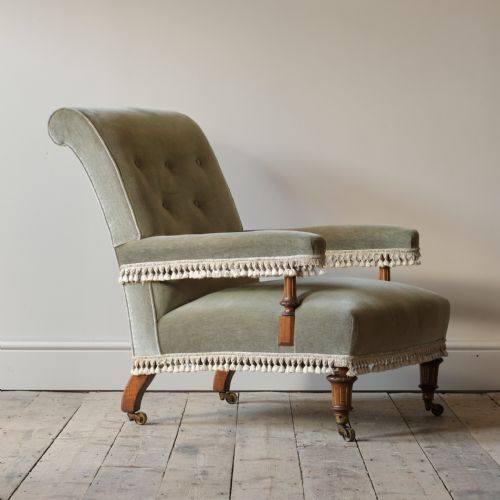
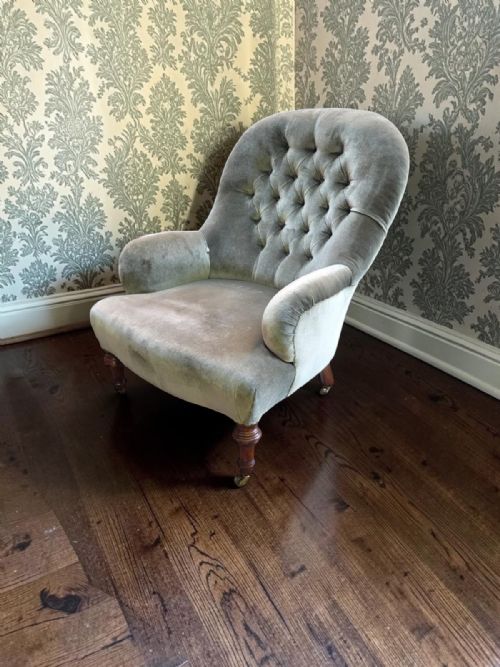
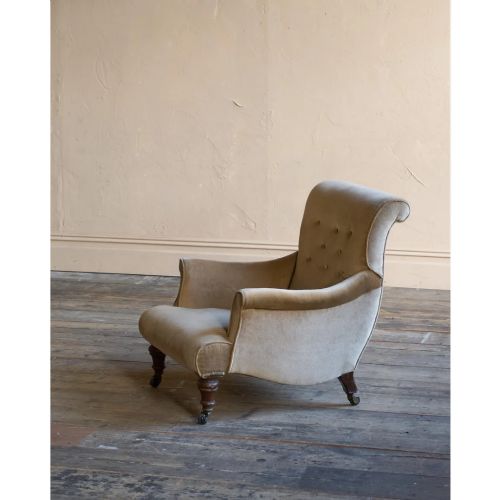
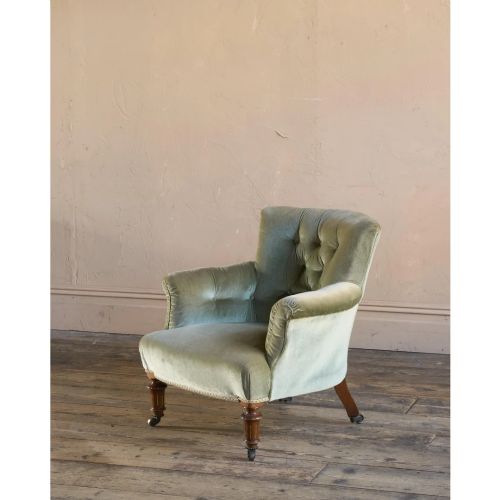
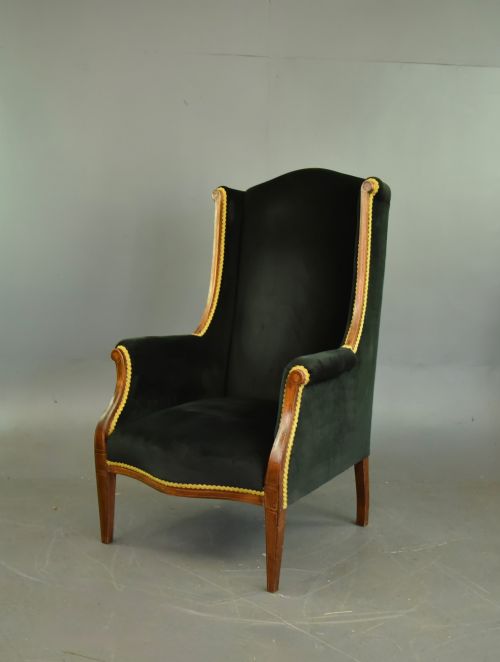
A velvet fireside chair provides comfortable seating designed for placement near a hearth, appearing across periods from the nineteenth century through the Edwardian era. You will encounter various forms here, including nursing chairs, bedroom chairs, and generous wingbacks originating from Victorian and earlier traditions.
Materials and construction
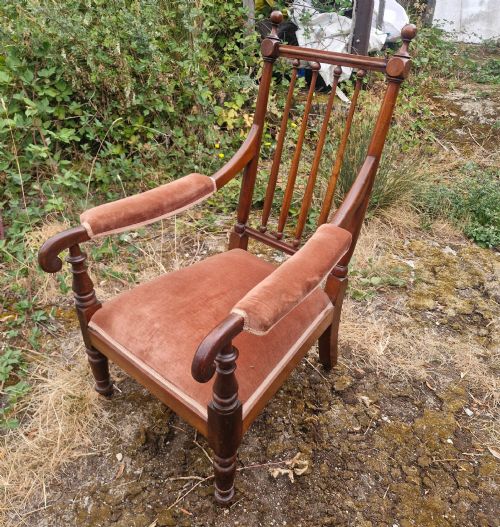
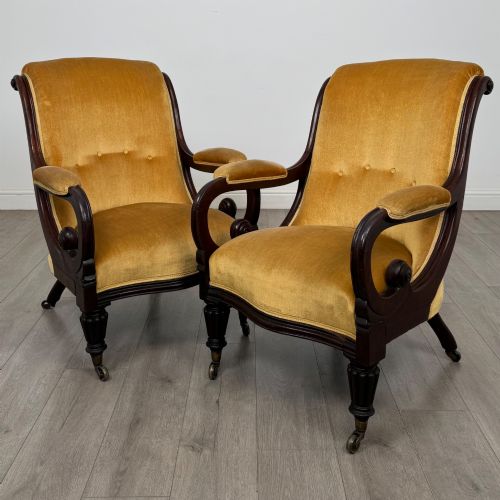
Frames rely on timbers like mahogany, walnut, rosewood, oak, and other hardwoods, providing sturdy structural skeletons for the upholstered body. Cabinetmakers shaped these woods into cabriole legs, spindle backs, or barley twist supports depending on the period.
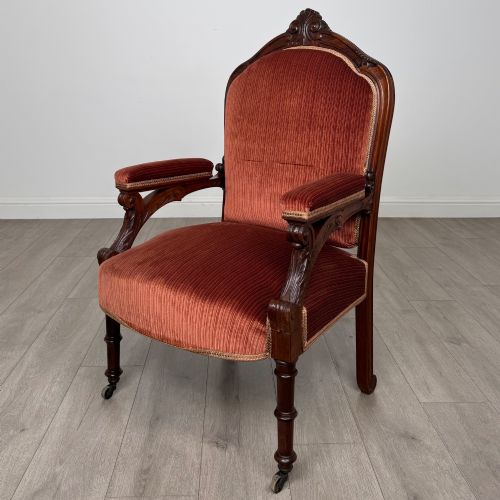
Textiles such as velvet and chenille cover the padded seating areas, sometimes complemented by brass details or decorative wood carving. Traditional joinery underpins the frame while layered padding supports the upholstered exterior.
Velvet Fireside Chair Retail Price Guide 2026
Typical asking prices for velvet fireside chair among the pieces listed under this phrase on Sellingantiques today, from the lower quarter to the upper quarter. They describe what is for sale here now, not the wider market.
Assessing quality and execution
Quality rests in the precision of the timber framing and the integrity of the carved details, such as cabriole legs or turned supports. Finer examples display deliberate proportions and refined shaping executed by skilled makers or workshops.
The selection of timber grain and the harmony between the wooden frame and the textile upholstery dictate the overall standard of the piece. Better chairs maintain structural cohesion alongside balanced upholstery lines that complement the underlying period style.
Gillows·Hampton and Sons
The Velvet Fireside Chair Glossary
- Bergere
- An enclosed upholstered armchair with wooden framing around the sides and back. This French form often incorporates cane panels or fully upholstered sides.
- Wingback
- An armchair featuring protective side panels attached to the backrest. These wings historically blocked draughts near open fires.
- Nursing chair
- A low-seated upholstered chair designed for comfort during domestic tasks. These pieces typically feature compact dimensions and supportive backrests.
- Cabriole leg
- A furniture leg curving outward at the knee and tapering inward toward the foot. This design originates from classical furniture traditions.
- Barley twist
- A decorative turning technique resembling a twisted rope. This detail appears frequently on nineteenth-century furniture supports.
Velvet Fireside Chair: Frequently Asked Questions
What period do these chairs typically date from?
The pieces span the nineteenth century and the Edwardian era, with Victorian examples appearing frequently alongside earlier Georgian and Regency designs.
Craftsmanship reflects the prevailing aesthetic of each decade, ranging from ornate carved rosewood to simpler spindle-backed frames.
How were velvet fireside chairs used originally?
These seats were positioned close to fireplaces in living spaces and parlours to provide comfort and protection from draughts.
Lower variants served in bedrooms and nurseries for specific daily domestic duties.
Which wood types should I expect to find?
Frames are constructed from hardwoods including mahogany, walnut, rosewood, oak, and general timber.
Selected examples incorporate decorative wood carving or exposed polished framing alongside the velvet upholstery.
How do I distinguish between Victorian and Edwardian pieces?
Victorian examples often feature heavier proportions, darker woods like rosewood and mahogany, and deep button backing. Edwardian chairs tend toward lighter framing and understated decorative details.
Examining the turning styles and structural lines helps clarify the manufacturing period.