



Vanity Fair Print
A vanity fair print captures the notable figures of an era with sharp satire, offering buyers a witty piece of social history.
Vanity Fair Print
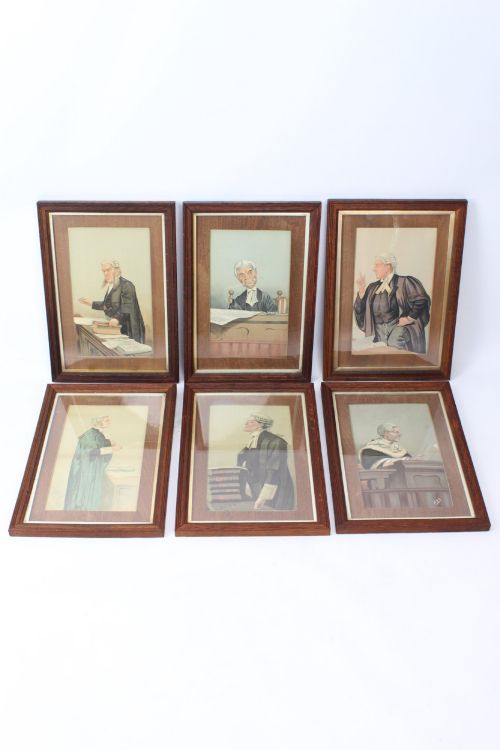
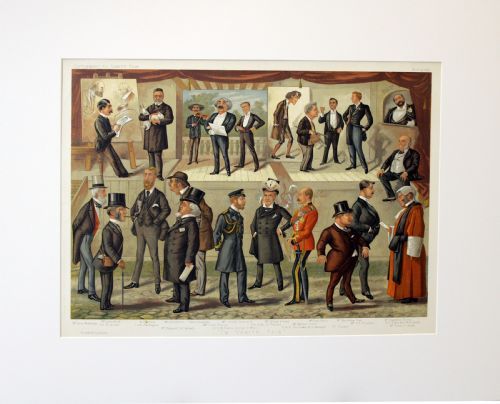
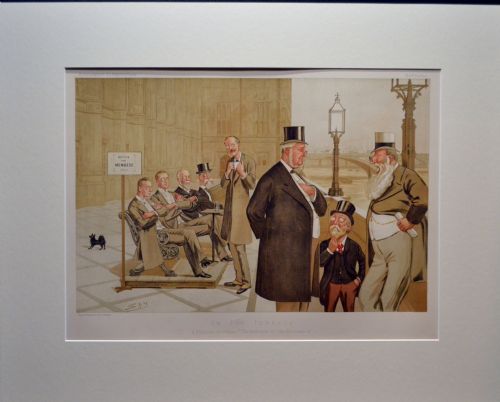
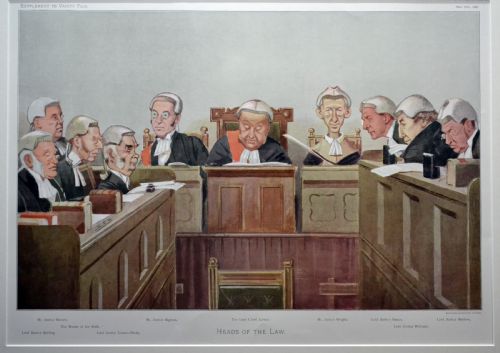
A vanity fair print is a satirical portrait typically issued as a supplement to the weekly magazine during the Victorian and Edwardian periods. These works capture statesmen, judges, sportsmen, and royalty through clever caricature rather than straightforward portraiture. Collectors encounter both single sheets and double-page formats, often gathered in sets focusing on themes like the law, the military, or sport.
The material form varies between standard single pages and larger unfolded double-page chromolithographs. Many examples arrive already framed in wood with glass and mount board, whilst others remain loose on paper or cardboard. The subjects span from the late nineteenth century through to the nineteen-twenties, mapping the prominent personalities of each successive decade.
Materials and Techniques
These works rely primarily on paper and ink, utilising the chromolithography process to achieve rich, layered colour across the surface. Printers applied multiple ink stones to build the distinctive tones seen in genuine period issues. Cardboard and mount board frequently support the paper sheets within framing arrangements.
Framed examples incorporate wood and glass to protect the fragile paper from environmental damage. The printing technique ensures the characteristic vibrancy of the caricature survives decades of handling. Each sheet reflects the commercial print standards of late nineteenth and early twentieth-century British workshops.
Listings span from Victorian beginnings through Edwardian society to the nineteen-twenties, using paper, ink, wood, and glass.
Assessing Quality and Condition
The crispness of the ink application and the registration of colours determine the visual impact of an individual plate. Strong, vibrant chromolithography stands apart from faded or washed impressions that have suffered from excessive light exposure. Double-page formats often command attention for their scale and undamaged centre folds.
Framing standards and paper preservation heavily influence the overall standard of surviving pieces. Examples retaining their original margins and clean mount boards show better preservation than those trimmed for past displays. Complete sets sharing uniform paper tone and matching framing present a more cohesive collection than disparate single sheets.
The Vanity Fair Print Glossary
- Chromolithography
- A colour lithographic printing process using multiple stones to build up rich hues on paper. This method defined the production of double-page weekly magazine supplements.
- Spy
- The pseudonym used by the most famous caricaturist for the publication, Sir Leslie Ward. Collectors frequently search for these specific signed or attributed plates.
- Men of the Day
- A recurring series title featuring prominent public figures accompanied by biographical text. These portraits form the core of many collections.
- Double Page
- A larger format plate printed across two pages with a centre fold. These sheets offer broader compositions and scenes involving multiple figures.
Vanity Fair Print: Frequently Asked Questions
What is a vanity fair print?
A vanity fair print is a satirical portrait published as a periodical supplement during the Victorian and Edwardian eras. They depict famous personalities of the day through clever artistic caricature.
These pieces served as commentary on society, politics, and culture. Today, collectors frame them to display historical figures and period aesthetics.
Are these prints originals?
Original examples were published directly in the magazine or issued as supplements between the Victorian period and the nineteen-twenties. They utilise period paper and traditional chromolithography ink techniques.
Buyers should examine the paper stock and printing dots to confirm period production. Genuine sheets show the characteristic ageing of nineteenth-century paper.
How should I frame these prints?
Protecting the paper requires acid-free mount board and glass to prevent light damage. Many period examples survive with their original framing materials intact.
Keep framed works away from direct sunlight to preserve the chromolithograph inks. Ensure the paper does not touch the glass directly during any re-framing process.