


Victorian Vanity Fair Prints
Victorian vanity fair prints offer witty caricatures of prominent figures, prized by collectors for their sharp social commentary and period charm.
Victorian Vanity Fair Prints
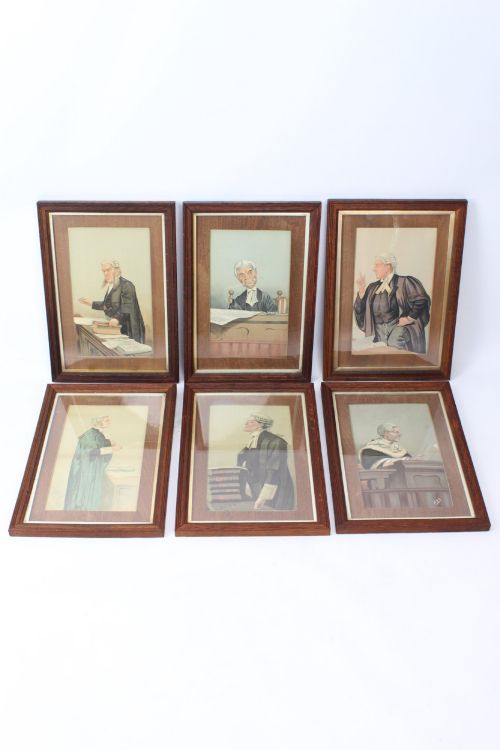
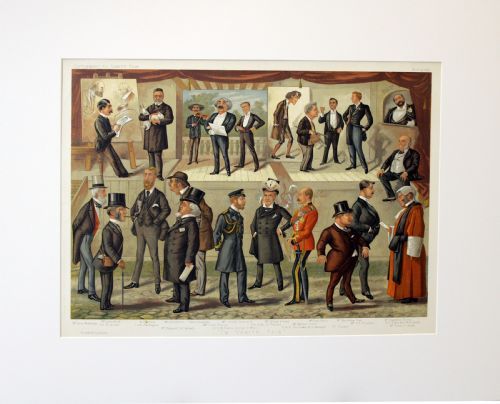
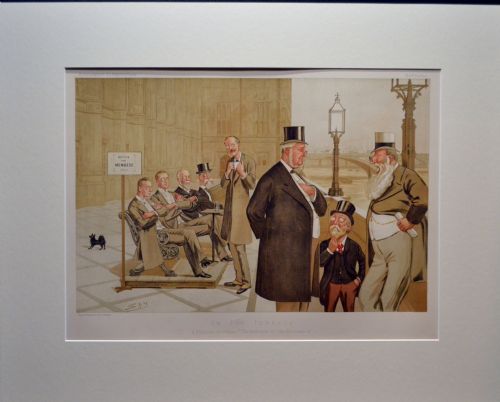
When you search for Victorian vanity fair prints, you encounter satirical portraits and caricatures originally published in the weekly magazine. These pieces capture statesmen, royals, judges, and sportsmen from the Victorian and Edwardian eras, often associated with the pseudonym Spy.
The selections available here range from single sheets to framed sets focusing on themes such as politics, law, racing, and society. You will frequently find them presented as framed wall art or unfolded double-page plates ready for display.
How They Were Made
Production relied on paper and ink, utilising chromolithography to achieve the vibrant multi-coloured hues seen on double-page plates and single sheets. Many examples incorporate card and mount board within contemporary framing methods utilising wood, glass, and metal.
Publishers utilised high-grade paper stock capable of holding fine ink details for the characteristic caricatures. Surviving pieces frequently retain their original framing materials from the late nineteenth and early twentieth centuries.
Listings feature items spanning the Victorian, Edwardian, and later periods utilising paper, ink, wood, and glass.
What Varies in Quality
Distinctions in quality often rest on the vibrancy of the ink and the preservation of the paper surface across the sheet. Original double-page chromolithographs generally command attention for their expansive imagery compared to standard single pages.
The condition of the surrounding materials, including mount board and framing, contributes to the overall presentation of the artwork. Complete sets spanning specific themes like politics or sport also differ from individual prints in collector interest.
The Victorian Vanity Fair Prints Glossary
- Chromolithography
- A planographic printing technique used to produce multi-coloured images using stone plates for each ink colour. This method created the rich tones characteristic of the period plates.
- Spy
- The pseudonym for Leslie Ward, the most prolific and famous caricaturist for the magazine. His works form the backbone of many collections.
- Double Page
- An unfolding centrefold plate providing a larger, more detailed illustration than standard single pages. These sheets require careful handling along the central fold.
- Men of the Day
- A recurring biographical feature title associated with the portrait prints. These plates highlighted notable personalities of the era.
Victorian Vanity Fair Prints: Frequently Asked Questions
What are Vanity Fair prints?
They are satirical caricatures of notable figures published in the British periodical during the nineteenth and twentieth centuries.
Collectors prize them for their artistic skill and historical record of prominent personalities.
How were they originally published?
The images appeared as weekly supplements bound within the magazine or issued separately as special plates.
Many survive today as individual sheets or assembled into themed sets by later collectors.
Who created the artwork?
Several artists contributed illustrations, with Leslie Ward signing his work under the famous pseudonym Spy.
Other contributors produced similar satirical portraits under different pen names during the publication run.
How should I frame them?
Select conservation-grade mounting materials to protect the paper from degradation and acid transfer.
Ensure proper clearance between the glass and the print surface to preserve the ink.