



Spy Caricature Prints
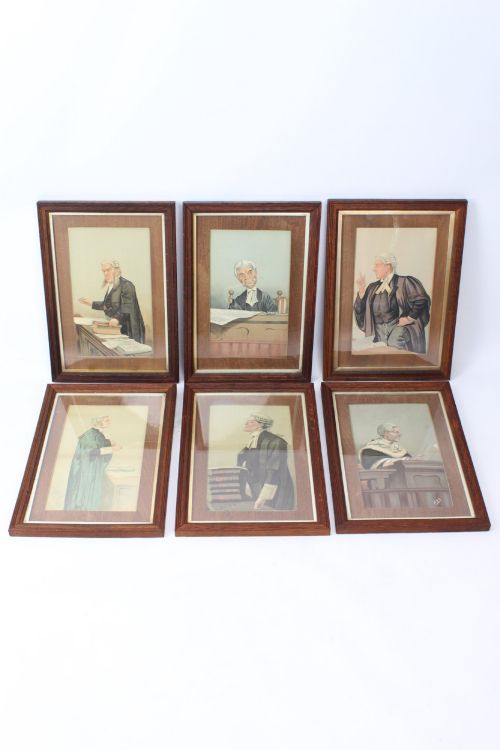
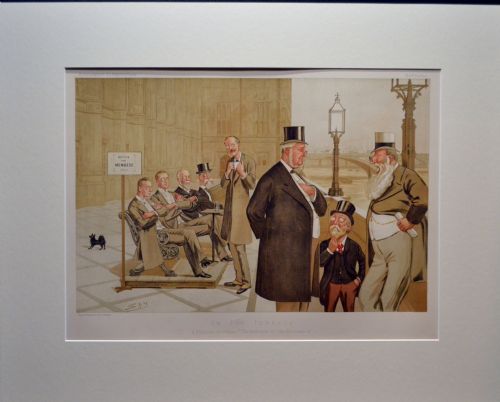
Spy caricature prints are satirical portraits from Vanity Fair depicting notable Victorian and Edwardian figures, offering a witty focal point for any study.
Spy Caricature Prints
Spy caricature prints capture prominent figures from the Victorian, Edwardian, and later periods through sharp artistic observation.
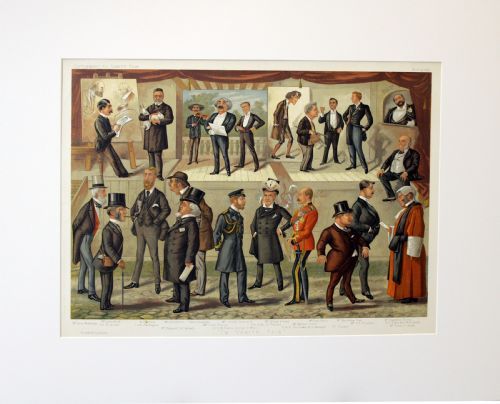
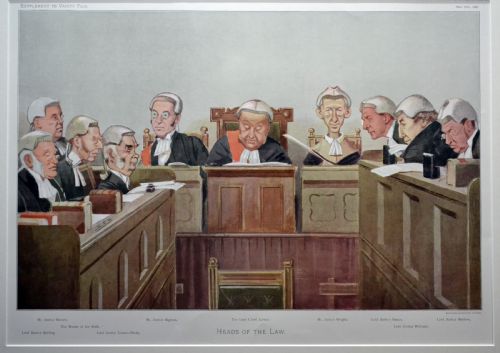
The versions most commonly met on this page include framed prints, double-page formats, and complete sets from various decades.
Subjects range from politicians and royalty to military figures, lawyers, and sportsmen associated with Vanity Fair.
Materials and Production
These works utilise paper and cardboard sheets printed with ink, frequently presented with mount board and glass within wood frames.
Production methods include chromolithography, which allowed for rich colour replication across single and double-page formats.
Sir Leslie Ward signed his satirical works with the alias Spy, observing high society with a sharp pencil and considerable humour.
Markers of Quality
Quality rests in the vibrancy of the ink and the preservation of the paper, distinguishing crisp impressions from faded examples.
Presentation also plays a role, with original framing materials and intact double-page formats commanding greater visual appeal.
The Spy Caricature Prints Glossary
- Chromolithography
- A planographic printing technique used to produce multi-coloured images using stone plates. This process created the vivid hues seen in periodical illustrations.
- Double page
- A publication format spanning two adjacent pages, opening out to provide a larger compositional area. These wider sheets often featured group scenes or panoramic subjects.
- Mount board
- A heavy paper-based card used to frame and separate the artwork from the glass. This material protects the underlying sheet during display.
Spy Caricature Prints: Frequently Asked Questions
What are spy caricature prints?
These pieces are satirical portraits originally published in the periodical Vanity Fair, depicting well-known personalities of the late nineteenth and early twentieth centuries.
They offer a humorous and observant record of historical figures across politics, law, and society.
How were they originally published?
Many were issued as single or double-page inserts within the weekly magazine, allowing readers to collect and display them.
Over time, owners had these sheets framed individually or gathered them into themed sets.
How do I date these prints?
Dating relies on the style of the imagery, the subjects depicted, and any accompanying publication dates noted on the paper sheets.
Victorian and Edwardian examples carry distinct typographic details and attire associated with their respective decades.
How should I display them?
These framed works suit studies, hallways, or living spaces, particularly when grouped by shared themes like law, royalty, or sport.
Keeping them away from direct sunlight preserves the ink and paper over time.