




Uzbek Suzani Textile Art
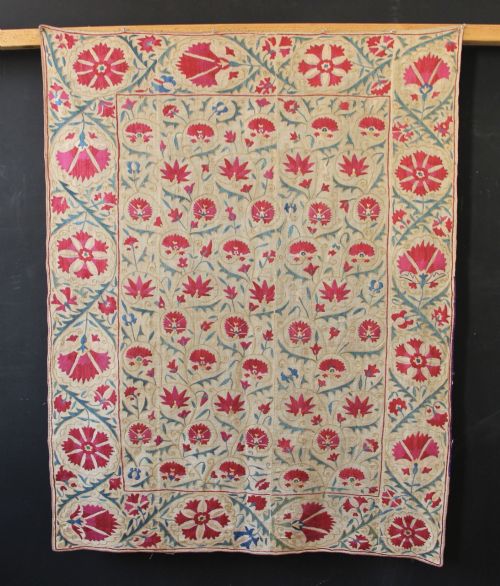
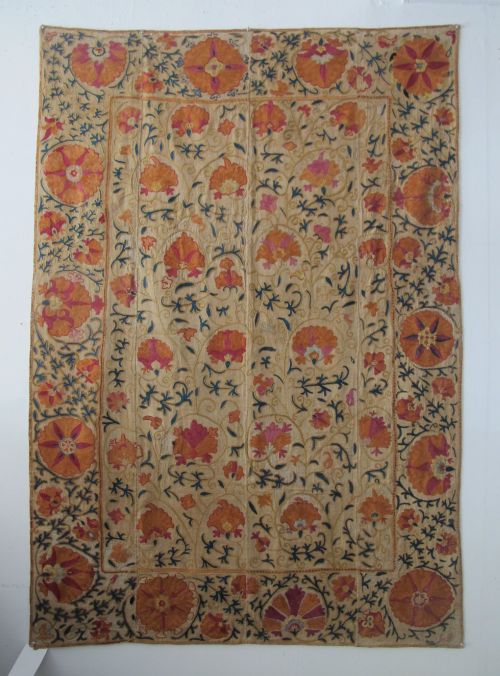
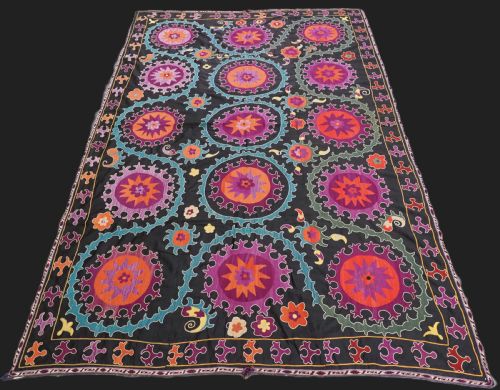
These uzbek suzani textile art pieces are embroidered Central Asian wall hangings and domestic textiles that bring rich historical colour to an interior.
Uzbek Suzani Textile Art
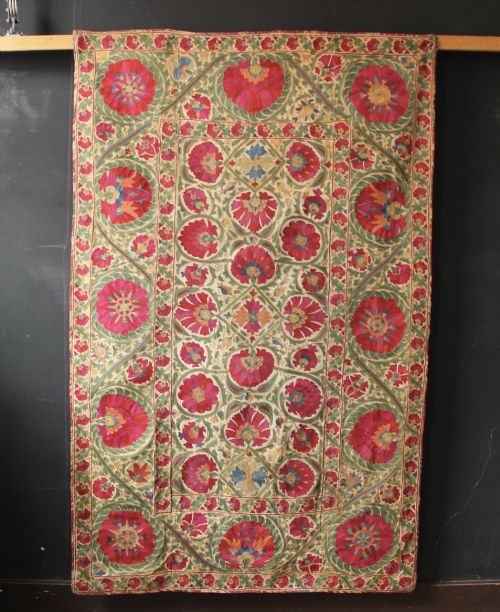
When you search for uzbek suzani textile art, you encounter a specialised group of Central Asian tribal and traditional embroideries originating from regions such as Bokhara, Nurata, Tashkent, and Samarkand. These textiles span the nineteenth century and the early twentieth century, functioning primarily as wall hangings, dowry items, and ceremonial coverings.
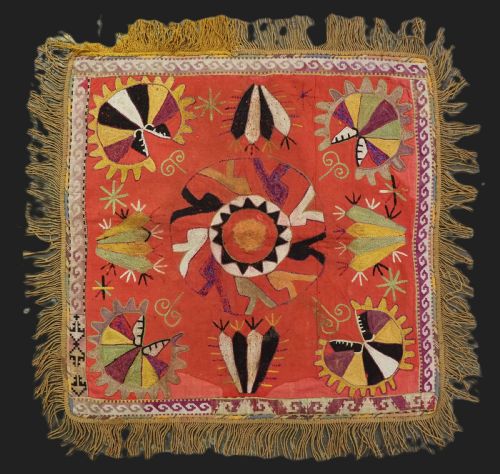
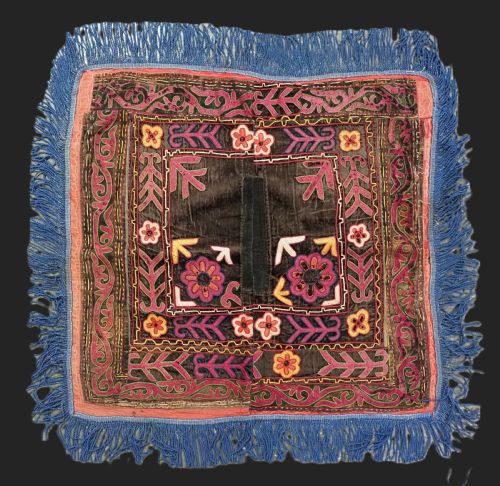
The objects most frequently met on this page include antique Lakai tribe ilgich embroideries, nim suzanis, and fully worked palak designs. They appear alongside mounted fragments and bed decorations, reflecting diverse domestic and tribal uses across Uzbekistan.
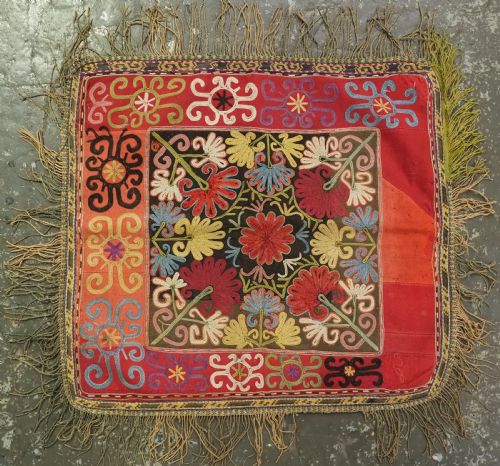
The visual vocabulary ranges from bold geometric motifs to intricate floral compositions. Pieces are attributed to specific regional traditions, including Tajik work and Lakai tribal output.
How They Were Made
The construction relies fundamentally on silk thread embroidery applied to woven foundations of cotton, linen, or wool. Grounds appear in various tones, including red and black cotton fabrics, providing a contrasting base for the densely stitched motifs.
Execution involves specialist needlework techniques carried out by hand. Some examples exhibit full work embroidery covering the entire ground, while others utilise specific regional stitching styles associated with Samarkand, Tashkent, and the Lakai tribe.
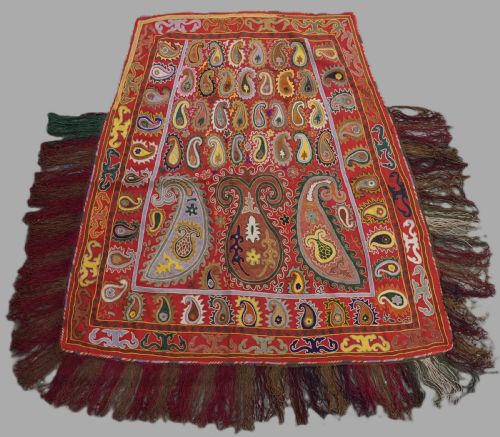
Several ceremonial horse and saddle covers survive, proving that Central Asian horses occasionally enjoyed finer interior design than their owners.
What Varies in Quality
Quality rests upon the density of the embroidery and the complexity of the design layout. Fully worked palak panels and fine Bokhara nim suzanis demonstrate superior execution compared to more sparsely decorated examples.
Colour saturation and the preservation of the original silk threads heavily influence the visual impact. The vibrancy of the dye work and the intact nature of elements like wool fringe distinguish the finer survivals from simpler domestic pieces.
The Uzbek Suzani Textile Art Glossary
- Suzani
- An embroidered textile from Central Asia, typically created as a decorative wall hanging or dowry piece. The word derives from the Persian term for needle.
- Nim Suzani
- A smaller half-size version of a standard suzani wall hanging. These pieces offer compact proportions while maintaining traditional embroidery techniques.
- Ilgich
- A specific form of embroidery created by the Lakai tribe of Uzbekistan. These items served as dowry embroideries intended for wall hanging.
- Palak
- A fully embroidered suzani design where the ground fabric is entirely covered in dense stitching. This style represents a high level of needlework investment.
- Saye Gosha
- A form of bed decoration or furnishing textile produced by the Lakai tribe. These works utilise silk embroidery on traditional fabric grounds.
Uzbek Suzani Textile Art: Frequently Asked Questions
What is an uzbek suzani textile art piece?
These pieces are traditional embroidered textiles originating from Central Asia, principally produced in regions like Bokhara, Tashkent, and Samarkand during the nineteenth and early twentieth centuries.
They served various domestic and ceremonial purposes, functioning as wall hangings, dowry items, and decorative covers for homes.
How were these textiles used originally?
Families utilised them as major decorative elements within the home, often mounting them on walls or using them as ceremonial furnishings.
Specific types, such as Lakai ilgich pieces and saddle covers, played roles in dowries and tribal ceremonies.
How do I distinguish regional suzani styles?
Regional attribution relies on examining the specific floral or geometric motifs, stitch density, and colour palettes characteristic of centres like Nurata, Bokhara, and Tashkent.
Tribal groups such as the Lakai employ distinct patterns and formats, including smaller nim suzanis and bed decorations.
How should I care for an antique suzani?
Protect the textiles from direct sunlight to prevent the silk threads and cotton grounds from fading over time.
Display them away from sources of moisture and heat, mounting them safely without placing undue tension on the historic fabrics.