



Hand Embroidered Needlework
Hand embroidered needlework covers centuries of stitched textiles, from Central Asian wall hangings to English samplers, prized for their intricate threadwork and historic design.
Hand Embroidered Needlework
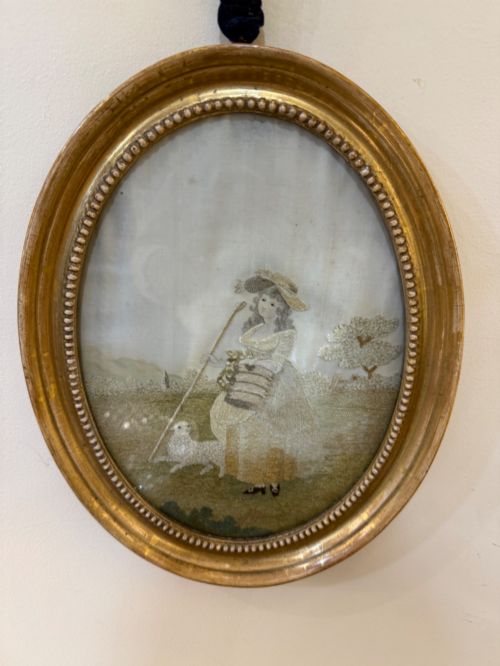
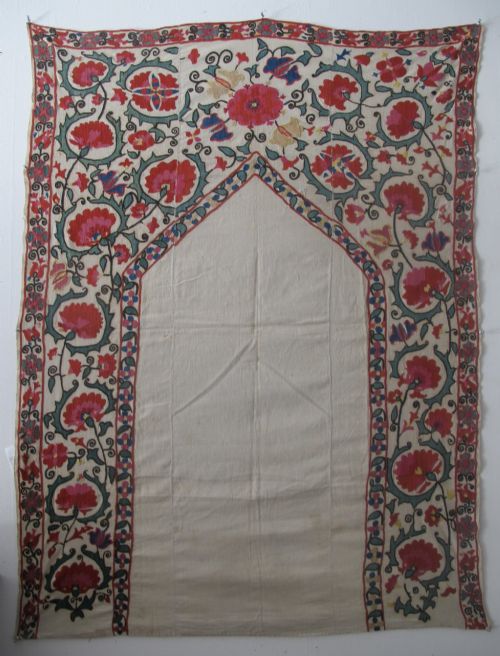
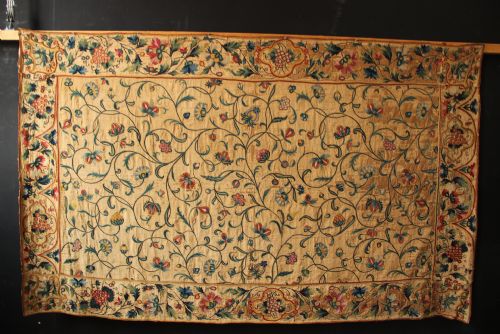
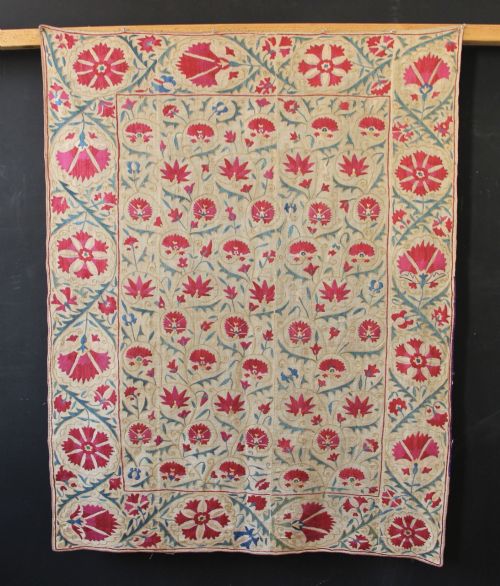
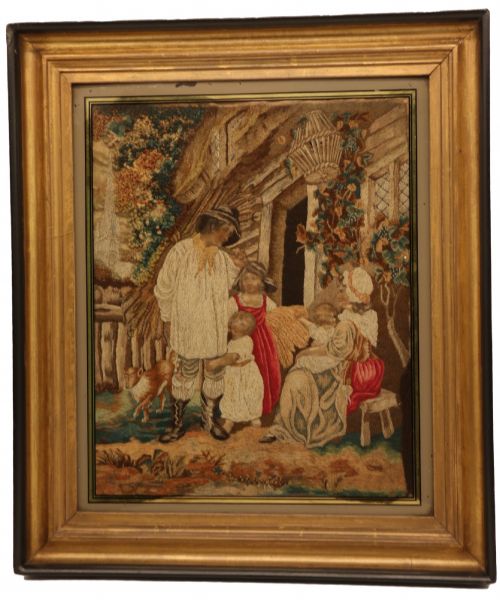
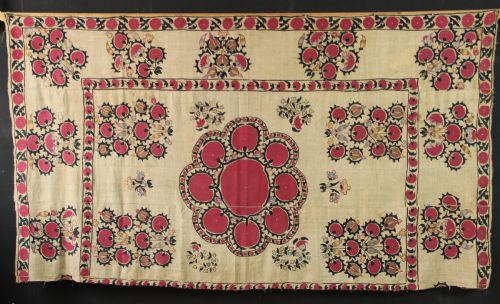
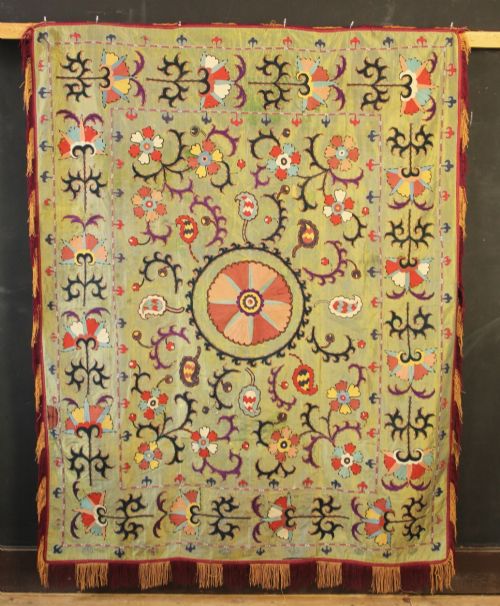
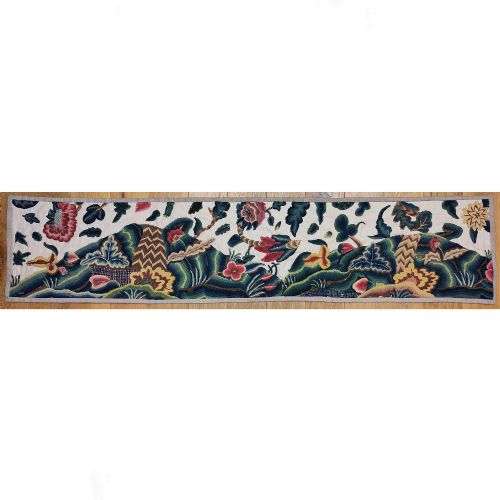
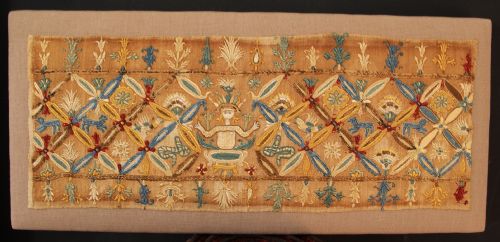
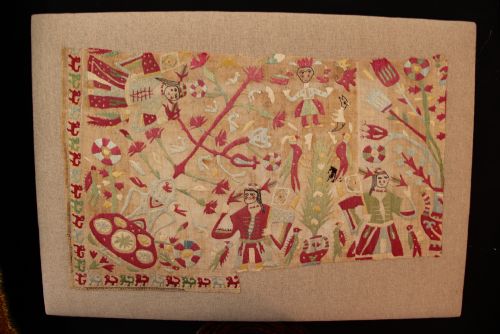
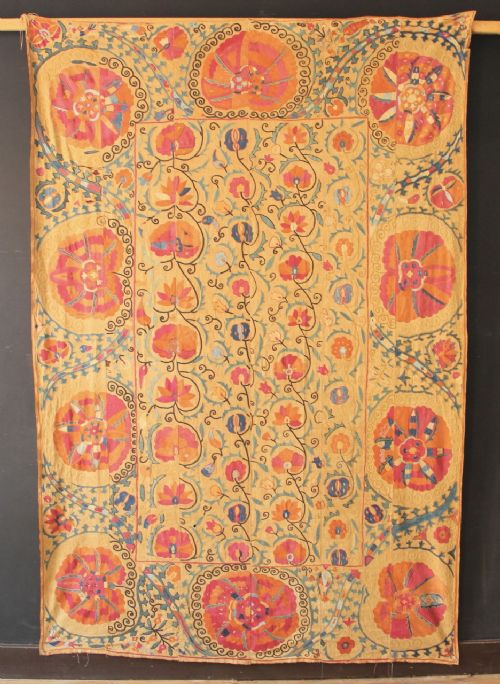
Hand embroidered needlework spans domestic samplers, framed pictures, bedsheet borders and large wall hangings originating from England, the Greek Islands, Portugal and Central Asia. Buyers encounter traditional English crewelwork panels alongside intricate Uzbek Suzanis featuring floral and architectural motifs.
The selection ranges from early geometric alphabet samplers worked by children to large ceremonial covers and wedding shawls. These textiles functioned as personal exercises in skill, domestic decoration or significant cultural items.
Origins stretch across regions such as Bokhara, Samarkand, Shahrisabz, and Skyros, each bringing distinct regional palettes and stitching traditions to the surface.
How they were made
Needlework pieces rely on base foundations of woven linen, cotton, or wool ground cloths that support dense applications of thread. Artisans utilised fine silk thread, wool, and occasionally cotton threads to build up pictorial and geometric designs.
Techniques vary by region and period, encompassing crewelwork stitching, Berlin wool work, cross stitch alphabets, and elaborate tambour or flat stitch embroidery found in Central Asian Suzanis. Ground fabrics are sometimes paired with hand-painted silk sections or mounted behind glass for preservation.
The listings include textiles from the 17th, 18th, 19th, and 20th centuries, spanning English, Greek Island, and Central Asian origins.
What varies in quality
Quality rests upon the density of the stitching, the precision of the needlework, and the complexity of the composition. Fully embroidered examples demand significantly more labour than those with open background fields.
The choice of materials also dictates standing, with fine silk thread on cotton or linen grounds yielding vibrant colour saturation and delicate detail compared to coarser wool variants.
Mary Mason·Jane Pattinson·Emma and Hannah Barnes
The Hand Embroidered Needlework Glossary
- Suzani
- A large embroidered tribal textile from Uzbekistan, traditionally worked in silk on a cotton or linen ground with floral or medallion designs.
- Crewelwork
- A traditional form of surface embroidery using wool on a linen fabric, often featuring scrolling floral and fauna motifs.
- Sampler
- A piece of needlework demonstrating various stitches and alphabets, frequently worked by young women or children as a record of proficiency.
- Nim Suzani
- A smaller variant of the traditional Central Asian Suzani textile, generally proportioned for compact domestic spaces.
- Palak
- A fully embroidered Central Asian Suzani type characterised by a dense ground and central star design.
Hand Embroidered Needlework: Frequently Asked Questions
What is a Suzani?
A Suzani is a large, decorative embroidered textile originating from Central Asia, particularly Uzbekistan. These pieces were traditionally made as part of a bride's dowry.
They feature vibrant silk embroidery on cotton or linen grounds, often displaying bold floral, vine, or architectural motifs.
How were samplers used?
Samplers served as practical exercises for girls and young women to demonstrate their proficiency in various stitches, alphabets, and numbers.
Completed works were often framed and displayed in the home as proof of domestic accomplishment and education.
How do I care for antique textiles?
Antique needlework requires protection from direct sunlight to prevent the fading of silk and wool threads. Keeping them away from excessive moisture and heat preserves the integrity of the natural fibres.
Many fragile wall hangings and samplers benefit from professional framing behind UV-filtering glass.
How are different regional styles distinguished?
Regional identification relies on the specific combination of ground fabric, motif vocabulary, and stitch technique. English pieces frequently display crewelwork vines or alphabets, while Greek Island embroideries show distinct border geometries.
Central Asian textiles are readily identified by large-scale medallion layouts and specific regional patterns from towns like Bokhara or Shahrisabz.