





Uzbek Suzani Bedspread
An uzbek suzani bedspread brings intense central asian colour and rich needlework into a room, made for traditional households as decorative textile covers.
Uzbek Suzani Bedspread
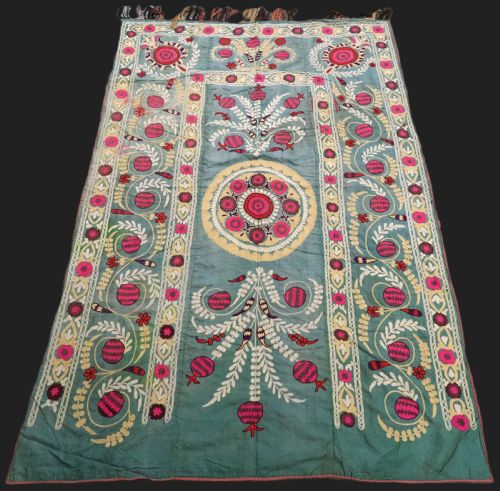
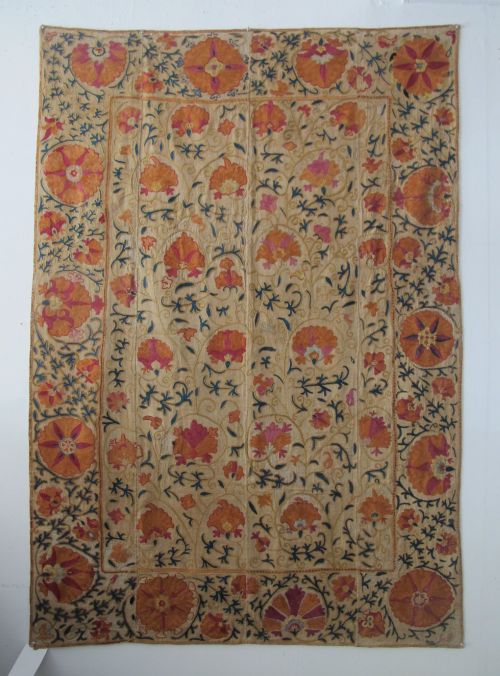
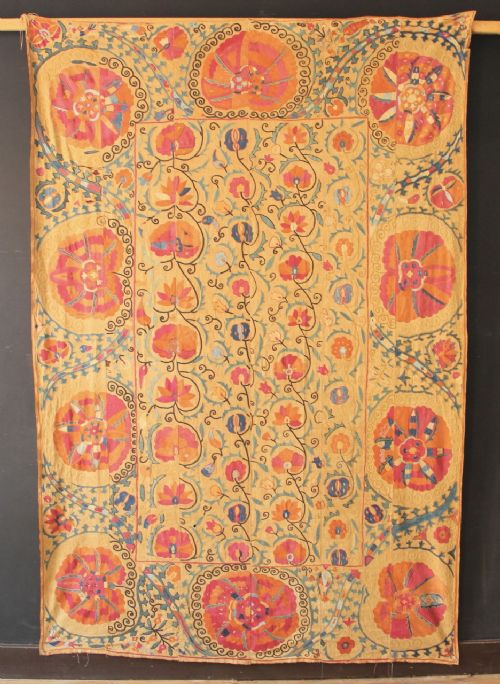
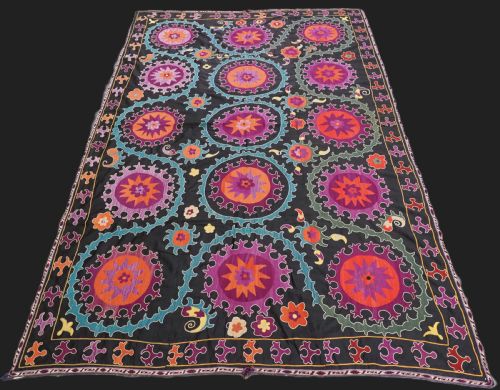
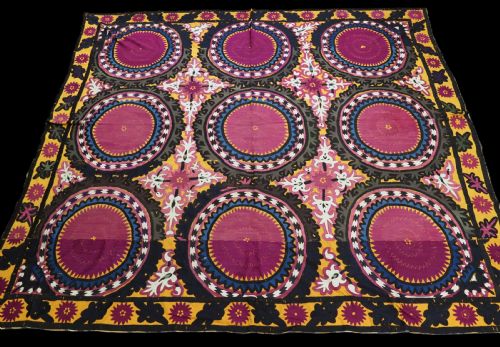
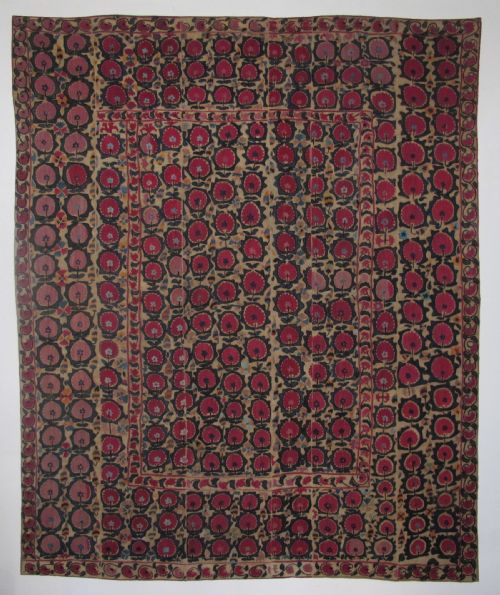
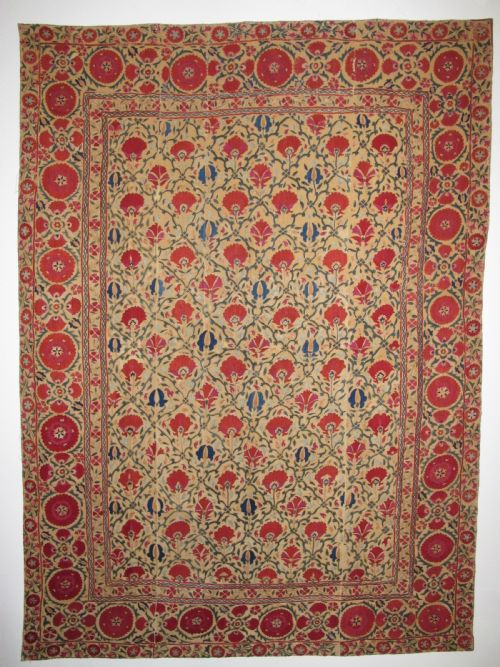
An uzbek suzani bedspread is a large embroidered textile originating from central asia, created as a traditional decorative cover or wall hanging in uzbek households. Pieces seen here span periods from the early nineteenth century through to the early twentieth century, carrying distinct regional identities from places such as samarkand, bukhara, uratube, and shahrisabz.
The format ranges from full panels to nim suzani and ru-i-jo bed covers, displaying central medallion variants or rich overall embroidery. Tribal groups like the lakai also contribute specific traditional designs executed on silk or cotton grounds.
How they were made
These textiles rely on fine silk embroidery threads worked by hand onto a supportive foundation ground. Grounds consist of cotton, plain silk, or adras, which is a woven mixture of silk and cotton.
Regional workshops and makers utilised distinct needlework densities, creating heavy full work coverage or lighter open layouts across the various coloured fabric backgrounds.
Bed covers often preserve slight tracer lines where makers drew the floral patterns before picking up their embroidery needles.
What varies in quality
Quality rests in the fineness of the silk thread embroidery and the density of the needlework across the textile ground. Full work examples demand immense labour compared to lighter regional variants.
The brilliance and preservation of the natural dyes on grounds of red, yellow, black, or natural cotton define the visual impact. Crisp execution of traditional central asian motifs separates standard village pieces from master regional outputs.
The Uzbek Suzani Bedspread Glossary
- Suzani
- An embroidered textile from central asia, typically worked in silk thread on a cotton or silk ground. These large cloths served as bed covers, wall hangings, and dowry items.
- Adras
- A traditional handwoven fabric made from a warp of silk and a weft of cotton. It provides a textured foundational ground for embroidery.
- Nim suzani
- A half-size embroidered textile panel, smaller than a full bed cover but sharing identical decorative motifs and techniques.
- Ru-i-jo
- A traditional central asian bed cover used in domestic settings. These pieces formed an essential part of a bride's dowry.
Uzbek Suzani Bedspread: Frequently Asked Questions
How do I care for an antique textile?
Keep these delicate silk and cotton pieces out of direct sunlight to prevent the natural dyes from fading over time. Gentle vacuuming through a protective mesh screen helps remove dust safely.
Avoid hanging heavy pieces by a single point to prevent strain on the historical fabric and embroidery threads.
How are different regional styles told apart?
Distinct regions like samarkand, bukhara, and shahrisabz developed signature colour palettes, composition layouts, and floral motifs. Samarkand pieces often feature bold medallions, while other areas utilise fine overall patterns.
Tribal attributions, such as lakai work, display unique geometric interpretations and compact scaling.
What is the difference between full work and standard panels?
Full work suzanis feature dense embroidery that covers nearly the entire foundation fabric with silk stitching. Standard or lighter variants leave more of the background ground exposed between motifs.
This density significantly changes the weight, texture, and visual richness of the textile.