

Urns on Pedestals
Urns on pedestals bring classical architecture indoors and into the garden, combining raised vessel forms with stable plinths for display.
Urns on Pedestals
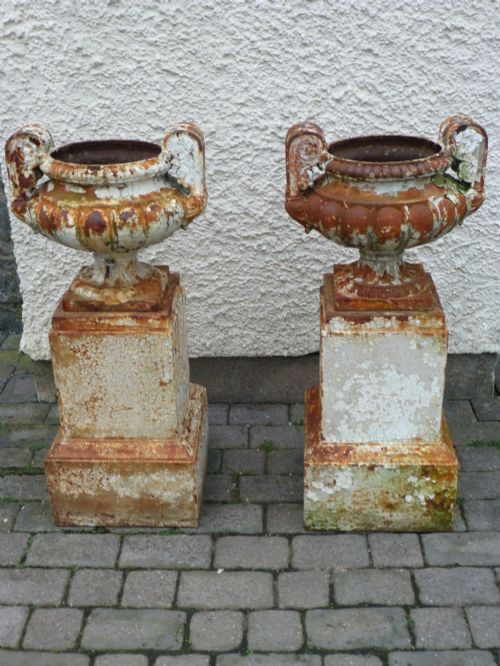
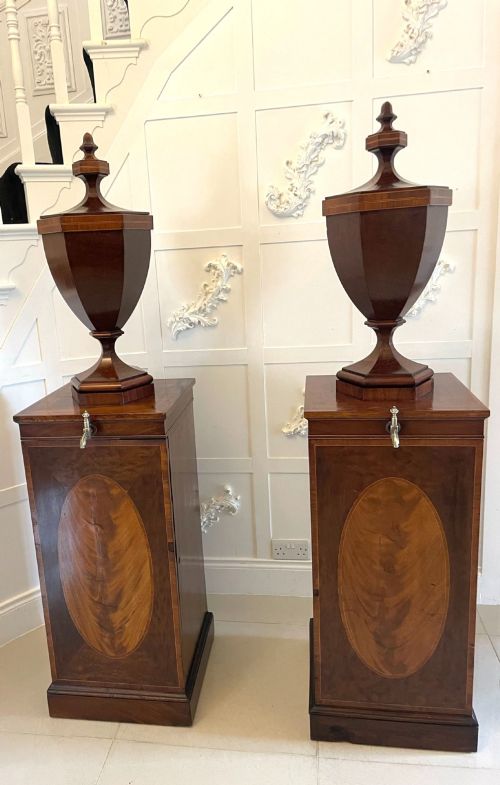
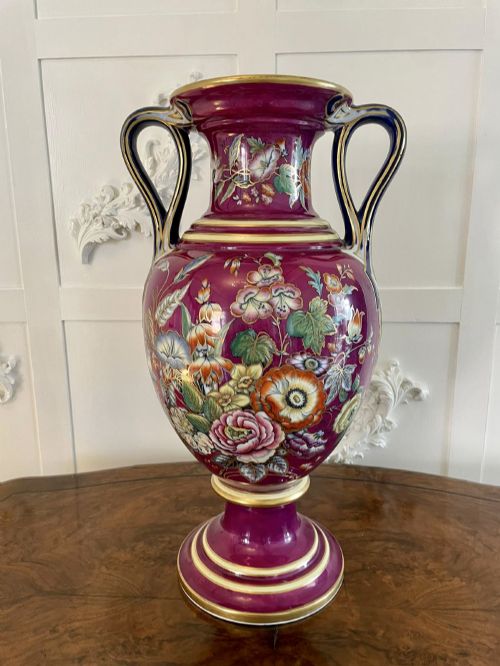
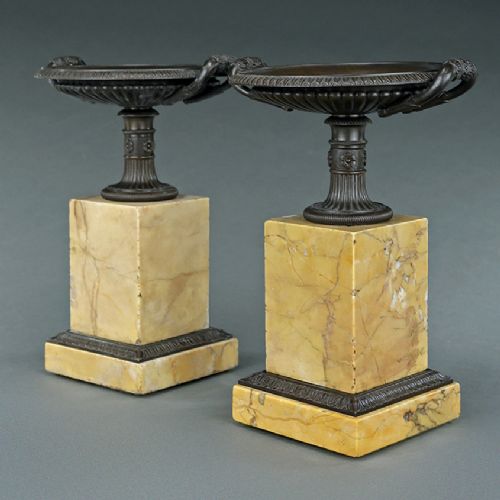
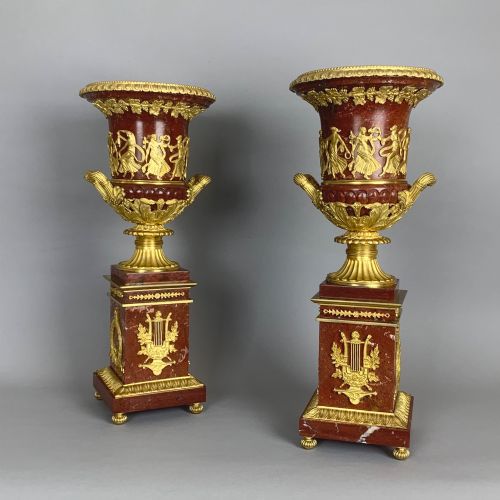
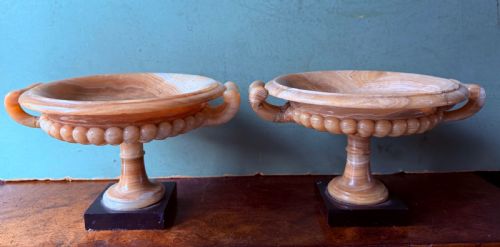
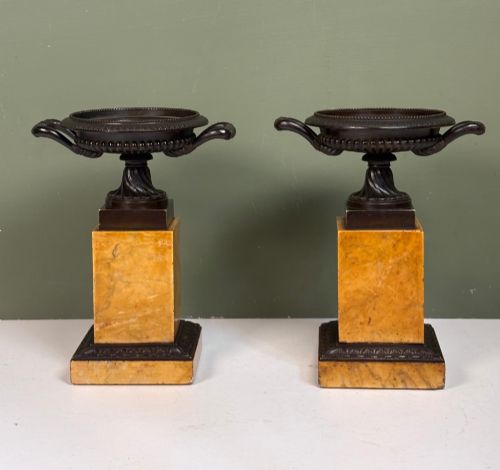
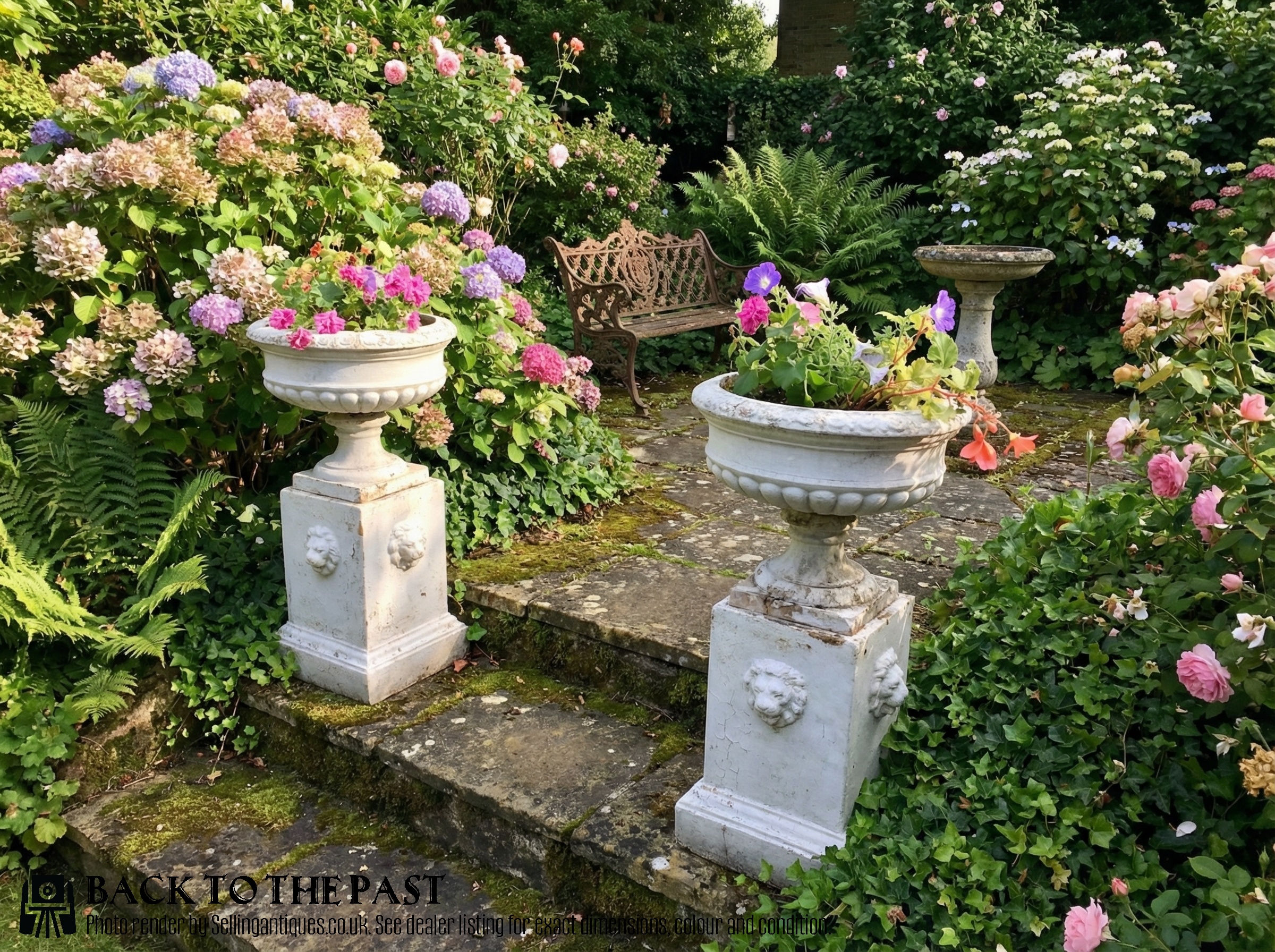
Urns on pedestals combine a raised vessel, such as a campana urn, tazza or coupe, with a matching base, plinth or pedestal. These compositions function structurally as plant stands, garden ornaments or formal decorative centrepieces.
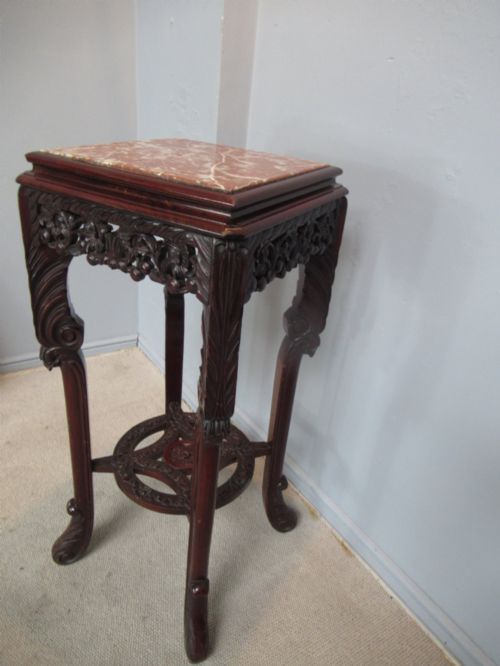
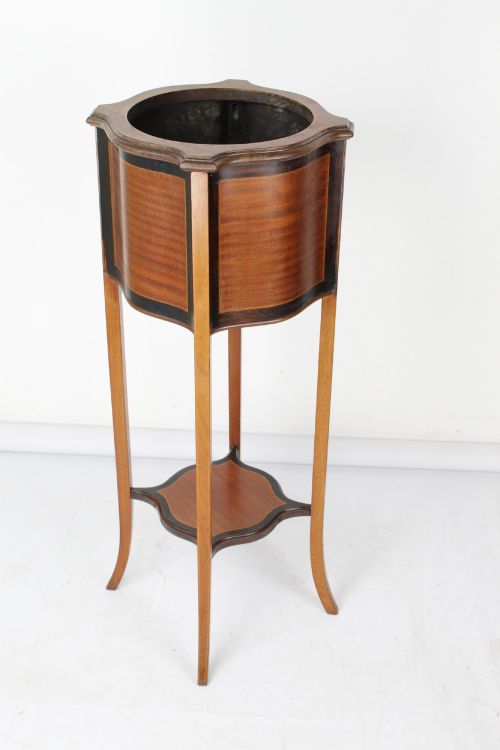
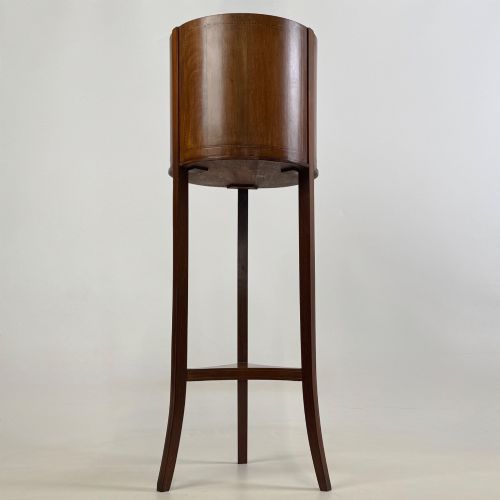
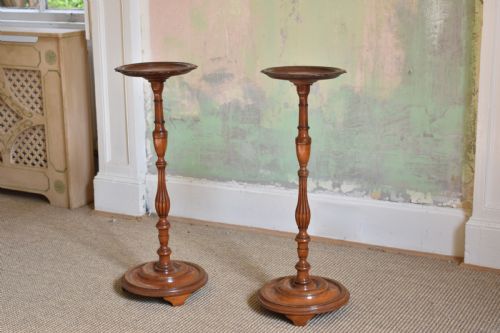
The versions met on this page span indoor display furniture and weather-resistant garden statuary. Indoor examples use timber, marble and bronze, while outdoor examples rely on cast iron, cast stone and reconstituted stone.
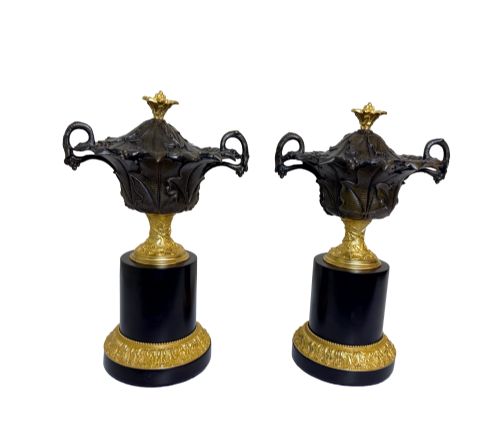
Origins stretch from Georgian and Regency workshops to Victorian foundries and Edwardian cabinet makers. Continental pieces also appear, including French bronze works and Italian Grand Tour souvenirs.
What varies in quality
Quality rests on the crispness of the casting or the precision of the cabinet work, particularly where pedestals meet their vessels. Early foundry pieces retain sharper definition in their foliage and classical motifs than later derivative castings.
Material selection dictates permanence and weight, with dense marbles, patinated bronzes and solid hardwoods marking the upper tier. Original matched pairs hold greater significance than married components assembled at a later date.
Some nineteenth-century travellers carried miniature alabaster bowls home in luggage to prove they had reached Rome.
Falkirk Carron foundry·Coalbrookdale·Andrew Handyside·Druce and Co London·Shoolbred
The Urns on Pedestals Glossary
- Campana urn
- A bell-shaped vessel with a flared rim and footed base, frequently mounted on a square plinth. This classical form originates from antiquity and appears widely in cast iron and bronze.
- Tazza
- A shallow saucer-like vessel mounted on a stem and foot, often carved from marble or cast in bronze. These pieces frequently relate to the Italian Grand Tour.
- Torchère
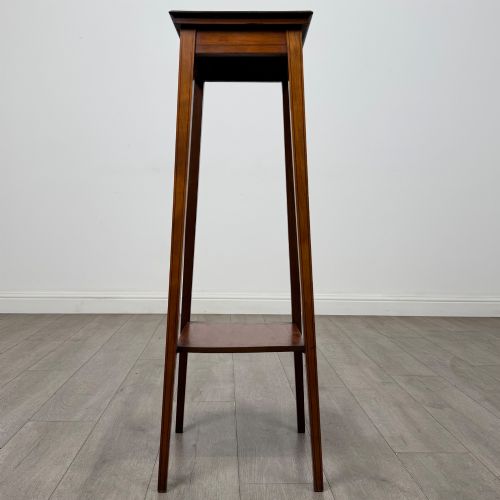
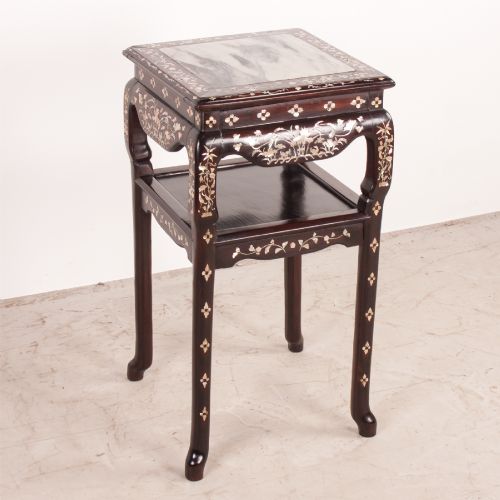
- A tall, slender stand designed to support a light or a decorative vessel such as an urn. Georgian and Edwardian examples utilise shaped mahogany and satinwood.
- Plinth
- A heavy rectangular block or base that elevates an urn or statue. These provide structural stability and visual weight to the composition.
Urns on Pedestals: Frequently Asked Questions
Were these urns meant for gardens or interiors?
Urns on pedestals served both domestic and outdoor functions depending on their material construction. Weather-resistant metals and stones stood in gardens, while carved timbers and fine bronzes remained inside.
Indoor iterations held plants or acted as decorative architectural accents in reception rooms. Garden versions defined pathways, terraces and lawns.
How do I identify a Grand Tour piece?
Grand Tour pieces typically date from the nineteenth century and reflect classical antiquities seen by travellers in Italy. They frequently utilise exotic marbles and patinated bronzes.
Smaller-scale tazzas and architectural models form the core of this category. These objects brought classical scholarship into nineteenth-century homes.
What distinguishes cast iron from stone urns?
Cast iron urns allow for sharper relief detailing and thinner walls than cast stone or terracotta. Foundries could achieve complex neoclassical motifs with crisp edges.
Stone and reconstituted stone versions possess greater mass and weather through porosity. Over time, stone develops lichen and surface patination.
Are pedestals and urns always original pairs?
Many surviving pieces represent married sets where vessels and plinths from the same period were united later. Original matching pairs preserve uniform patination and manufacturing traits.
Checking the seating joints and material wear helps determine whether components belong together. Both matched sets and assembled pairs appear across historical periods.