

Upholstered Wood Dining Chairs
Upholstered wood dining chairs combine solid timber frames with padded seats, offering formal presence around a dining table through various historical periods.
Upholstered Wood Dining Chairs
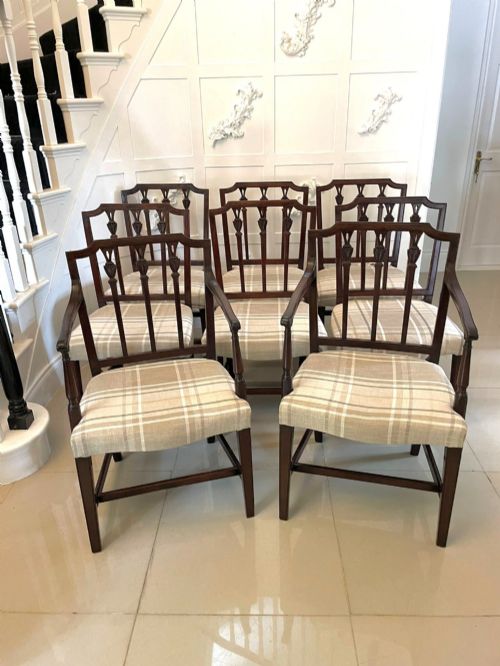
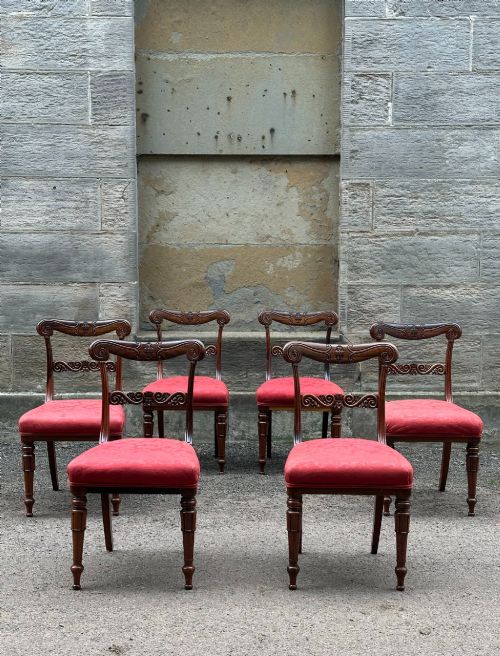
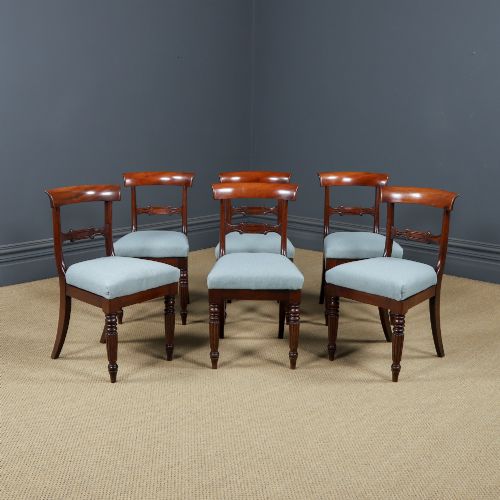
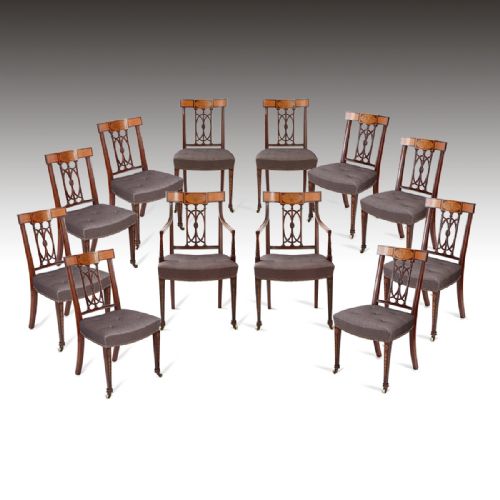
When you search for upholstered wood dining chairs, you encounter seating built from centuries including the eighteenth, nineteenth, and twentieth. The listings span forms such as side chairs, armchairs, library chairs, and desk chairs originating from English, Scottish, French, Italian, and Dutch workshops.
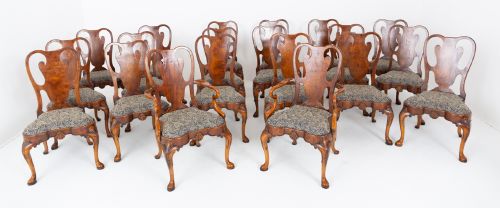
The material combinations on this page pair dense timbers with fabric, velvet, leather, and brass details. You will find sets ranging from pairs and quartets up to large assemblies of twelve or twenty seats.
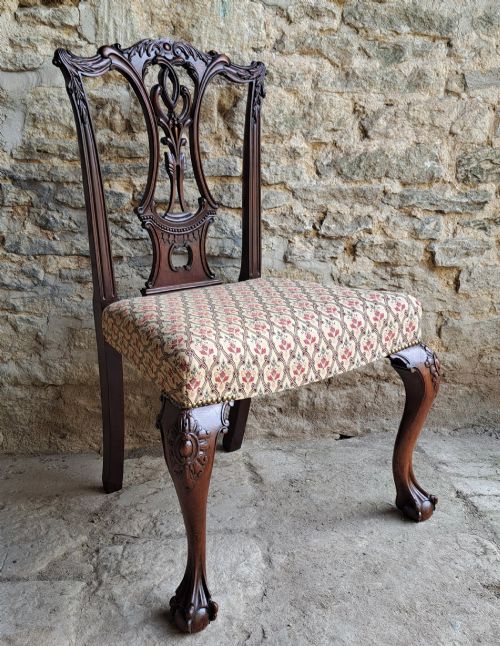
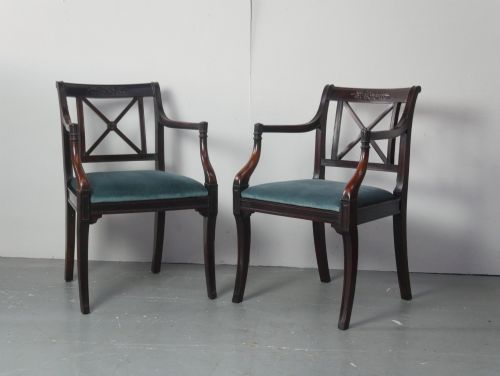
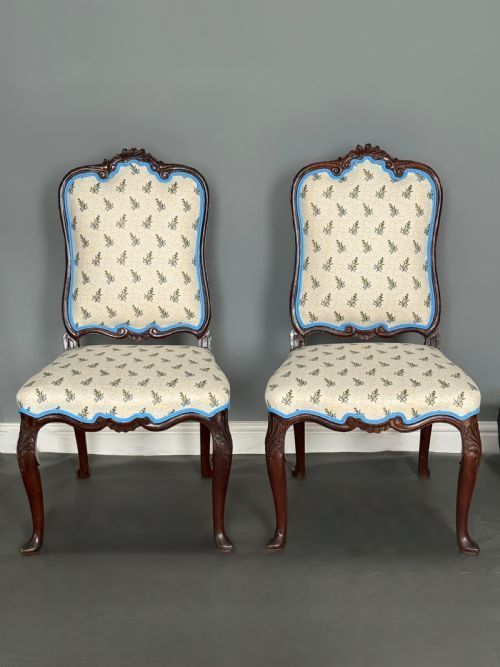
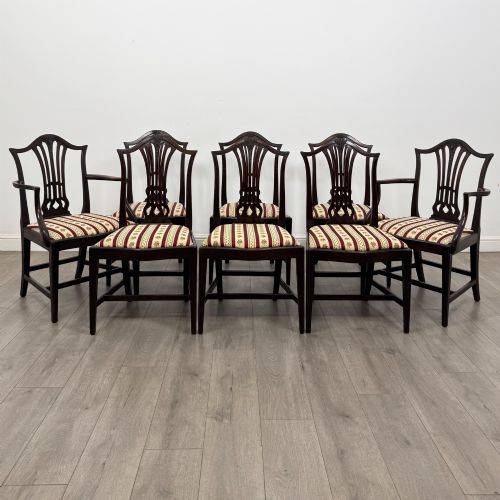
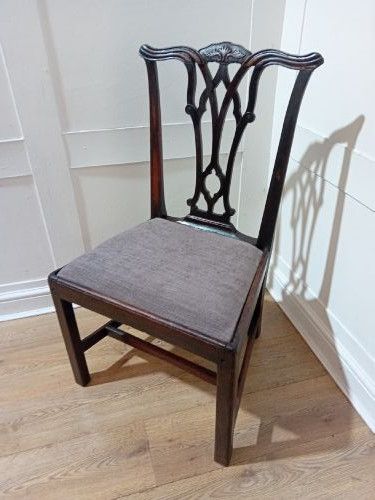
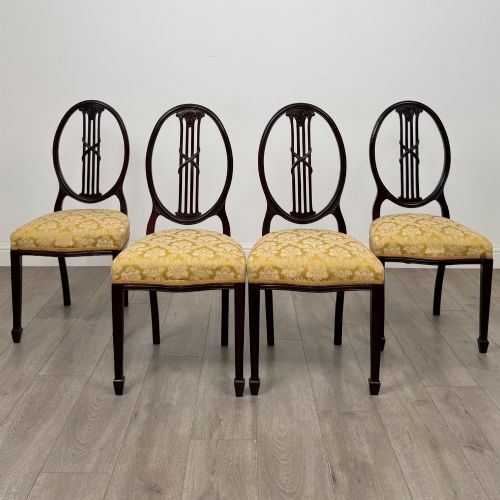
Styles represented include Georgian, Regency, Victorian, and Edwardian periods alongside later revivals such as Chippendale style, Hepplewhite Revival, and Queen Anne style. Mahogany and rosewood dominate the timber selection, though oak, elm, walnut, and satin birch also appear.
Materials and construction methods
Makers utilised solid hardwoods like Cuban mahogany and rosewood for structural frames, turning and carving timber to form legs, rails, and shaped backs. Ebonised finishes, gilding, and paint also surface on French salon chairs and Victorian seating.
Seat construction relies on upholstery fabric and velvet stretched over padding supported by the wooden frame. Brass fittings and leather appear on specific library and desk variants to add durability.
A solitary hand chair from the Regency period offers a surprising sculptural grasp where a normal backrest should be.
Evaluating standard and design execution
Quality rests on the crispness of carved details in the timber backs and the structural integrity of the joints connecting the legs and seat rails. Substantial sets matching in timber grain and colour elevate the standard above mixed or altered groups.
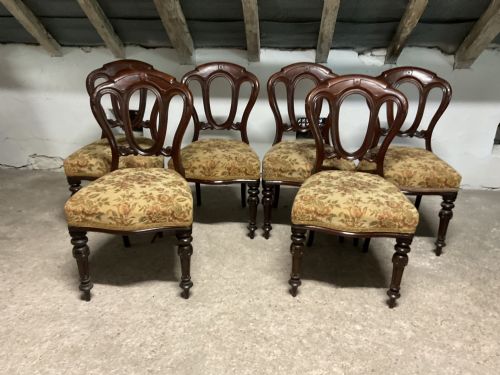
The refinement of the silhouette, from balloon backs to shield backs and carved armchairs, determines how successfully the seat integrates proportion and comfort.
Gillows·Alfred Allen of Birmingham
The Upholstered Wood Dining Chairs Glossary
- Balloon back
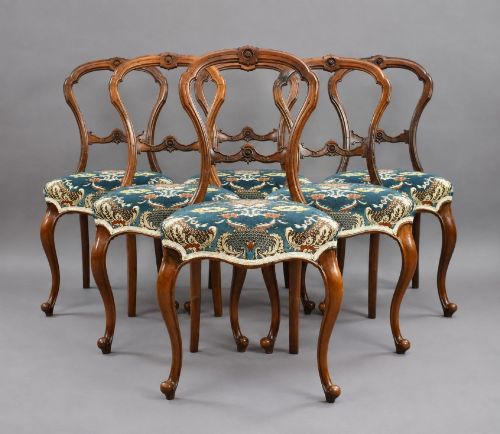
- An open wooden chair back curved in the continuous outline of a balloon. This design gained prominence during the Victorian era.
- Shield back
- A chair back shaped like a heraldic shield, commonly associated with Georgian and revival design. Carved splats often fill the interior frame.
- Carver
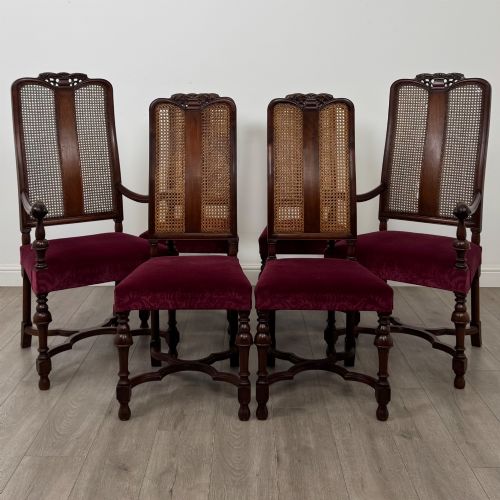
- An armchair designed with elbow supports, traditionally placed at the head of a dining table. Pairs of these often accompany larger sets of side chairs.
- Cabriole leg
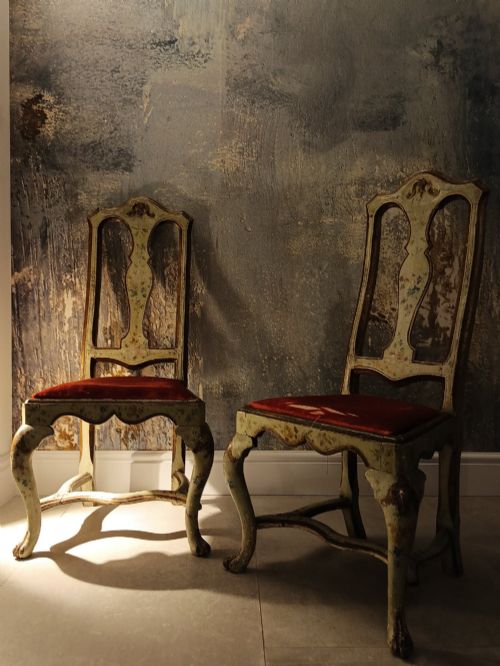
- A furniture leg that curves out at the knee and tapers inward to an ankle or foot. The form draws inspiration from animal limbs.
- Splat
- The vertical wooden strip down the centre of a chair back connecting the seat to the top rail. Carving or pierced work frequently decorates this element.
Upholstered Wood Dining Chairs: Frequently Asked Questions
How do I care for antique wood chairs?
Maintain the timber by applying appropriate wax polish occasionally and keeping the furniture away from direct heat sources. Protect the upholstered pads from strong sunlight to preserve the fabric fibres.
Check the stability of the joints periodically without applying harsh chemical cleaners to the finished wood surfaces.
Are these chairs comfortable for daily dining?
Many historical dining seats offer supportive upright posture through padded upholstery and curved wooden backrests. The depth and height vary according to the specific period of manufacture.
Pairs or larger sets can serve everyday use if the frame construction remains solid and the padding provides adequate resilience.
How can I date an antique dining chair?
Examine the timber species, joinery methods, and stylistic cues such as shield backs or balloon framing. Eighteenth and nineteenth-century pieces display specific regional cabinetmaking traits.
Revival pieces from the twentieth century often replicate earlier Georgian or Victorian aesthetics while retaining newer construction signatures.
Can I mix different chair styles together?
Combining side chairs and carvers from related periods creates a traditional dining room arrangement. Maintaining consistency in timber types, such as mahogany or rosewood, helps unify disparate pieces.
Matching sets of four, six, or more provide a uniform appearance, whereas individual salon or desk chairs suit eclectic spaces.