
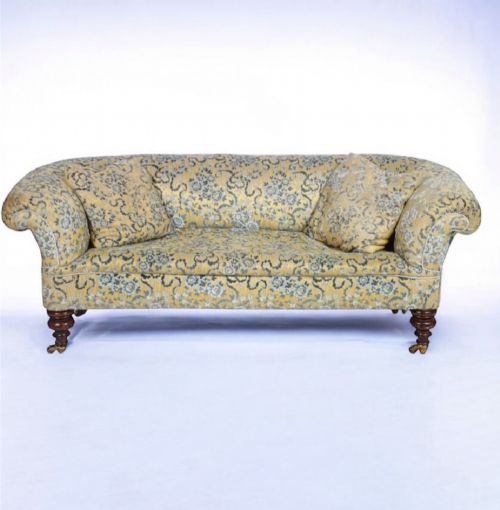
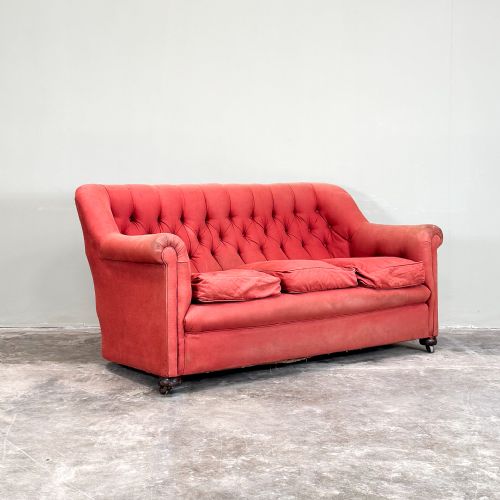


Upholstered Three Seater Settee
An upholstered three seater settee offers substantial seating, combining period timber frames with soft fabric covers.
Upholstered Three Seater Settee
An upholstered three seater settee provides generous seating capacity while anchoring a room with traditional proportions. When exploring an upholstered three seater settee, buyers encounter pieces spanning from the Regency and Victorian eras through the Edwardian period and into the 1930s.
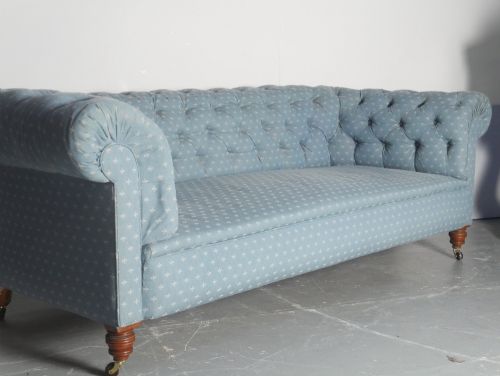
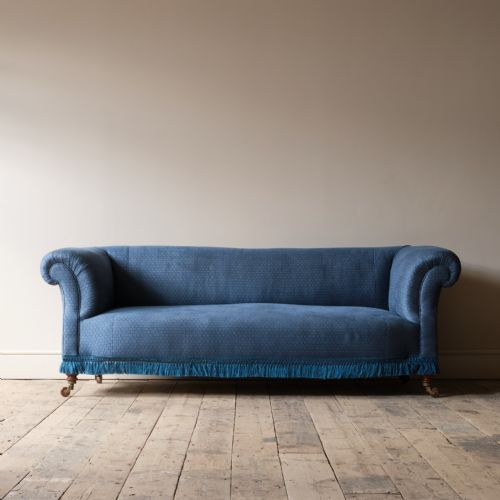
The selection ranges from formal camelbacks and Chesterfield designs to relaxed English country house seating and drop end models. Many examples arrive covered in floral prints, velvet, or plain fabric, while others await reupholstery to suit modern interiors.
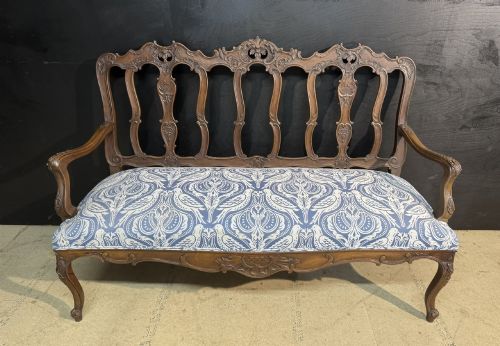
Formations include serpentine camel backs, straightforward mahogany frames, and ornate gilt wood structures. These large seats serve as central furniture items in drawing rooms, studies, and formal reception spaces.
How they were made
Frames rely on sturdy timbers such as mahogany, walnut, and general wood, often shaped with hand carving or classical proportions. Joinery techniques from the nineteenth and early twentieth centuries ensure structural endurance beneath the padding.
Upholstery involves layers of traditional stuffing secured with hessian backing, finished with fabric coverings fixed by brass tacks or piping. Show wood elements display polished mahogany or walnut surfaces, while specific frames feature gilt wood or painted finishes.
Listings include timber frames in mahogany and walnut, alongside upholstered finishes in velvet, hessian, and patterned fabric.
What varies in quality
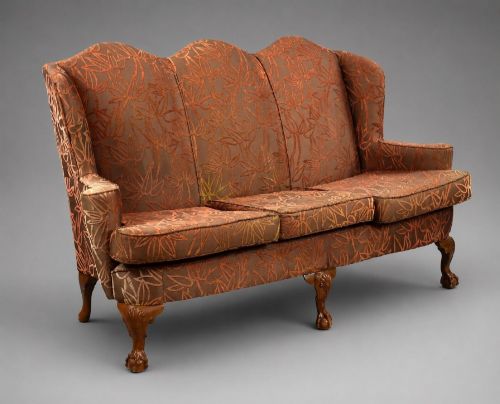
The integrity of the underlying timber frame and the precision of any carved details distinguish finer examples from standard production. Superior pieces exhibit well-balanced proportions, such as serpentine camel backs or precise Chinese Chippendale style elements, executed by skilled makers.
The condition and authenticity of the show wood, whether polished walnut, mahogany, or gilt wood, dictate the standing of a piece. Furthermore, surviving maker signatures or stamps on frames elevate historical interest significantly.
Hampton and Sons·Howard and Sons·William Birch
The Upholstered Three Seater Settee Glossary
- Camel back
- A sofa back featuring a graceful, undulating convex curve resembling a camel's hump. This profile gained popularity during the Georgian period and reappeared in later revival styles.
- Drop end
- A sofa design where one or both armrests can be lowered via a mechanical hinge. This allows the seating to convert into a temporary daybed or lounging surface.
- Chesterfield
- A deep button-tufted sofa style featuring arms and back of the same height. Traditional versions incorporate rolled arms and substantial padding.
- Knowle sofa
- A traditional English sofa style characterised by high, adjustable or hinged wings attached to the back by cord or decorative braids. Original pieces often originate from country house settings.
- Show wood
- The exposed, polished wooden parts of a largely upholstered piece of furniture. It highlights the craftsmanship of the frame beneath the fabric.
Upholstered Three Seater Settee: Frequently Asked Questions
How do I identify a 19th century settee?
Examine the timber used in the underframe and the style of the carving, noting that nineteenth century examples often utilise solid mahogany or walnut with hand-finished details.
Look beneath the upholstery or check for maker stamps, which frequently appear on nineteenth century frames from workshops like Howard and Sons.
Can I buy a settee for reupholstery?
Several pieces are listed specifically for reupholstering, allowing buyers to select their own fabric to match existing interior schemes.
These frames provide an opportunity to restore the internal webbing and padding while retaining the antique wooden structure.
What is a serpentine camel back?
A serpentine camel back refers to a sofa back that combines an undulating central hump with wavy, serpentine horizontal lines.
This sophisticated silhouette draws on Georgian design principles and appears on both eighteenth century originals and later nineteenth century interpretations.