


Three Seat Settee
A three seat settee provides generous long-form seating, combining historical joinery with practical room for three.
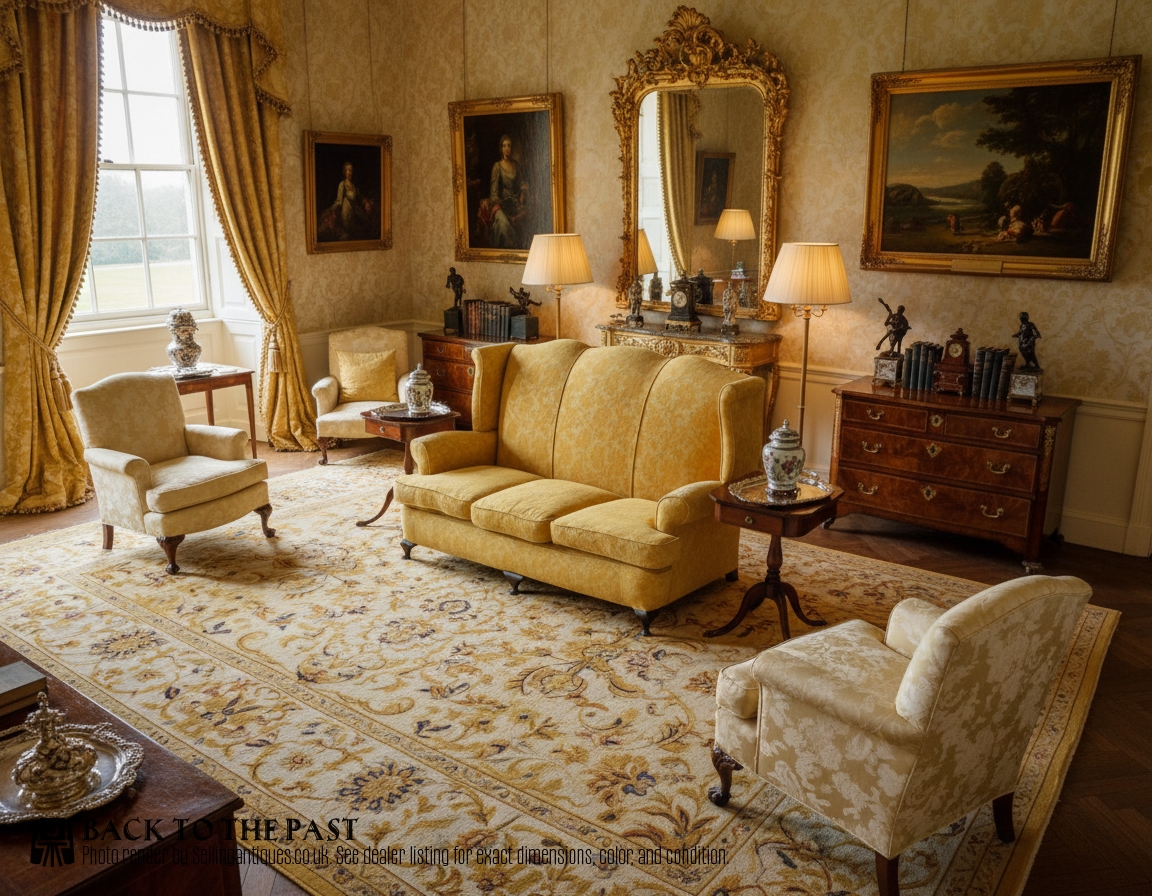
Three Seat Settee
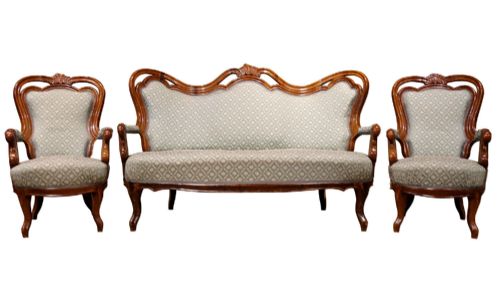
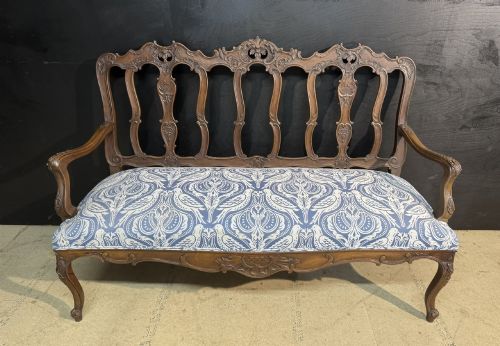
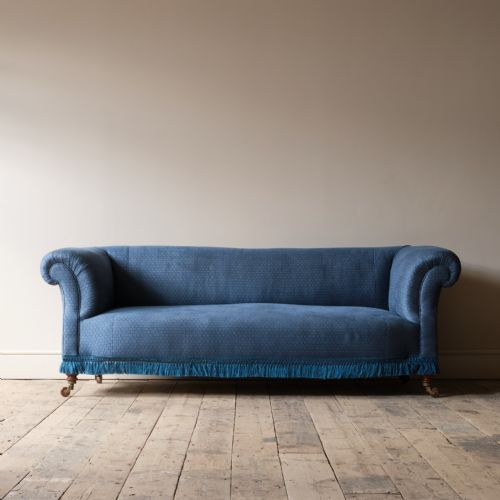
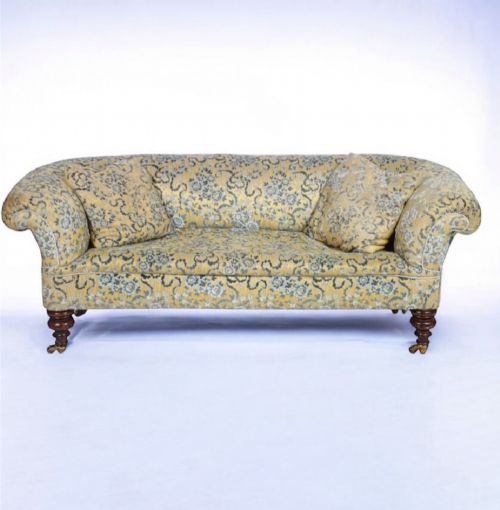
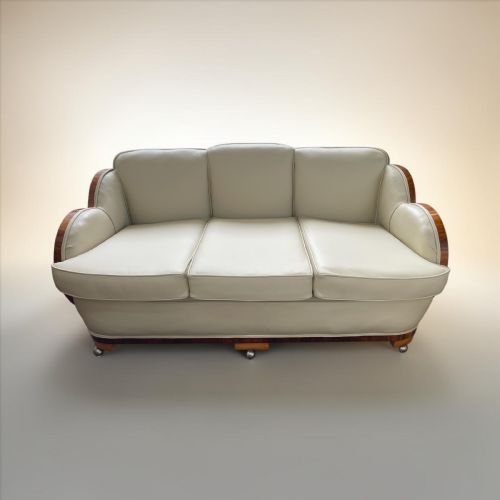
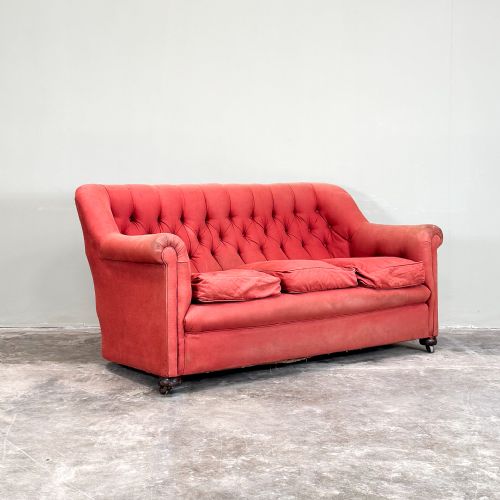
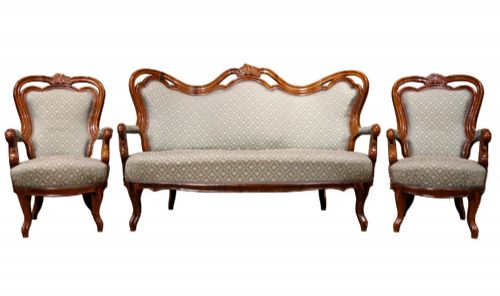
A three seat settee is a long seating form designed for multiple occupants, appearing across nineteenth-century and early twentieth-century periods. These pieces range from substantial Chesterfield and deep-seated country house sofas to carved salon suites and period revival frames.
Buyers encounter walnut, mahogany, and giltwood timber structures alongside upholstered frames covered in leather, velvet, and textile. Many examples reflect specific historical revivals, including Queen Anne, Georgian, Hepplewhite, and Carolean styles, or bear attribution to notable cabinet makers.
How they were made
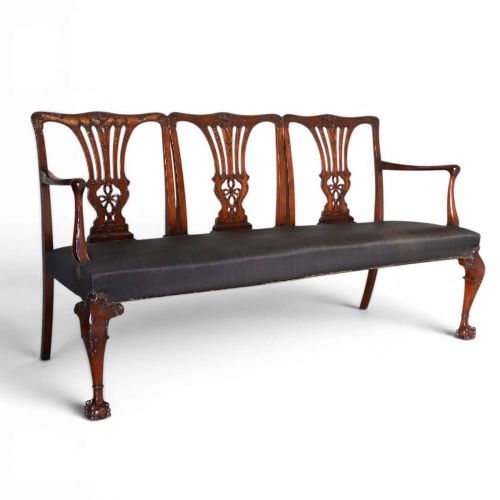
Makers constructed these frames using dense hardwoods like mahogany, walnut, teak, padauk, and rosewood, often combining exposed carved woodwork with concealed internal joinery. Structural elements include cabriole legs, ball and claw feet, and intricate shield or chair-back frames.
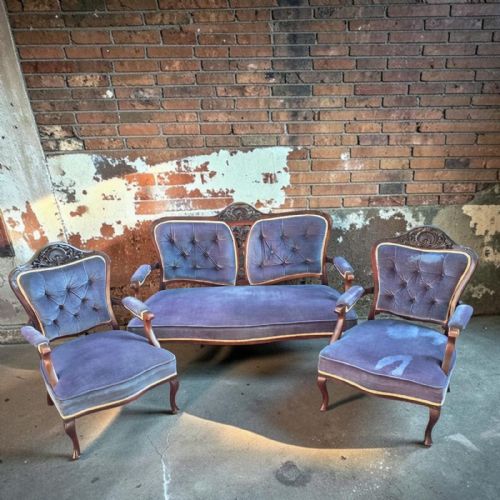
Upholstery techniques involve traditional sprung interiors, feather cushions, button-backed panels, and hand-tacked leather or fabric coverings. Artisans incorporated decorative details such as brass castors, gilt accents, and inlaid woodwork.
Some nineteenth-century makers evidently believed that if three people must share a seat, they ought to do so upon eight sturdy legs.
What varies in quality
Quality rests in the integrity of the timber frame and the sophistication of the carving, ranging from robust country house constructions to finely detailed continental salon suites. The depth of hand-carved detailing on mahogany or walnut frames distinguishes high-workmanship pieces from simpler utilitarian seating.
The standard of upholstery materials, from original un-restored leather to specialised designer textiles and feather-filled cushions, dictates the tactile depth of the piece. Surviving maker stamps and fully intact original frames command distinct attention from collectors.
Hampton and Sons·Harry and Lou Epstein·Howard and Sons·Gillows
The Three Seat Settee Glossary
- Chesterfield
- A upholstered sofa characterised by deep buttoning and equal height back and arms. These pieces frequently appear in leather or traditional textiles across the nineteenth century.
- Bergere
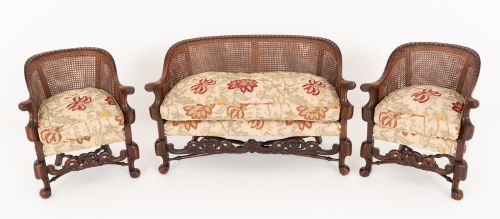
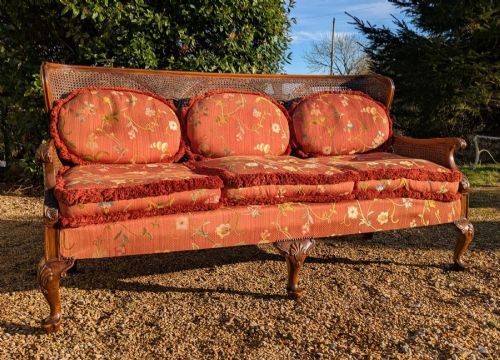
- An enclosed wooden-framed armchair or sofa featuring woven cane panels. This French-inspired form often includes loose seat cushions.
- Salon suite
- A matched set comprising a small sofa and accompanying armchairs. These matched groupings were designed for formal reception rooms.
- Canape
- An ornamental upholstered bench or small sofa originating in French design. They display exposed wooden frames with carved cabriole or straight legs.
- Camel back
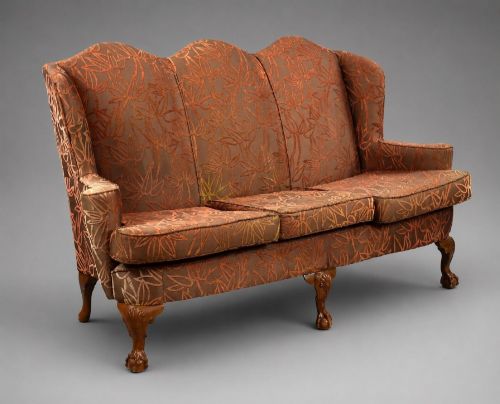
- A sofa back profile featuring a gentle, undulating serpentine curve resembling a camel's hump. This classical contour appears on Georgian and revival styles.
Three Seat Settee: Frequently Asked Questions
What defines a three seat settee?
A three seat settee is an extended seating form designed to accommodate three people comfortably. These pieces span diverse historical periods, offering wood frames paired with textile, leather, or velvet upholstery.
Designs range from button-backed Chesterfields to carved salon suites and deep-seated country house sofas. The category encompasses both formal period revivals and relaxed domestic seating.
How do I identify a period frame?
Period identification relies on examining the timber species, joinery methods, and characteristic stylistic motifs. Cabinet makers utilised mahogany, walnut, and rosewood across the nineteenth and early twentieth centuries.
Details such as carved shield backs, ball and claw feet, or specific revival styles like Queen Anne and Hepplewhite point toward distinct eras of production.
Where were these settees used?
These settees served primarily in domestic reception rooms, drawing rooms, and country house parlours. Large salon suites furnished formal entertaining spaces.
Deep-seated variations provided comfortable lounging options for residential living areas, while bedroom or hallway versions utilised compact chair-back or bench configurations.
How do I live with antique upholstery?
Living with antique upholstery involves balancing historical preservation with daily domestic use. Pieces featuring original leather or vintage fabric require careful conditioning and protection from direct sunlight.
Many examples offer the flexibility of professional re-upholstery or conservation, allowing antique frames to be paired with modern or period-appropriate textiles.