
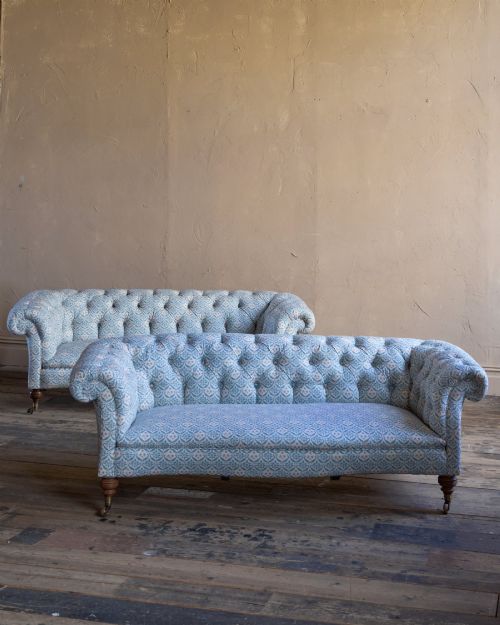
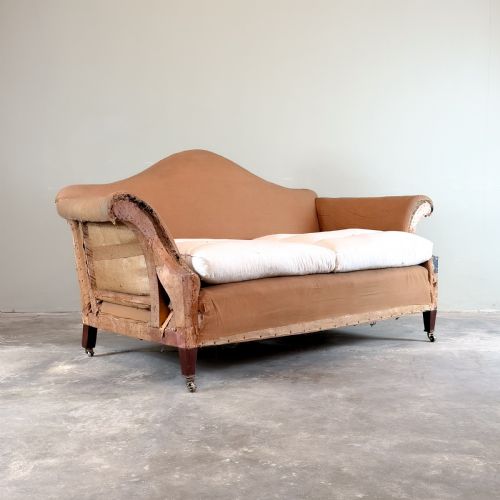
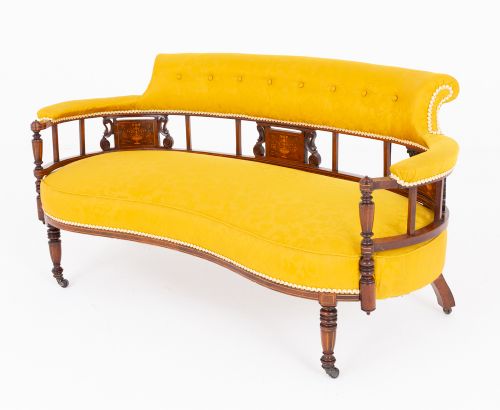
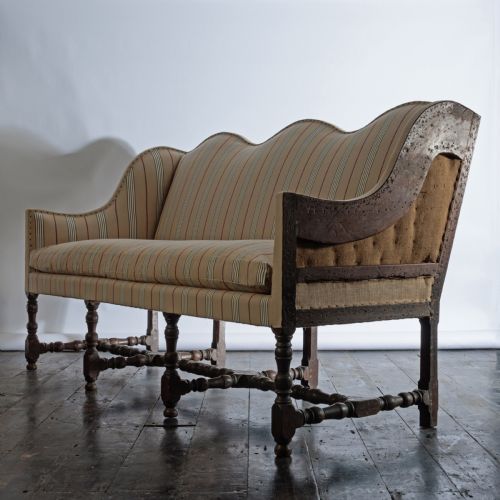




Upholstered Serpentine Couch
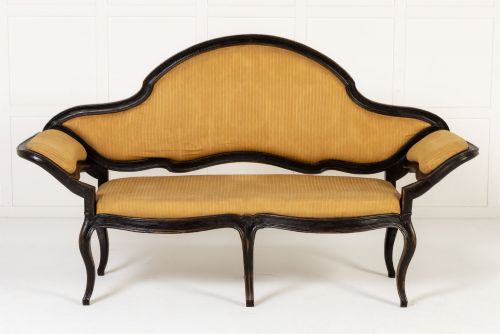
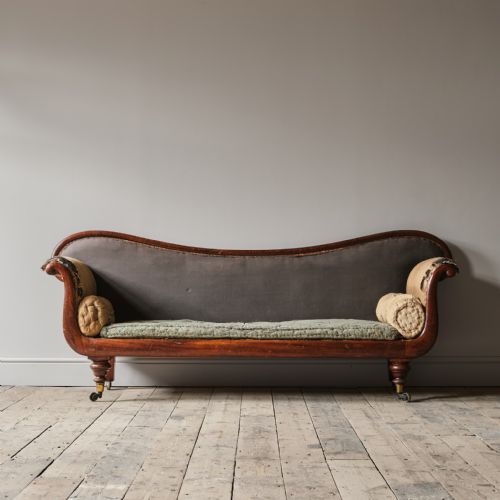
An upholstered serpentine couch brings sweeping lines and generous seating to a room, offering the graceful curves of eighteenth and nineteenth-century design.
Upholstered Serpentine Couch
An upholstered serpentine couch is a seating piece defined by its undulating front rail and arched backrest, appearing in forms such as the camel back and the double end sofa. These pieces span centuries from the seventeenth century through to the Edwardian era and 1940, drawing on George III, Hepplewhite, and Chippendale styles.
The version most commonly met on this page is the nineteenth-century serpentine camel back sofa, often reflecting Georgian proportions or English Country House taste. Alongside these, buyers encounter Victorian walnut and mahogany framed settees, Edwardian interpretations, and eighteenth-century Italian ebonised examples.
How they were made
Frames are constructed from timbers including mahogany, walnut, rosewood, and general wood, providing the structural foundation for the undulating serpentine form. Traditional upholstery materials such as cotton, fabric, jute, and velvet cover the padding, secured with brass detailing where appropriate.
Joinery and carving techniques support the distinct styles, from Chinese Chippendale woodwork to Victorian showwood frames and barley twist turnings. The internal webbings and stuffings use natural fibres like jute and cotton to maintain the arched tension of the camel back.
Some Victorian conversation seats feature barley twist frames designed so occupants could chat face-to-face without craning their necks.
What varies in quality
The calibre of an upholstered serpentine couch rests upon the definition of the carved wooden frame and the precision of the serpentine curve along the front rail. Finer examples display crisply executed woodwork in mahogany or walnut, whereas simpler pieces rely on basic turned legs or concealed frames.
Proportion and execution distinguish the output, particularly how well the camel back arch balances the undulating seat base. The choice of covering materials, from plain cotton to rich velvet and showwood surrounds, shifts the visual weight and finish of the piece.
Howard and Sons
The Upholstered Serpentine Couch Glossary
- Serpentine
- A front rail or edge shaped with a central convex curve flanked by concave curves, mimicking the movement of a snake. This contour defines the primary silhouette of the couch.
- Camel back
- A sofa backrest featuring a continuous convex arch along the top edge, often rising smoothly toward the centre. It creates a distinctive profile against the wall.
- Showwood
- A furniture frame where portions of the polished wood are intentionally left visible around the upholstery rather than being entirely covered in fabric. This highlights the mahogany or walnut structure.
- Hepplewhite manner
- A design style inspired by the eighteenth-century cabinet maker George characterised by elegant tapering legs and refined proportions. Pieces in this manner follow classical restraint.
- Barley twist
- A type of turning carved to resemble a twisted rope, frequently seen on Victorian frames and structural supports. It adds texture and visual rhythm to the woodwork.
Upholstered Serpentine Couch: Frequently Asked Questions
What is a serpentine couch?
A serpentine couch is a traditional seating form characterised by a wavy front rail that curves inward and outward. These pieces date across several periods and incorporate styles from George III designs to Victorian frameworks.
They function as principal living room seating, combining deep upholstery with sculptural wooden frames. The undulating shape softens the geometry of a room while providing formal proportions.
How do I date an upholstered couch?
Dating relies on observing the timber used, the framing style, and the upholstery technique. Eighteenth-century examples often show Hepplewhite or Chippendale influences, while nineteenth-century pieces frequently feature mahogany showwood or Victorian walnut.
Secondary indicators include the presence of traditional stuffing materials like jute and cotton beneath the top fabric. Comparing the frame construction to known period styles clarifies the era of manufacture.
Where should I place a serpentine sofa?
These couches suit formal reception rooms, drawing rooms, or spacious country house interiors where their curved silhouettes can be appreciated from multiple angles. Their decorative backs make them effective when positioned away from walls.
Pairing the piece with complementary antique armchairs or side tables enhances the historical proportion. Adequate clearance around the undulating front ensures the serpentine line remains a focal point.
What is the difference between a sofa and a settee?
Historically, a settee often denoted a narrower, lighter wooden-framed seat with partial or full upholstery, whereas a sofa traditionally described a fully padded piece meant for reclining. Over time, the terms have often been used interchangeably in listings.
On this page, both terms cover upholstered seating designed for multiple occupants. The distinction in practice comes down to the specific frame architecture and the extent of the padding.