



Upholstered Oak Armchairs
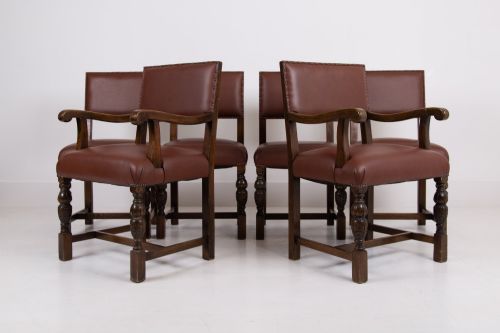
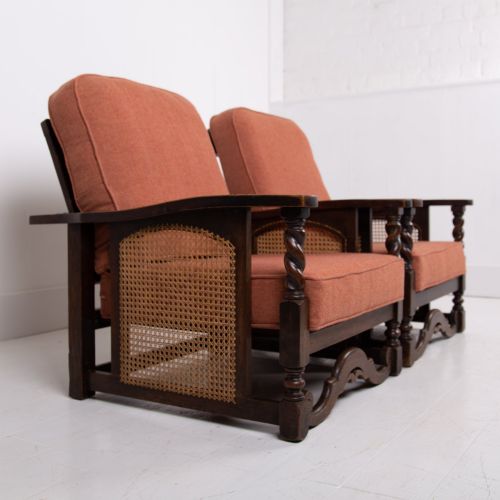
Upholstered oak armchairs combine solid timber frames with padded seating, spanning centuries of domestic comfort and craft.
How they were made
Carpenters constructed the structural frames primarily from solid oak, sometimes incorporating walnut, beech, or ebonised elements for specific decorative effects. These wooden skeletons utilise traditional joinery to support the weight of the user and the tension of the internal padding.
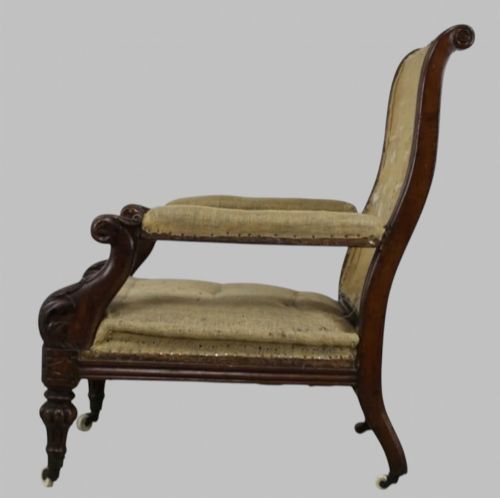
Upholstery techniques combined supportive webbing and springs with padding materials, enclosed in outer coverings of leather, velvet, wool, or standard textiles. Brass tacks, metal fittings, and turned block supports frequently secure or accent the junctions between timber and fabric.
What varies in quality
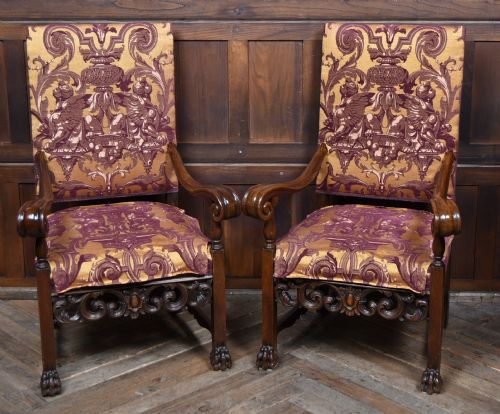
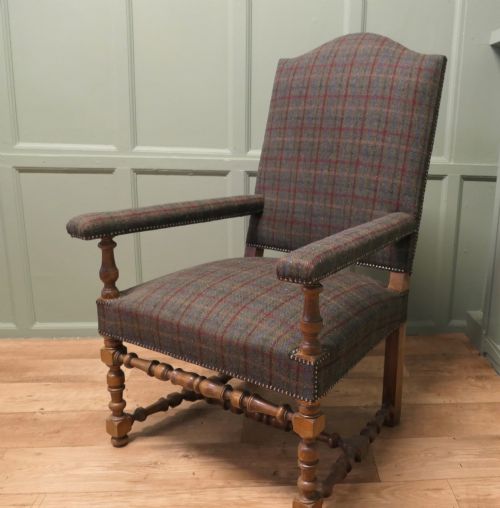
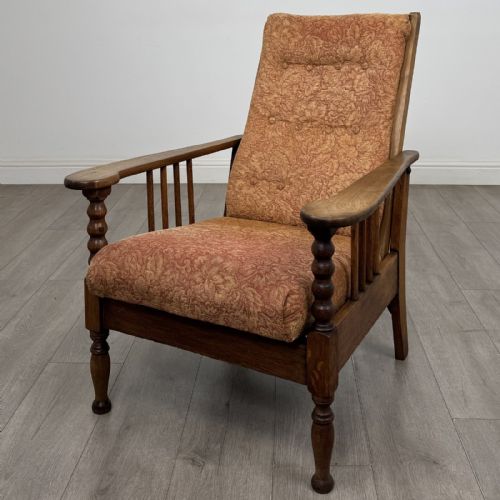
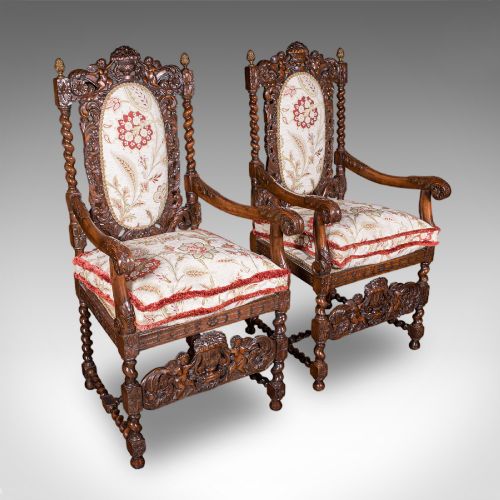
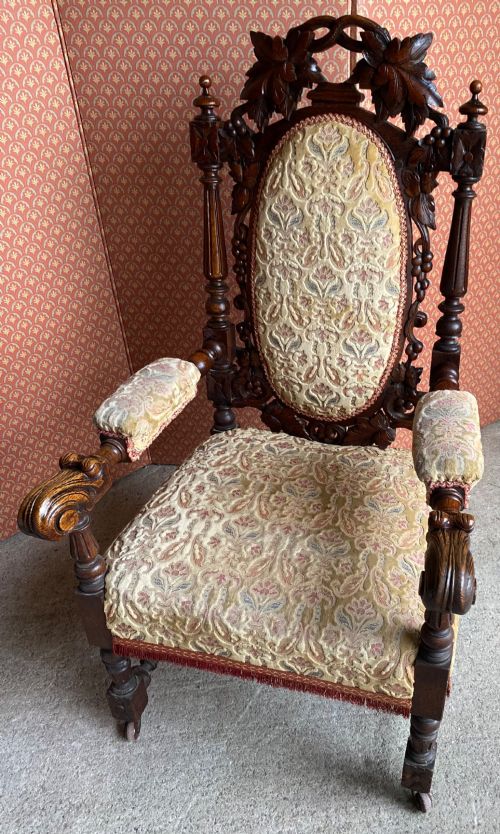
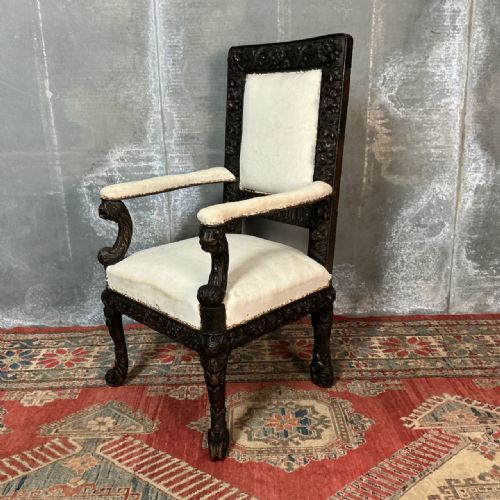
Quality reveals itself in the crispness of the timber carving, particularly around lion heads, crest rails, and turned or barley twist supports. Superior examples maintain structural integrity in the oak frame without excessive timber shrinkage or clumsy repairs.
The standard of upholstery work dictates longevity, distinguishing between rushed modern re-webbing and historically sympathetic padding methods. Selecting pieces with harmonious proportions and intact original framing elements separates standard utility seating from finer workshop productions.
Upholstered Oak Armchairs Retail Price Guide 2026
Typical asking prices for upholstered oak armchairs among the pieces listed under this phrase on Sellingantiques today, from the lower quarter to the upper quarter. They describe what is for sale here now, not the wider market.
Eisteddfod throne chairs occasionally appear alongside standard library seating, bringing a grand sense of Welsh competitive assembly straight to the fireside.
The Upholstered Oak Armchairs Glossary
- Bergere
- An enclosed upholstered armchair with wooden framing, often featuring cane panels on the sides or back. This French form gained popularity during various nineteenth-century revival periods.
- Fauteuil
- An open-armed upholstered armchair originating in France, characterised by exposed wooden arm supports and upholstered back and seat pads. They appear frequently in nineteenth-century interpretations.
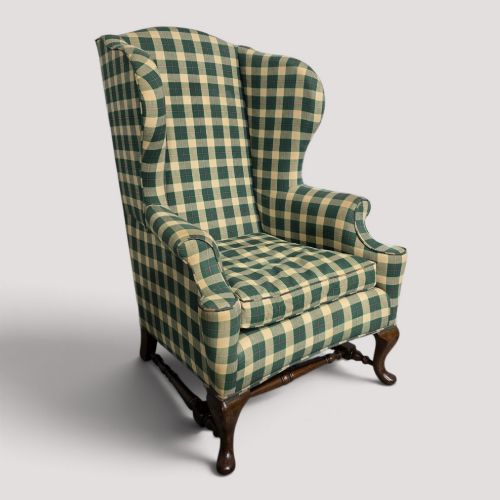
- Wingback
- An armchair featuring side panels attached to the back of the frame, designed to shield the occupant from drafts. Early examples often utilise deep oak frames and leather coverings.
- Barley Twist
- A woodworking technique where the timber shaft is turned into a spiral shape, commonly seen on seventeenth-century and revival-period chair legs and stretchers.
- Gothic Revival
- An architectural and decorative style drawing inspiration from medieval design, typically expressed through pointed arches, heavy oak frames, and carved tracery.
Upholstered Oak Armchairs: Frequently Asked Questions
How do I identify a Victorian oak armchair?
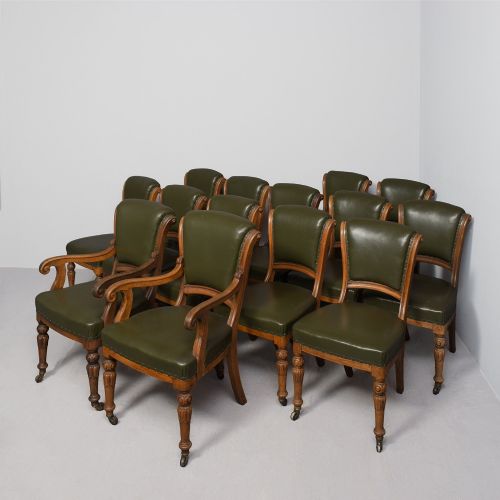
Victorian oak armchairs often display heavier proportions, dark finishes, and decorative carving influenced by Gothic or Renaissance revival styles. They typically feature deep leather or velvet upholstery.
Makers of this era frequently incorporated turned wooden supports, buttoned padding, and robust frames designed for heavy library or parlour use.
Are these chairs suitable for daily desk work?
Many oak armchairs from the late nineteenth and early twentieth centuries were specifically built as desk or library chairs, offering sturdy back support. Revolving and adjustable variants provided practical seating for office environments.
Buyers should check the seat height and arm clearance to ensure the chair fits underneath standard modern tables and desks.
What is the difference between Arts and Crafts and Victorian styles?
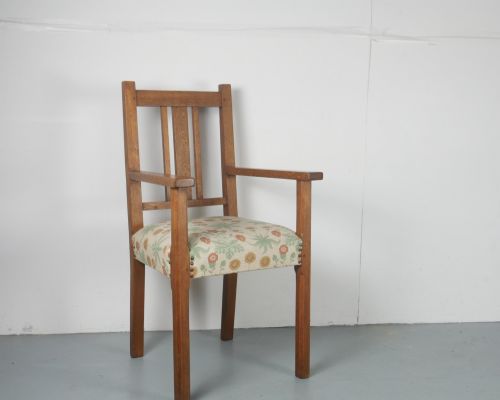
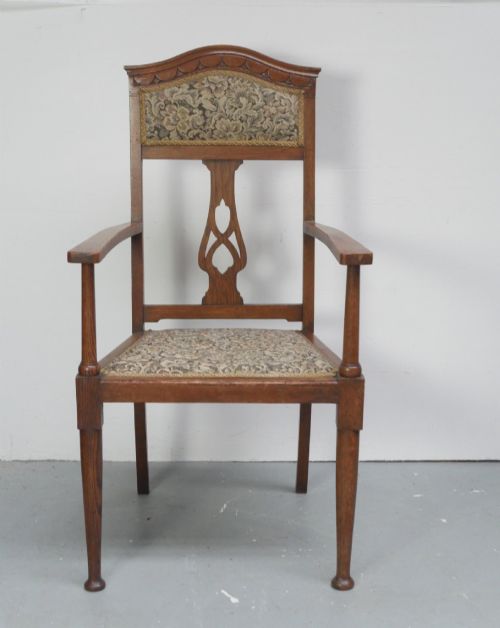
Arts and Crafts armchairs emphasise simple construction, visible joinery, and functional comfort, often reflecting the philosophies of makers inspired by Liberty's. They generally eschew excessive surface ornamentation in favour of honest timber grain.
In contrast, Victorian designs lean towards heavier ornamentation, deep buttoning, and historical revivals like French Renaissance or Gothic motifs.
How should I care for leather upholstery on old oak?
Leather upholstery benefits from gentle cleaning using specialist balms to prevent the hide from drying out over time. Avoiding direct sunlight helps preserve the colour and suppleness of original or older replacement leather.
The surrounding oak frame requires only occasional dusting with a dry cloth and protection from excessive humidity fluctuations.