
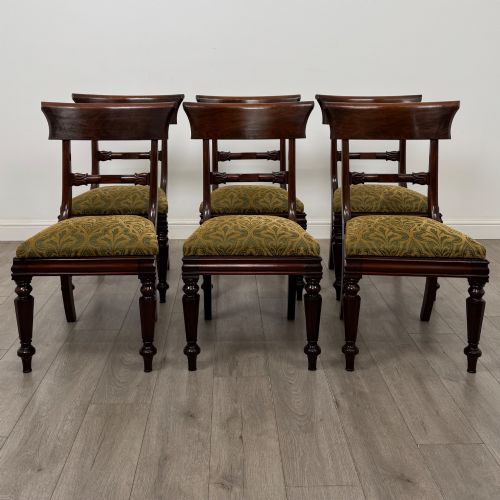
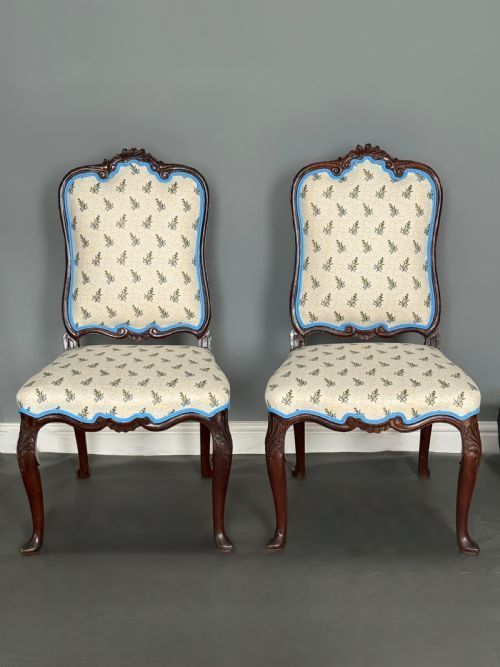
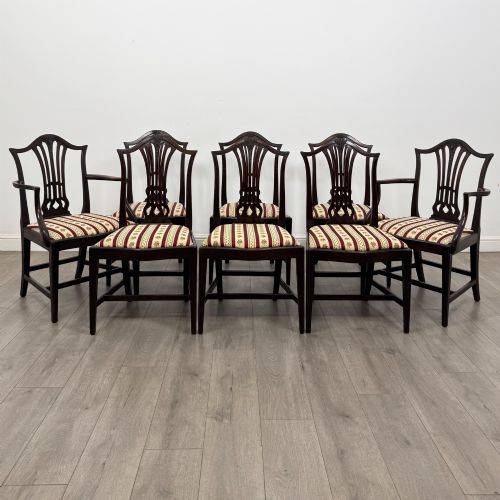
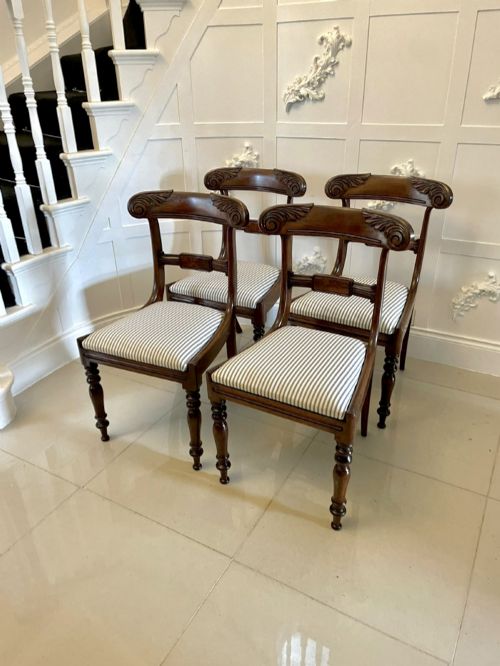


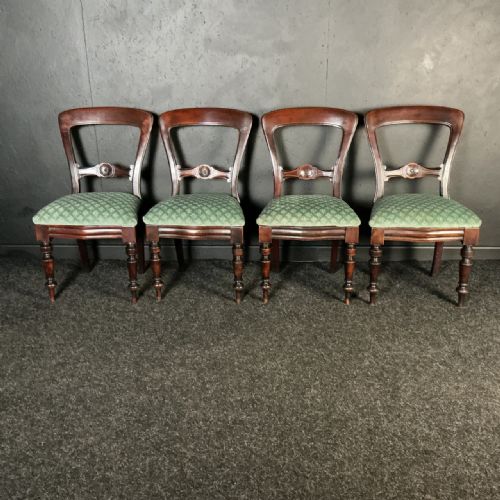
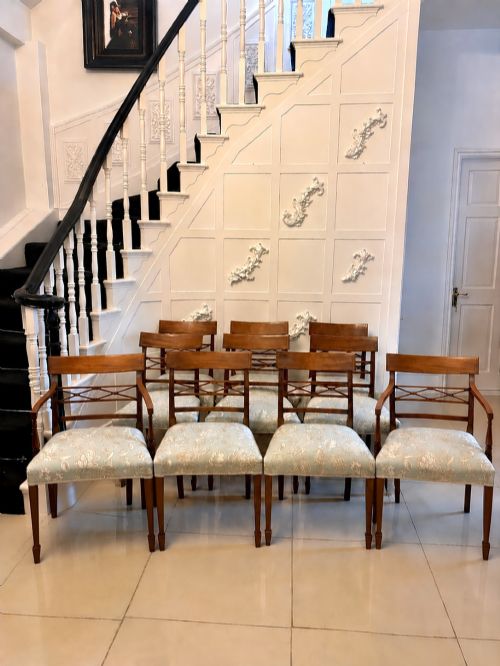
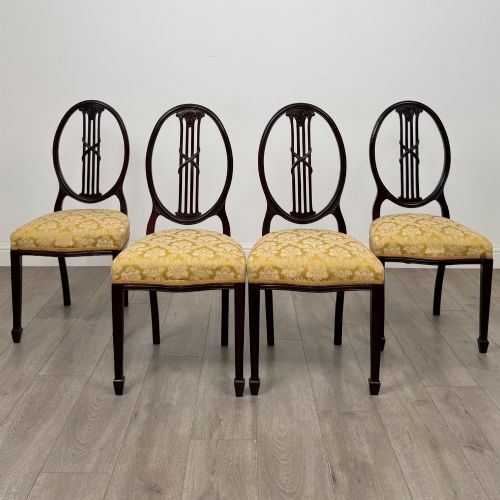
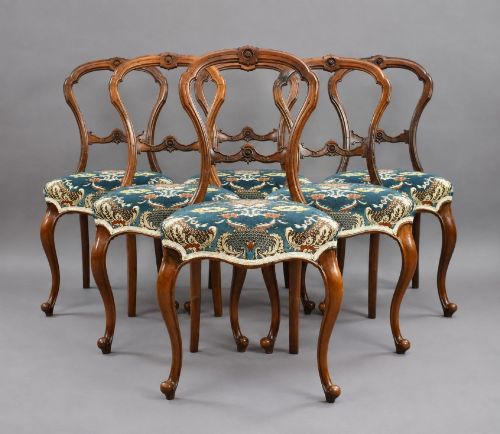
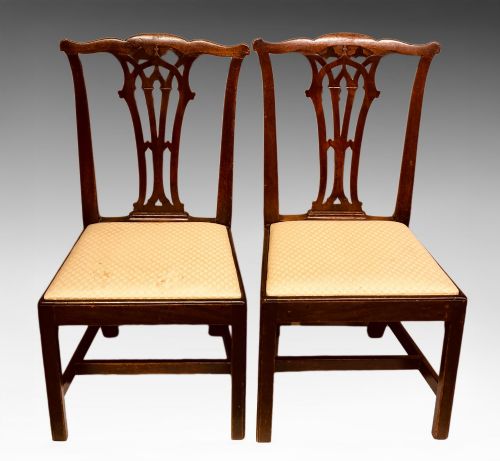
Upholstered Mahogany Side Chairs
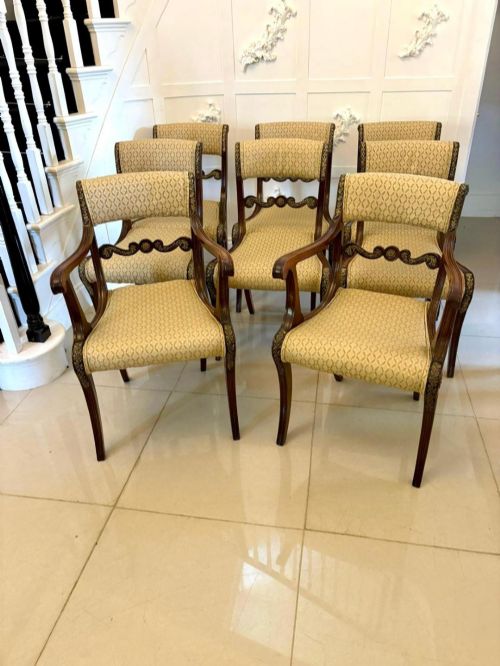
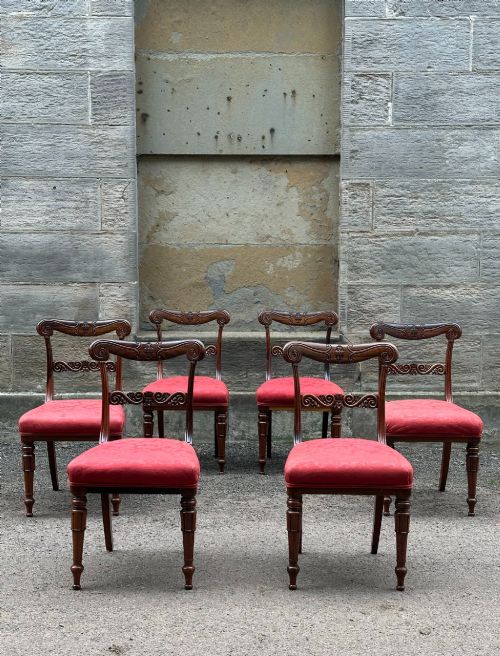
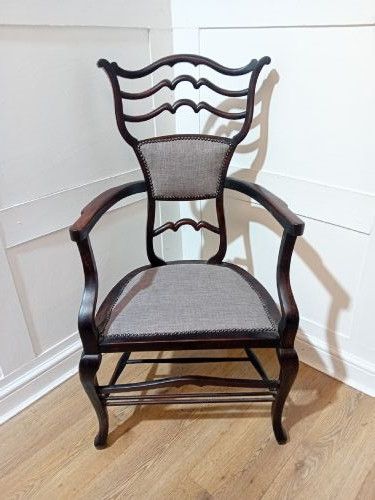
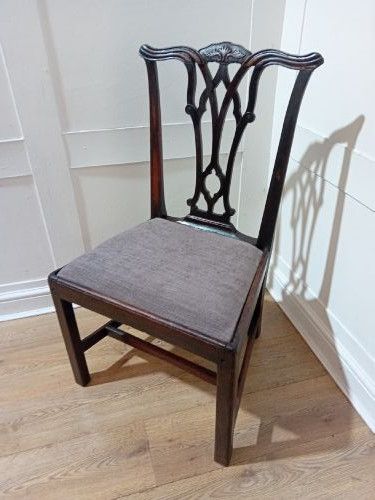
These upholstered mahogany side chairs bring solid timber frames and period textile seats to modern interiors.
Upholstered Mahogany Side Chairs
Upholstered mahogany side chairs span multiple centuries of British design, appearing most frequently in forms dating from the Georgian, Regency, and Victorian periods.
These seating pieces generally lack arms and serve primarily around dining tables, though variants also function in halls, libraries, and bedrooms.
The selections on this page range from single pairs up to large matched sets of ten or twelve chairs.
Design influences across the inventory include Hepplewhite, Sheraton, and William IV styles alongside later revival periods.
How they were made
Makers constructed the structural frames using solid mahogany, frequently selecting dense Cuban mahogany or domestic timbers finished to resemble it.
Upholstery techniques applied over the timber bases utilise materials such as velvet, silk, damask, and standard upholstery fabric, often secured with brass detailing.
Joinery methods rely on traditional cabinet-making practices to ensure the stability of legs, backs, and seat rails without modern mechanical fasteners.
Several chairs include secret hand grips carved underneath the seats for convenient repositioning.
What varies in quality
The standard of carving on the mahogany frame differentiates standard production from exhibition or library quality pieces commissioned from prominent workshops.
Cohesion within larger sets dictates value, as matched groups assembled originally hold greater architectural integrity than assembled sets gathered later.
The subtlety of timber grain and the precision of brass inlay or structural joinery separate standard examples from superior specimens.
Gillows·Maple and Co
The Upholstered Mahogany Side Chairs Glossary
- Mahogany
- A durable tropical hardwood known for a rich reddish-brown colour and fine grain, used extensively in high-grade furniture.
- Side Chair
- An upright chair without arms, designed originally for dining or general placement around a room.
- Balloon Back
- A rounded, oval-shaped chair back contour popular during the Victorian era.
- Shield Back
- A heart-shaped or shield-shaped chair back design associated with late eighteenth-century Hepplewhite and related revival styles.
- Bar Back
- A horizontal cross-rail set across the upper section of a chair back, frequent in Regency and William IV pieces.
Upholstered Mahogany Side Chairs: Frequently Asked Questions
Were these chairs used only for dining?
While most serve around dining tables, smaller versions frequently functioned in bedrooms, hallways, and drawing rooms as occasional seating. Their light frames allowed easy movement between domestic spaces.
Specific forms like hall chairs were designed primarily for formal reception areas rather than prolonged seated dining.
How should I care for antique upholstery?
Maintenance involves gentle surface cleaning appropriate to the specific textile, such as velvet, silk, or damask. Professional conservation helps preserve fragile historical fabrics.
Protecting the chairs from direct sunlight prevents the fading of both the textile covers and the underlying mahogany timber.
What is the difference between Georgian and Victorian examples?
Georgian chairs tend to feature lighter proportions, hand-carved details, and restrained classical lines influenced by designers like Hepplewhite. Victorian pieces often display heavier framing, more pronounced curves, and balloon backs.
Timber selection also shifted over time, moving from early Cuban mahogany stocks toward broader commercial varieties later in the nineteenth century.