

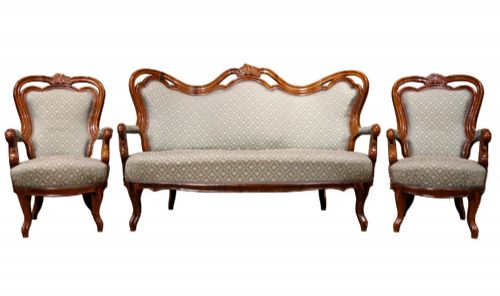


Upholstered Louis XV Settee
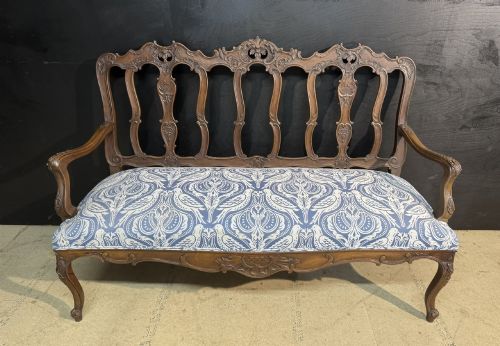
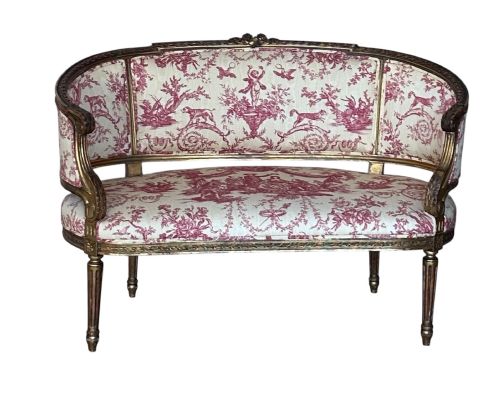
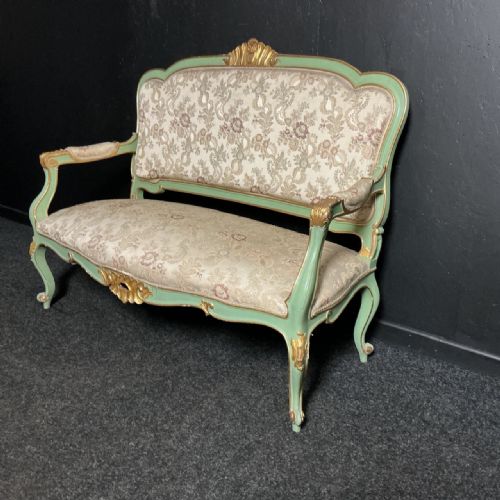
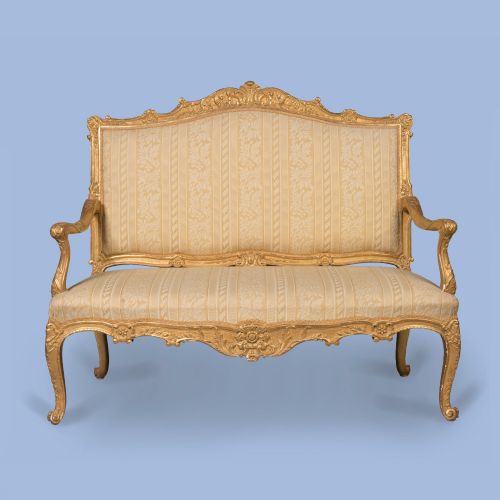
An upholstered louis xv settee brings curved wooden framing and generous seating into a room, drawing on eighteenth-century French design.
Upholstered Louis XV Settee
When you search for an upholstered louis xv settee, you are looking at seating forms created to provide comfortable lounging within formal drawing rooms and salons. The pieces recorded here span the nineteenth and early twentieth centuries, capturing revival phases that imitate original continental cabinet work. Most examples on this page adopt the nomenclature of sofas, canapés, or salon suites.
The prevalent materials include walnut, giltwood, and painted wood, upholstered in various textiles such as silk, velvet, and tapestry. You will encounter two-seater and three-seater variants, often accompanied by matching armchairs in larger salon sets. The defining silhouettes follow the curvilinear lines associated with French rococo taste.
How They Were Made
Carpenters shaped the structural frames from hardwoods including walnut, rosewood, and beech, applying carved details by hand along the crest rails and cabriole legs. Giltwood surfaces received layers of gold leaf over preparation grounds, while other frames were painted or left in their natural timber grain. Caned panels appear on select frames alongside solid wooden supports.
Traditional upholstery techniques involved stuffing horsehair, wool, or plant fibres over webbing and springs, secured with tightly pulled top covers of linen, damask, or silk. The fabric edges were finished with decorative gimp braid or rows of individual brass tacks. Joinery relied on mortise and tenon joints to withstand the outward pressure of the sprung or stuffed seats.
One compact two-seater is specifically listed as an end-of-bed couch, proving that nineteenth-century lounging knew no boundaries.
What Varies in Quality
The crispness of the wood carving dictates much of the visual merit, distinguishing sharply rendered acanthus leaves and scrolling motifs from softer, more mechanically rounded profiles. Frames constructed from dense walnut or heavily gilded timber display superior weight and presence compared to lighter painted alternatives.
The integrity of the structural joinery and the survival of period upholstery materials influence how solidly a frame holds together under daily use. Pieces retaining their original gilding or early textile coverings hold distinct interest for collectors focused on untouched surfaces.
The Upholstered Louis XV Settee Glossary
- Canapé
- A French term for an upholstered sofa or settee, typically featuring an exposed wooden frame and an arched back. These pieces served as formal seating in nineteenth-century reception rooms.
- Cabriole leg
- A furniture leg that bends outward in a convex curve and tapers inward in a concave arc, ending in a scroll or plain foot. This shape is a primary characteristic of louis xv design.
- Giltwood
- Timber that has been coated with a thin layer of gold leaf or metallic powder. It catches candlelight and daylight in formal interiors.
- Bergère settee
- An enclosed upholstered settee where the upholstered areas extend fully to the arms. It offers a more enclosed and cushioned seating experience than open-arm frames.
- Damask
- A reversible figured fabric woven on a jacquard loom, frequently utilised for period upholstery. The pattern reverses between flat and satin weaves.
Upholstered Louis XV Settee: Frequently Asked Questions
How do I clean the fabric on my settee?
Vacuum the upholstery gently using a soft brush attachment to remove surface dust without catching delicate threads. Professional textile cleaning is recommended for heavier marks to avoid water staining the surrounding material.
Keep the settee away from direct sunlight to prevent the textile colours from fading unevenly over time. Period fabrics require careful maintenance to preserve their structural weave.
Are these settees comfortable for everyday sitting?
Many nineteenth-century revival pieces feature deep spring interiors and stuffed backs designed for genuine lounging. The generous length of a three-seater provides ample room for relaxing.
Some early or decorative frames offer a firmer sit due to traditional stuffing methods that prioritise upright posture over deep squabs. Checking the depth and back angle helps determine daily comfort.
How can I tell a revival piece from an 18th century original?
Most examples found here date from the nineteenth and early twentieth centuries, displaying machine-sawn timber marks or later joining methods beneath the upholstery. Eighteenth-century pieces exhibit hand-cut joinery and specific tool signatures unique to period workshop practices.
Examine the secondary woods used for internal framing, as nineteenth-century makers frequently utilised different regional timbers than their eighteenth-century predecessors. Revival pieces often combine historical motifs with the structural preferences of their actual manufacturing era.