
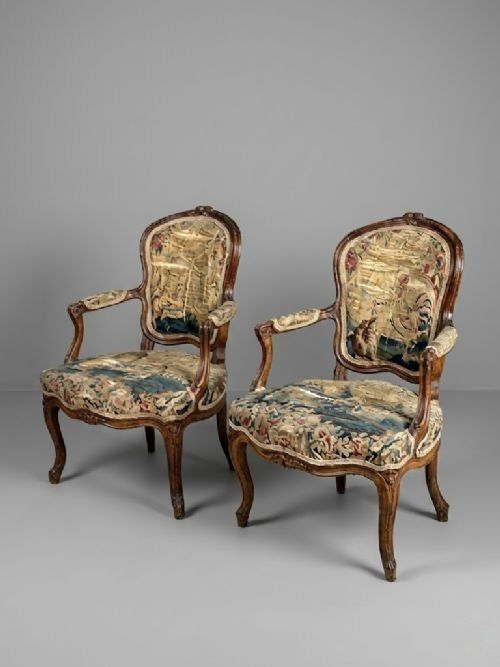
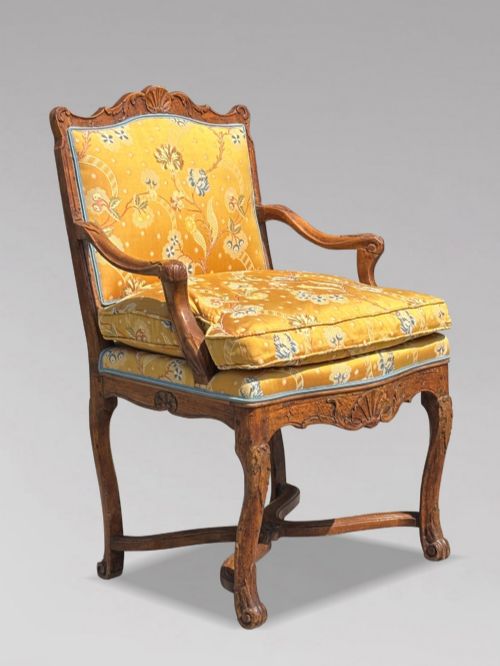
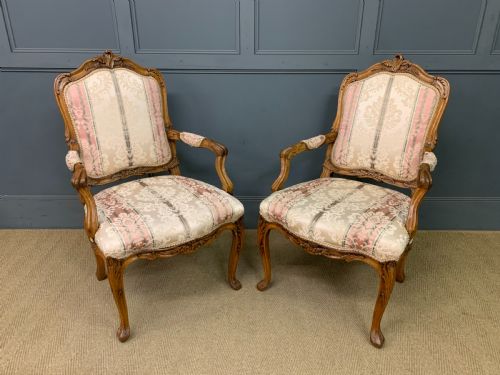
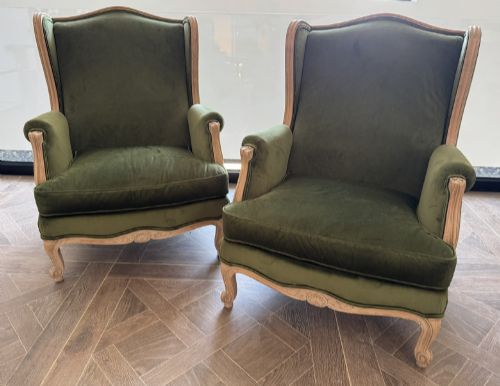
Upholstered Louis XV Armchairs
Upholstered Louis XV armchairs bring the flowing, asymmetrical elegance of eighteenth-century French seating into modern rooms.
Upholstered Louis XV Armchairs
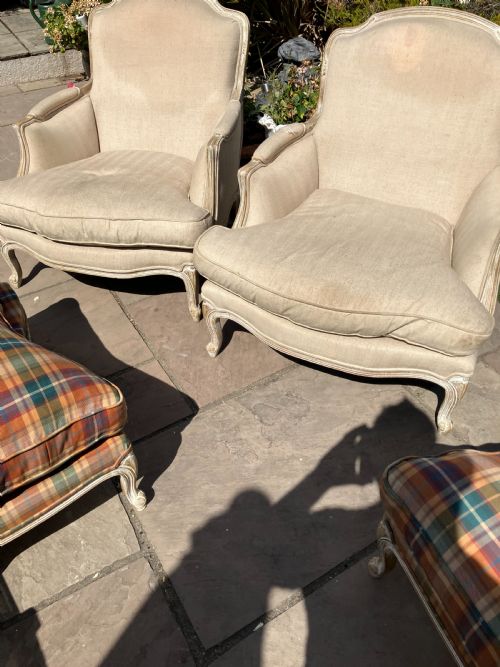
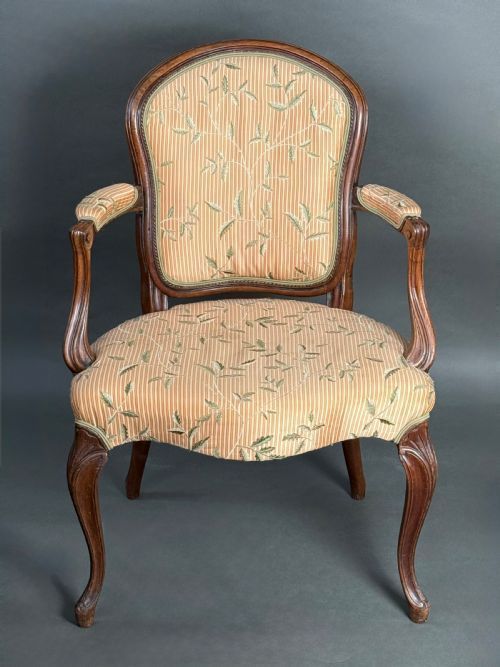
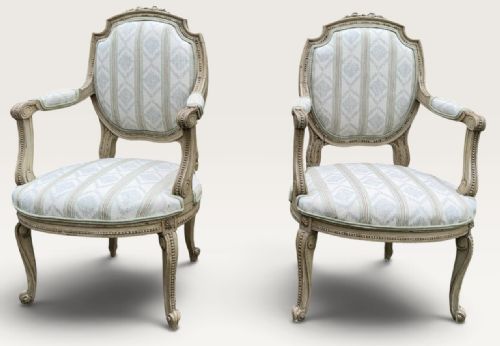
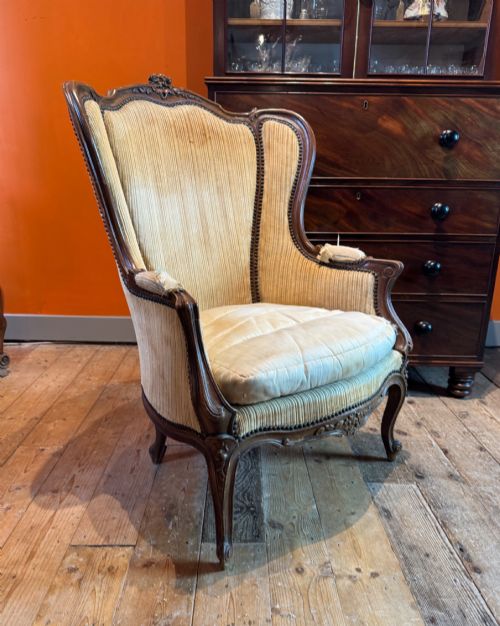
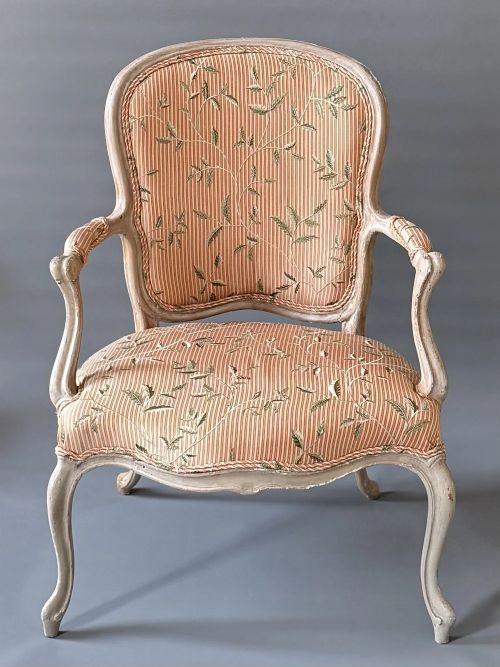
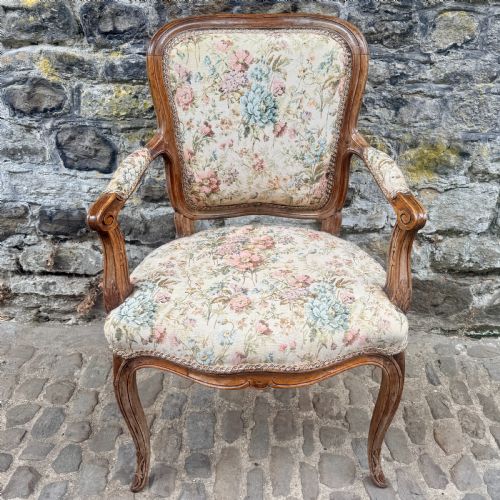
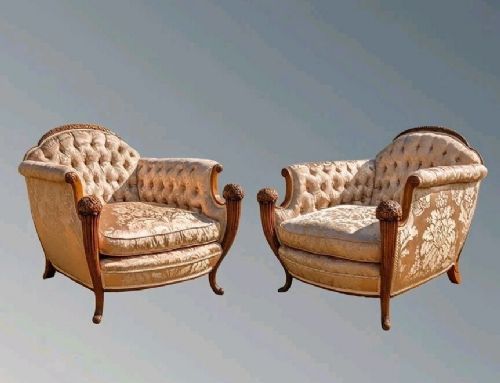
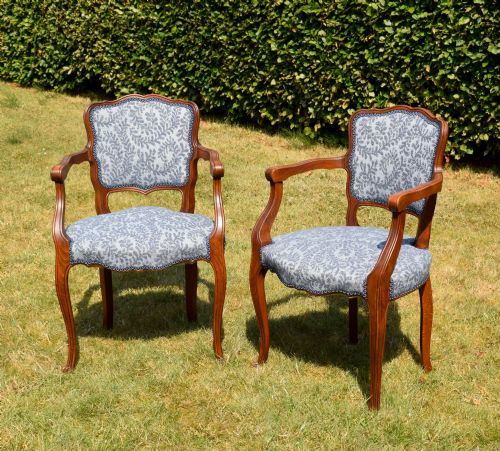
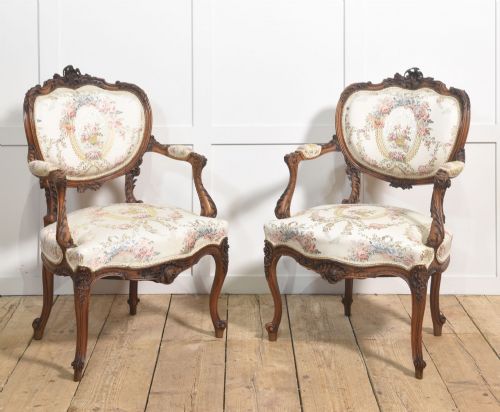
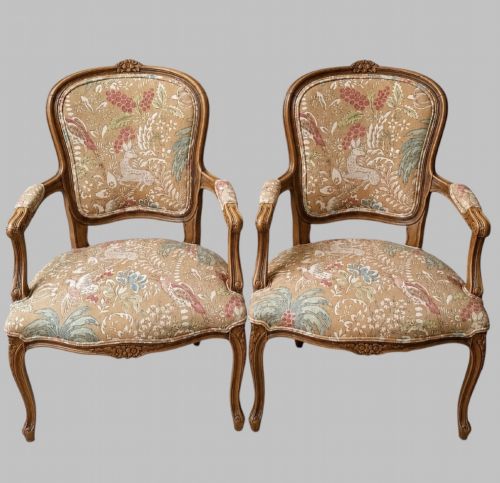
Most examples met on this page originate from nineteenth-century revivals rather than the 1700s, reflecting the enduring popularity of French styles during later decades. These revival pieces frequently adopt the distinctive open arms of the fauteuil or the enclosed upholstered sides of the bergère.
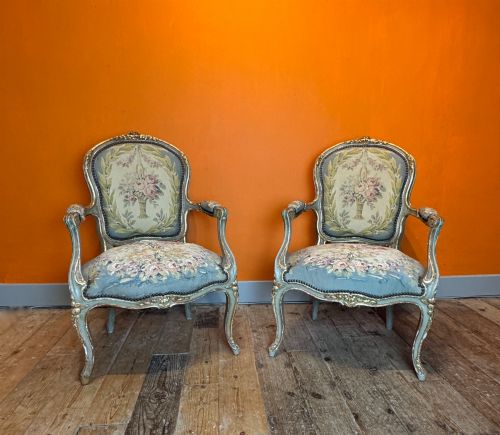
Beyond single armchairs, the category extends to pairs and larger salon suites that include settees and chaise longues sharing identical carved frames and textile coverings. Walnut, beech, and giltwood provide the structural foundation for these pieces, often paired with silk, velvet, or needlepoint upholstery.
Materials and construction
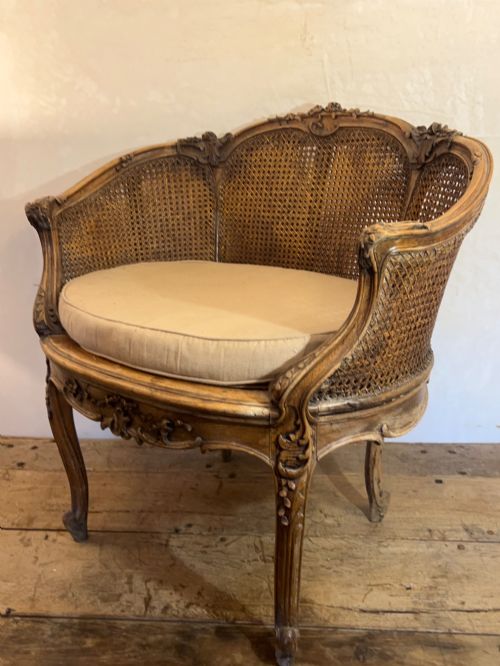
Makers shaped the structural frames from solid hardwoods like walnut, beech, and oak, carving the wood by hand to create the characteristic asymmetrical curves and foliage details of the style. Giltwood and painted finishes were frequently applied directly to the timber, sometimes accented with parcel gilding on the raised relief work.
Upholstery methods involved traditional stuffing techniques secured within open arm or closed bergère formats, utilising textiles such as silk, velvet, and tapestry. Brass tacks often secured the fabric edges along the wooden rails, while loose cushions provided additional comfort.
Upholstery choices recorded across the inventory range from traditional Aubusson tapestries and needlework panels to plain silk and velvet fabrics.
Distinctions in quality
The crispness and depth of the wood carving separate superior frames from simpler production, distinguishing delicate hand-chiselled foliage from softer, more mechanical detailing. Frames that retain their original paint or gilding carry greater authenticity than later overpainted surfaces.
The selection of covering materials also marks the tier of a piece, with Aubusson tapestries, heavy silks, and needlework panels representing a higher grade of finish than standard contemporary textiles. Structural integrity in the joints and the retention of original upholstery lines complete the measure of quality.
The Upholstered Louis XV Armchairs Glossary
- Fauteuil
- An open-arm armchair with upholstered back and seat, typically featuring exposed wooden framing. This form became a staple of French interior design during the eighteenth century.
- Bergère
- An enclosed armchair with upholstered sides and a padded back, often featuring a loose cushion. The style provides a more enclosed and comfortable seat than the open fauteuil.
- Cabriole leg
- A furniture leg that curves outward and then tapers inward, mimicking the shape of an animal's leg. It terminates in a scroll or plain foot without stretching bracing.
- Giltwood
- Timber coated with a thin layer of gold leaf or gilt paint. This finish was widely applied to formal seating frames to reflect candlelight in grand salons.
- Aubusson
- A woven tapestry style originating from the French town of the same name. These pictorial textiles frequently appear as upholstery on formal period chairs.
Upholstered Louis XV Armchairs: Frequently Asked Questions
How do I identify a true period chair?
Original eighteenth-century examples display hand-cut joinery, older timber patination, and construction methods consistent with period cabinetmaking. Revival pieces from the nineteenth century often show machine-tool marks or denser nineteenth-century hardwoods beneath the finish.
Examining the underside of the seat frame and the wear patterns on the wood helps clarify the actual age of the piece.
Can these armchairs be used in modern rooms?
The curved wooden frames and restrained proportions allow these seats to blend easily with contemporary sofas and minimalist furniture. Many buyers place single armchairs in studies, bedrooms, or living areas as accent seating.
Their decorative carvings and textile coverings add texture and historical contrast to plain architectural backdrops.
How should I care for antique silk upholstery?
Silk and delicate textiles require protection from direct sunlight to prevent fading and fibre degradation over time. Gentle vacuuming with a soft brush attachment removes surface dust without stressing the fabric.
Professional textile cleaners should handle deeper stains to preserve the integrity of historic or fine woven covers.