


Upholstered Gothic Chair
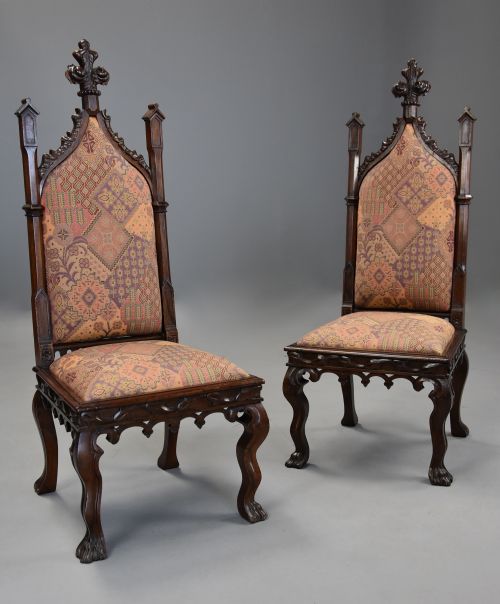
An upholstered gothic chair brings the heavy timbers and pointed arches of medieval architecture directly into domestic nineteenth-century rooms.
Upholstered Gothic Chair
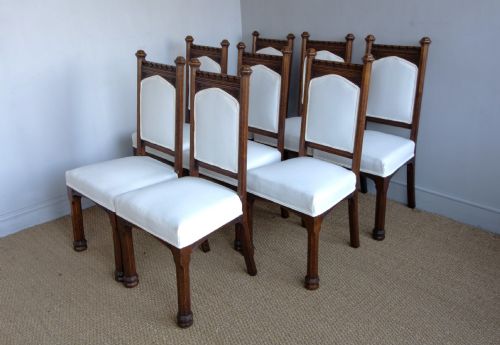
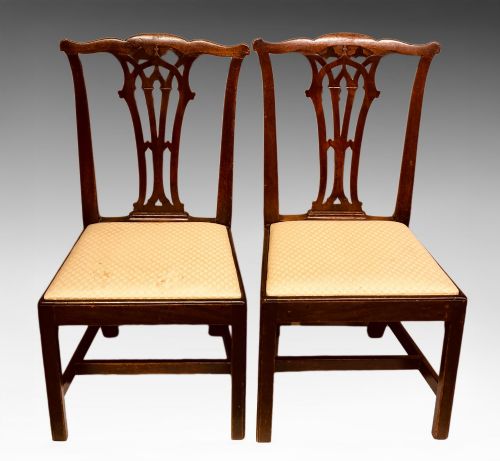
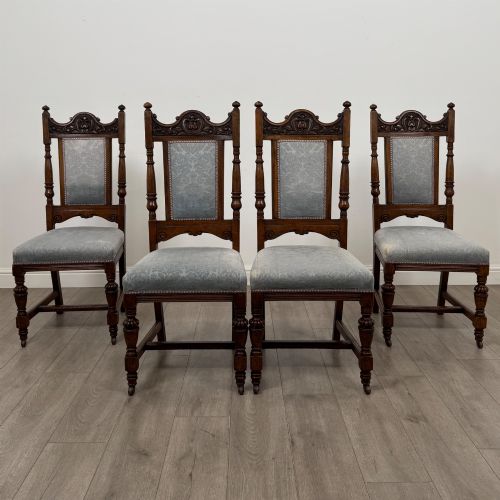
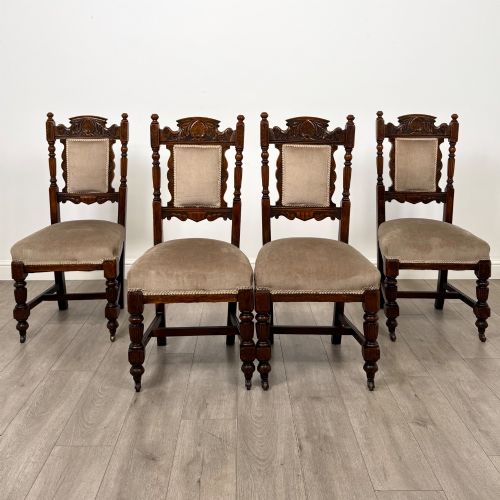
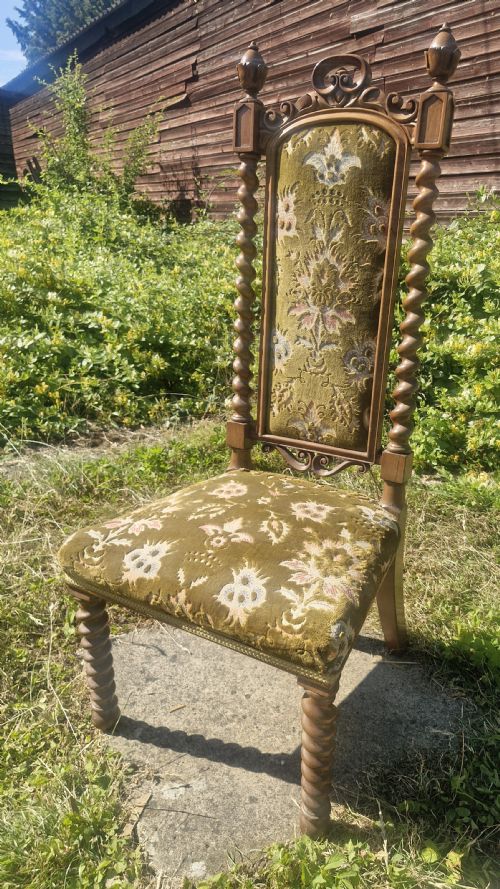
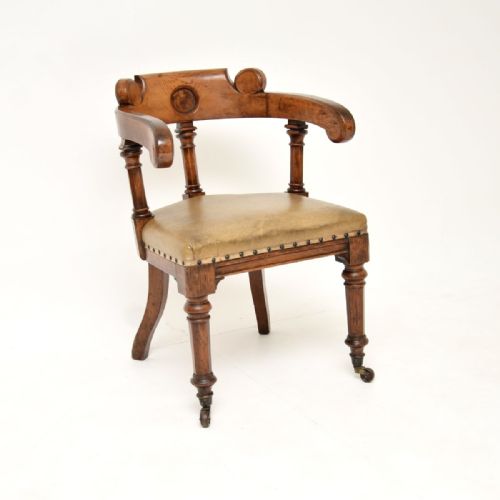
When searching for an upholstered gothic chair, a buyer encounters heavy nineteenth-century seating derived from Victorian revivals, spanning dining chairs, armchairs, library desks, and prayer chairs. Most examples date from the Victorian era, utilising dense timbers built during the mid to late nineteenth century alongside occasional Georgian mahogany pieces.
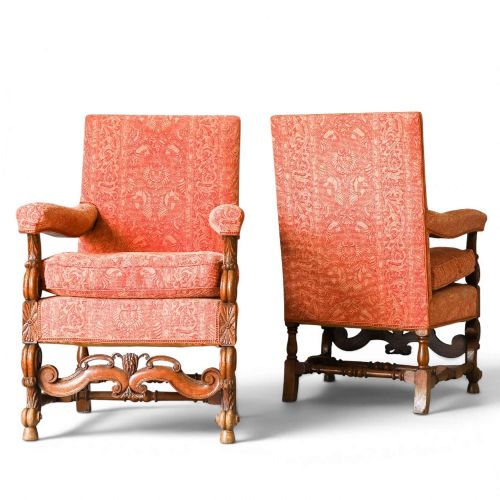
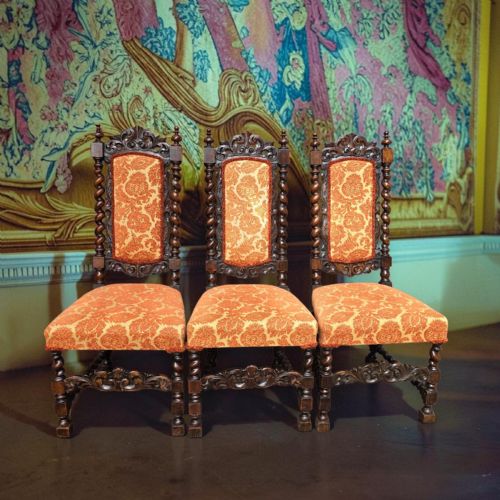
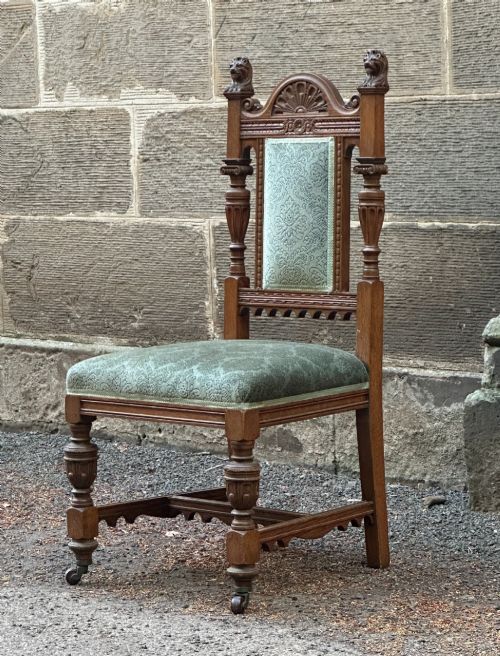
The dominant forms on this page include solid oak dining sets, walnut throne chairs, and rosewood hall chairs, often featuring high backs or upholstered panels. Makers utilised specific regional styles, from French Renaissance Revival to English Gothic revival, creating practical seating with distinct architectural framing.
Materials and construction
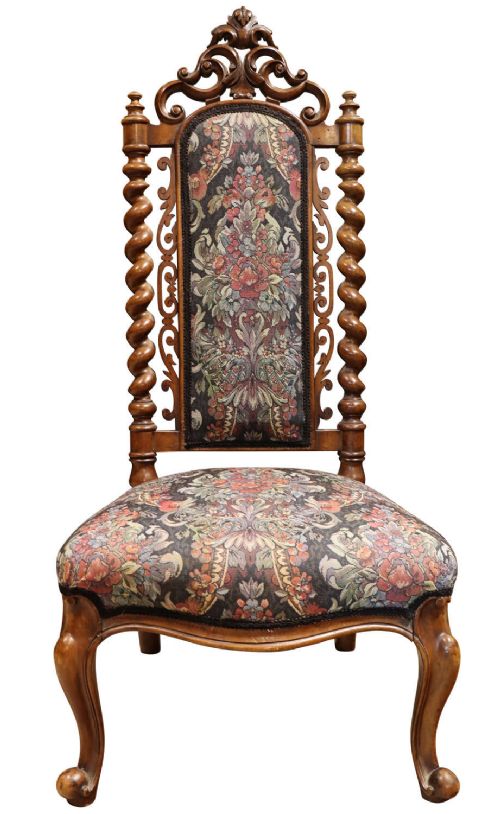
Carpenters built these chairs primarily using solid oak, walnut, and rosewood frames, joined by traditional methods and embellished with hand carvings such as lion heads or green man motifs. Wood framing provides the rigid architectural structure necessary to support deep upholstery and heavy textiles.
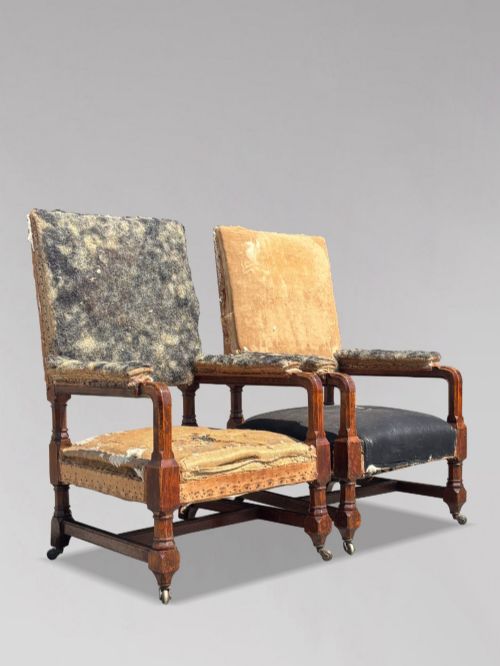
Upholstery materials recorded in the listings include leather, tapestry, and various textile coverings, secured to frames constructed from mahogany and oak. These soft coverings contrast with the dark, polished timbers and structural brass details.
Listings feature oak, rosewood, mahogany, and walnut frames paired with leather, tapestry, and textile upholstery across the nineteenth century.
Judging quality and craftsmanship
The distinction between standard seating and exceptional work lies in the depth of the hand carving and the selection of timber. Dense, figured rosewood and heavily carved solid oak represent superior craftsmanship compared to plain utility frames.
Proportions and matching sets dictate desirability, with complete sets of dining chairs or matched pairs commanding greater presence than single side chairs. The integration of maker signatures, labels, or attribution to notable workshops elevates specific examples.
W A Willcocks·Bruce Talbert·Gillows of Lancaster·Charles Bevan
The Upholstered Gothic Chair Glossary
- Gothic Revival
- An architectural and decorative style drawing inspiration from medieval design, featuring pointed arches, tracery, and heavy timber construction. This movement dominated nineteenth-century furniture production.
- Prie Dieu
- A low prayer chair featuring a high back designed to support kneeling or devotional posture. These items often include upholstered armrests and rich textile coverings.
- Rosewood
- A dense, heavily figured tropical hardwood prized for its dark grain and polished finish. Cabinetmakers utilised it for high-status Victorian seating.
- Barley twist
- A decorative turning technique resembling a twisted rope, carved into chair legs and stretchers. It appears frequently on mid-nineteenth-century oak frames.
Upholstered Gothic Chair: Frequently Asked Questions
What is an upholstered gothic chair?
An upholstered gothic chair is a nineteenth-century seat featuring medieval architectural motifs like pointed arches, heavy carved timber frames, and covered panels in leather or tapestry.
These pieces range from tall library armchairs and low prayer chairs to complete sets of dining chairs built during the Victorian revival.
How do I date a gothic chair?
Dating relies on identifying timber choices, construction methods, and stylistic markers recorded across the nineteenth century. Victorian examples often feature oak or rosewood with heavy machine or hand carvings.
Earlier Georgian pieces utilise simpler mahogany frames, while specific nineteenth-century decades introduce distinct turnings like barley twist legs or stamped maker labels.
Where were these chairs used?
Original placements varied from formal dining rooms and libraries to private bedrooms and chapels. Large library armchairs and throne chairs suited studies and hallways, while prayer chairs served devotional spaces.
Dining chairs were produced in sets to accompany heavy wooden tables in Victorian homes.
How do I care for antique upholstery?
Preserving these textiles involves keeping chairs away from direct sunlight and maintaining stable room humidity to protect old wood frames and leather or tapestry coverings. Gentle dusting prevents particle buildup on carved oak and rosewood surfaces.
Professional conservation is recommended for fragile nineteenth-century fabrics and original stuffing.