




Dark Rosewood Accent Chair
A dark rosewood accent chair brings deep timber tones and nineteenth-century craftsmanship into a modern room.
Dark Rosewood Accent Chair
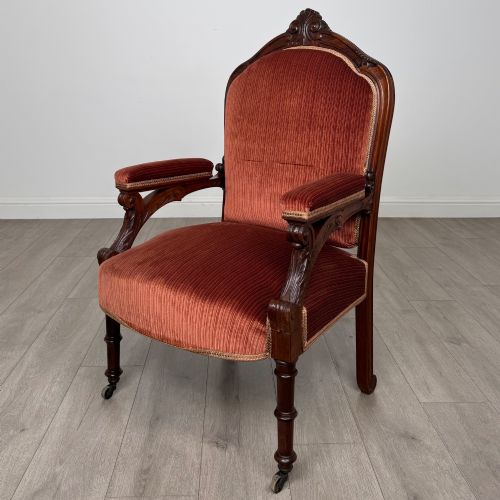
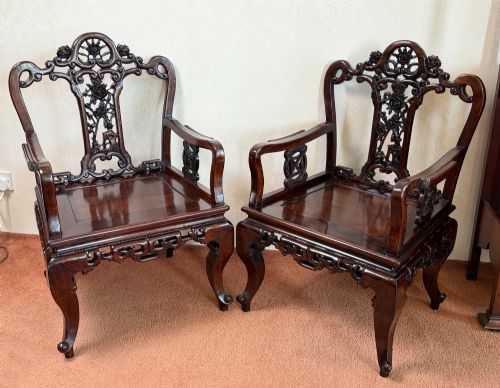
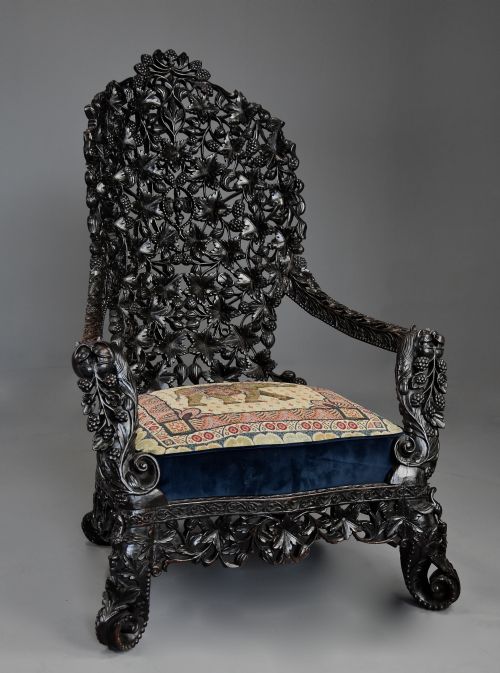
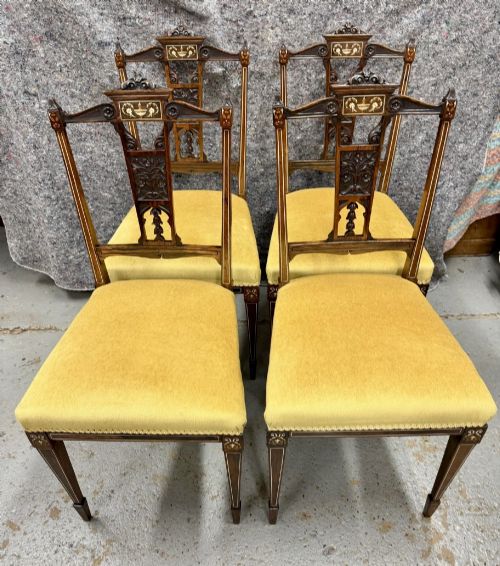
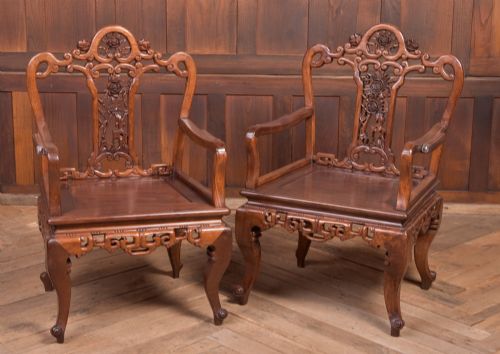
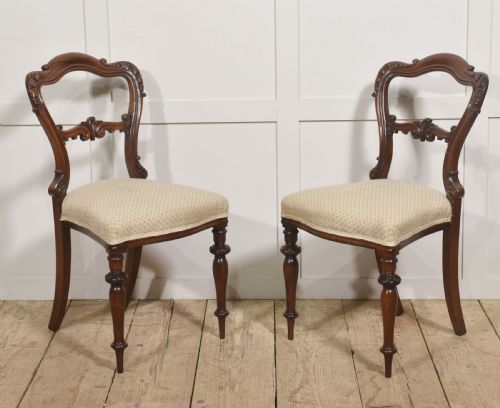
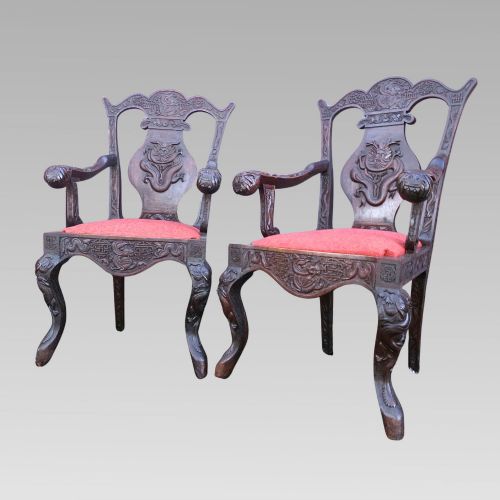
A dark rosewood accent chair is a seating piece designed to stand out in a room, drawing on nineteenth-century forms such as nursing chairs, side chairs, and open armchairs. You will encounter Victorian and Regency pieces alongside Anglo-Indian, Chinese Qing Dynasty, and Moorish examples.
The selection ranges from low-slung prie dieu chairs and high-backed library armchairs to pairs of carved salon chairs and occasional stools. These items span periods from the eighteenth century through the Victorian era to the early twentieth century, utilising dense hardwoods and rich rosewood timbers.
How they were made
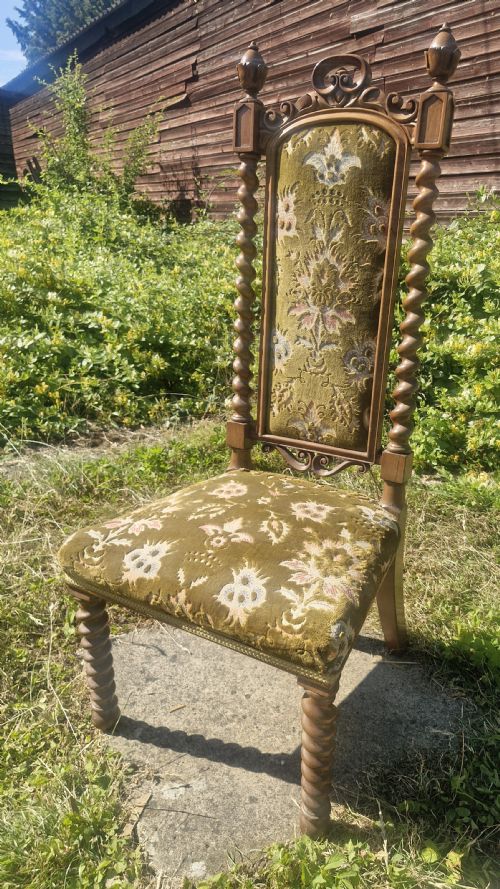
Craftsmen built these chairs using dense timbers like rosewood, blackwood, and hongmu, often shaping the frames with intricate hand-carving. Many pieces feature structural joinery enhanced by turned elements such as bobbin turnings or cabriole legs.
Makers integrated decorative details including brass inlay and extensive carving depicting oriental dragons or foliate motifs. Upholstery fabrics, velvet, and caning were applied to seats and high backs to provide comfort alongside visual weight.
Listings feature pieces spanning the eighteenth century, the Regency era, the Victorian period, and Edwardian styles.
What varies in quality
The depth and crispness of the hand-carved detail separate standard production from exceptional examples, particularly in Chinese Qing Dynasty and Anglo-Indian items where undercut foliage and figurative motifs require high skill. The choice and density of the rosewood timber itself, alongside the integrity of the original joinery, dictate the structural presence of the chair.
Subtleties in proportion, such as the sweep of a cabriole leg or the precision of brass inlay work, distinguish finer pieces. The retention of period upholstery materials or appropriate textiles also contributes to the overall coherence of the design.
The Dark Rosewood Accent Chair Glossary
- Rosewood
- A dense, dark timber prized for its rich grain and weight, frequently utilised in nineteenth-century seating.
- Cabriole leg
- A furniture leg that curves out and then tapers inward, commonly seen on Victorian chairs and stools.
- Prie dieu
- A low-backed devotional chair designed for kneeling and prayer, originating in the Victorian period.
- Hongmu
- A Chinese term for dense hardwoods, often translated as red wood, used in Qing Dynasty throne chairs and armchairs.
- Bobbin chair
- A seating form characterised by turned wooden spindles resembling spools of thread.
Dark Rosewood Accent Chair: Frequently Asked Questions
Where should I place an accent chair?
These chairs suit hallways, bedrooms, or reception spaces where a single piece can anchor a corner. Their decorative backs and rich timbers work well when viewed from multiple angles.
Pairing a nineteenth-century rosewood chair with simpler modern furnishings allows the dark wood tones and period carvings to stand out clearly.
How do I identify a Victorian rosewood chair?
Look for dense, dark grain patterns combined with nineteenth-century stylistic markers like cabriole legs, high backs, or Gothic Revival motifs. Many pieces feature button upholstery or carved rosewood frames.
Construction methods typically involve traditional joinery and heavy hardwood frames characteristic of workshops from the eighteen-fifties onwards.
What is the difference between an armchair and a nursing chair?
Armchairs feature supportive side arms and broader proportions intended for general seating in libraries or salons. Nursing chairs are typically lower to the ground and lack arms to accommodate nineteenth-century garments.
Prie dieu chairs represent a specialised variant of the nursing chair form, built with high backs for devotional use.
How do I care for antique rosewood?
Maintain the timber by keeping the chair away from direct heat sources and sudden humidity changes that can affect old hardwood. Dust regularly with a soft, dry cloth to protect the polished surface.
Avoid chemical polishes and consult a specialist if the traditional finish or upholstery requires conservation.