

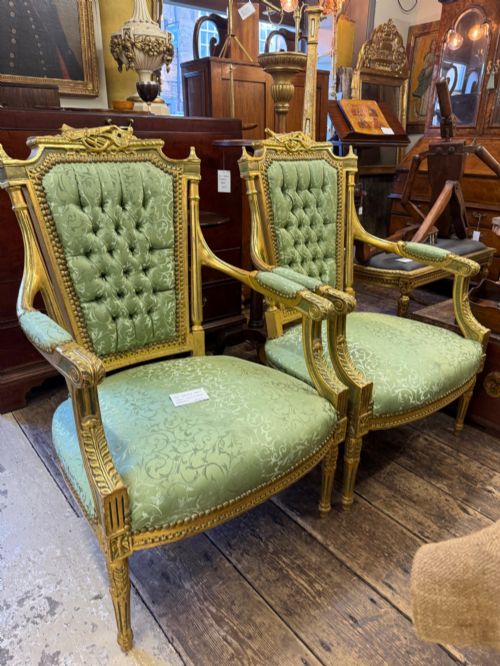
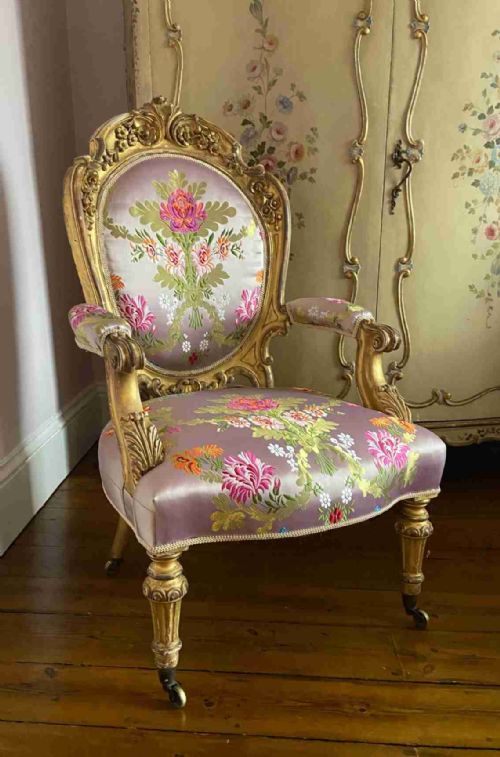
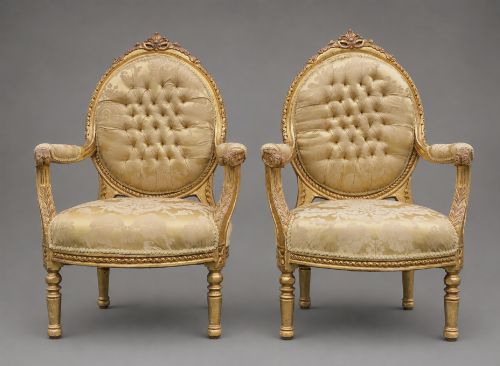
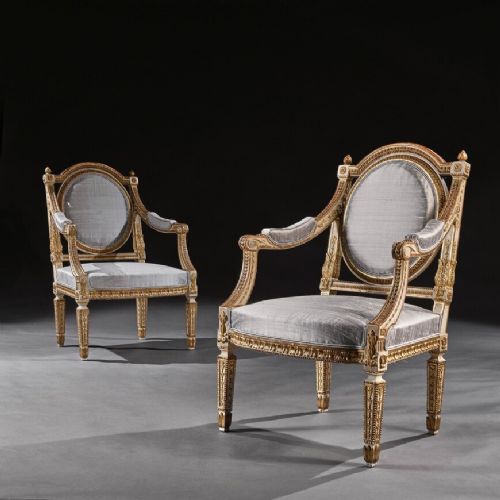
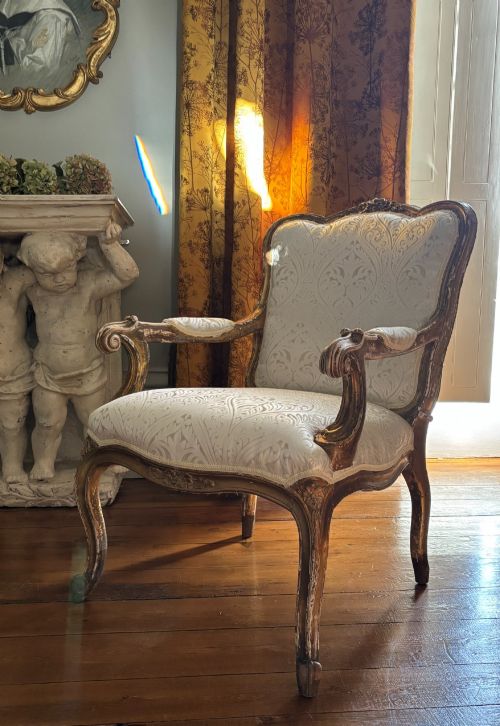
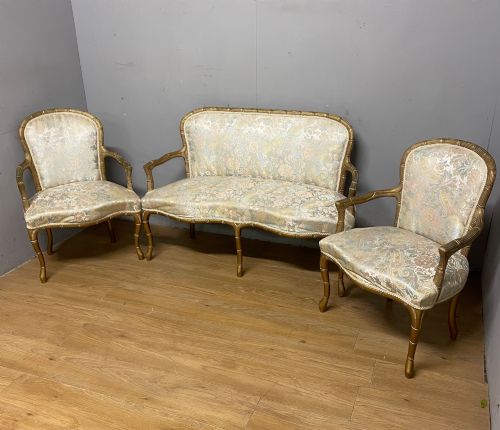
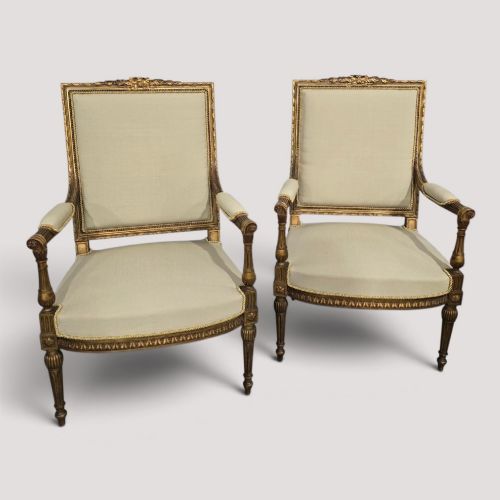
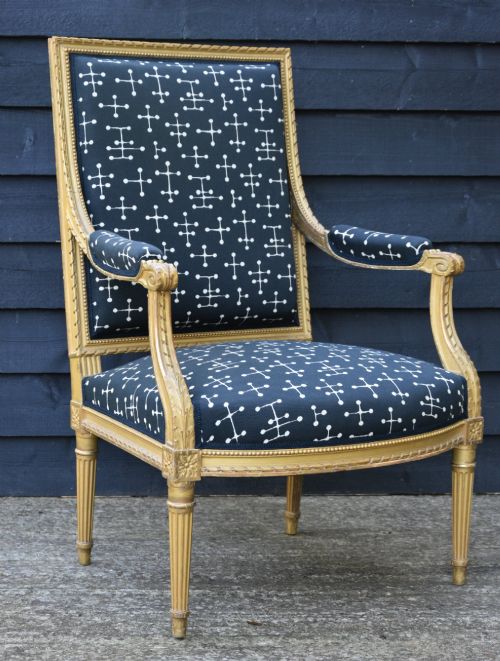
Upholstered Gilt Fauteuil
An upholstered gilt fauteuil brings formal French elegance and carved wooden grace to a room, offering both decorative presence and comfortable seating.
Upholstered Gilt Fauteuil
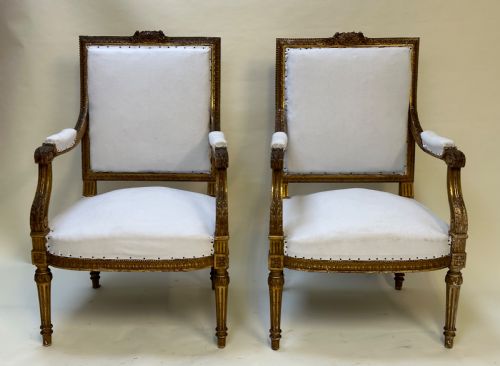
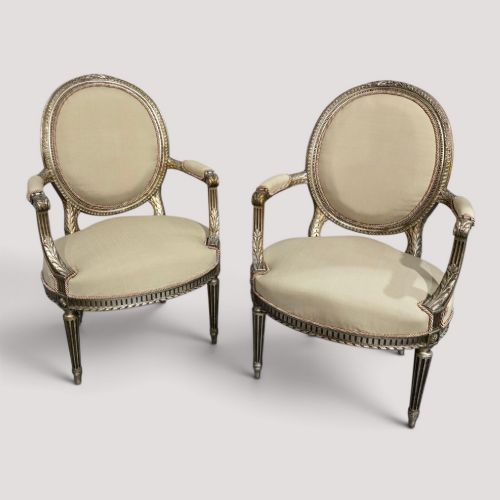
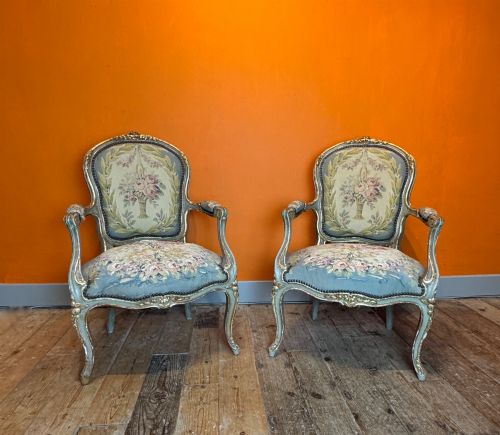
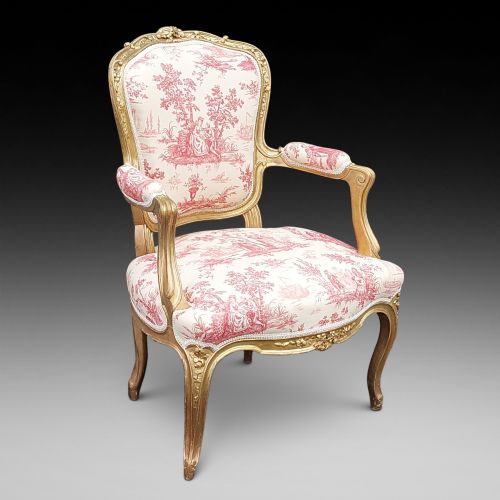
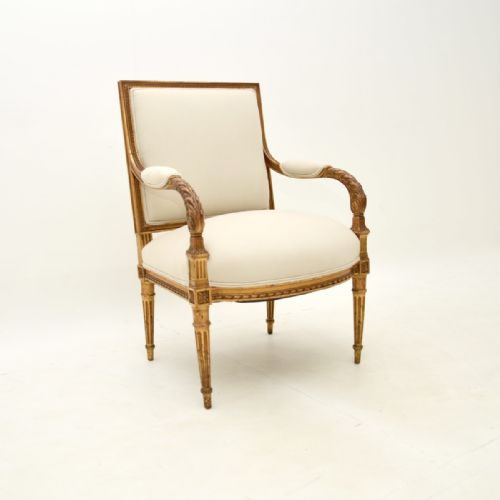
An upholstered gilt fauteuil represents an open-armed seating form designed in France and widely interpreted across subsequent European revivals. Buyers seeking this phrase encounter distinct variations spanning the eighteenth, nineteenth, and early twentieth centuries.
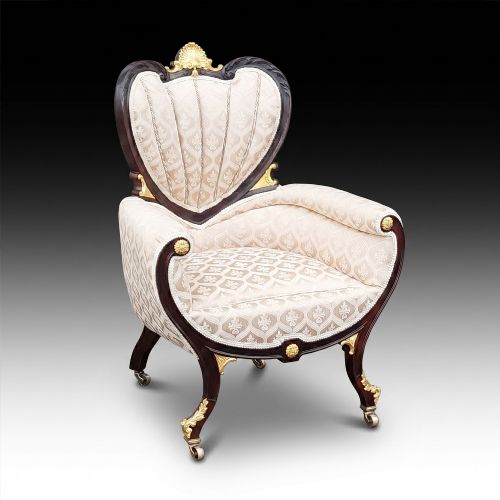
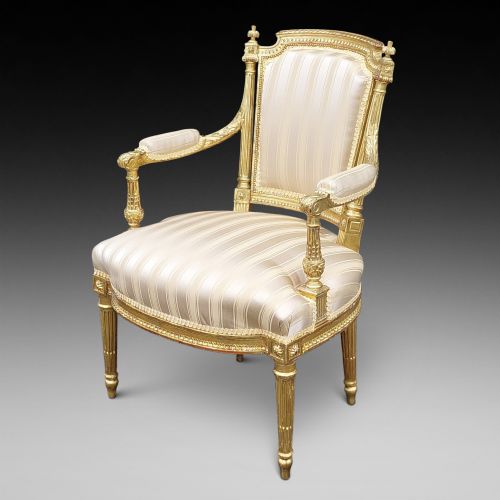
The selections here highlight pieces influenced by classical French design, including Louis XVI, Rococo, and Empire styles. Many examples originate from nineteenth-century workshops adopting earlier royal aesthetics.
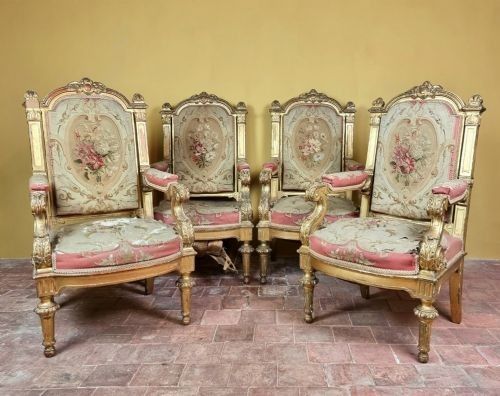
Makers frequently utilised beech, walnut, and other timbers to construct these open armchairs before applying gold leaf or paint. Surviving items often feature silk fabric, tapestry, or modern textile upholstery.
Materials and construction methods
Craftsmen carved solid woods such as beech, walnut, and mahogany into curvilinear frames before applying gold leaf or silver gilt. This metallic layer was meticulously laid over a prepared ground to achieve a brilliant surface finish.
Frames incorporated traditional joinery to support the open armrests and upholstered components. Final presentation relied on textile coverings including silk, tapestry, and patterned fabrics secured across the seat and back.
Upholstered Gilt Fauteuil Retail Price Guide 2026
Typical asking prices for upholstered gilt fauteuil among the pieces listed under this phrase on Sellingantiques today, from the lower quarter to the upper quarter. They describe what is for sale here now, not the wider market.
Listings demonstrate a strong prevalence of nineteenth-century French manufacture, particularly items reflecting Louis XVI Revival and Napoleon III aesthetics.
Distinctions in craftsmanship
The refinement of the carved woodwork dictates the distinction between standard production and superior craftsmanship. Crisp execution of floral motifs, fluted legs, and structural moulding shows the artisan's direct skill.
The application and preservation of the gold leaf surface further define the character of each piece. Intact original gilding or controlled parcel-gilt finishes maintain historical integrity more effectively than heavy, indiscriminate refinishing.
Blaise Maucuy·Holland and Sons
The Upholstered Gilt Fauteuil Glossary
- Giltwood
- Timber coated with gold leaf or powder over a prepared gesso base. It provides a bright, reflective surface characteristic of formal period seating.
- Parcel Gilt
- A decorative treatment where only specific carved elements of a painted or stained wooden surface are gilded. This technique accentuates particular architectural details of the frame.
- Tapestry
- A heavy hand-woven or jacquard textile featuring pictorial designs. It frequently appears as durable upholstery on formal nineteenth-century salon seating.
Upholstered Gilt Fauteuil: Frequently Asked Questions
What is an upholstered gilt fauteuil?
An upholstered gilt fauteuil is an open-armed armchair constructed from wood, finished with gold leaf or paint, and fitted with fabric upholstery. The style originates from traditional French seating design.
These chairs serve as both functional furniture and decorative statements. They are typically placed in formal reception rooms, parlours, or large bedrooms.
How do I identify a revival period piece?
Revival pieces often replicate eighteenth-century Louis styles while utilising nineteenth-century manufacturing techniques and wood preparations. Examination of the timber age and assembly clues assists in dating.
Details such as machine-sawn components or nineteenth-century hardware distinguish revival pieces from eighteenth-century originals. Stylistic cues frequently reference Napoleon III or Victorian interpretations.
How should I care for giltwood surfaces?
Giltwood requires careful handling because the delicate gold leaf layer can abrade or flake if cleaned incorrectly. Dusting should be performed gently with a soft, dry brush.
Moisture and harsh cleaning agents must be avoided entirely to preserve the metallic finish. Direct sunlight can also degrade delicate silk and tapestry upholstery over time.
Where were these armchairs typically used?
These armchairs were designed for formal sitting rooms and reception areas within grand houses and chateaus. Their open arms accommodated voluminous contemporary fashion during earlier eras.
Today, they function well as accent seating in living spaces or dressing rooms. Their decorative frames allow them to complement both traditional and eclectic interiors.