
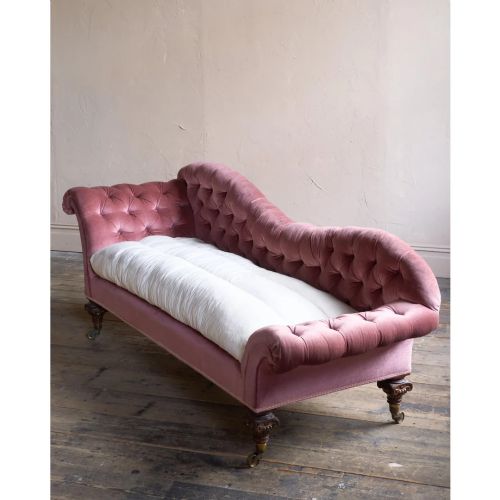
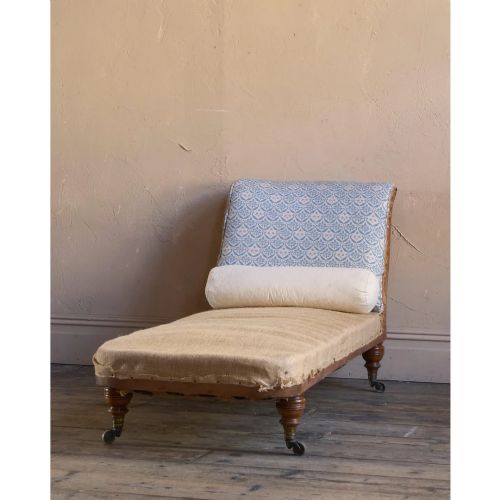
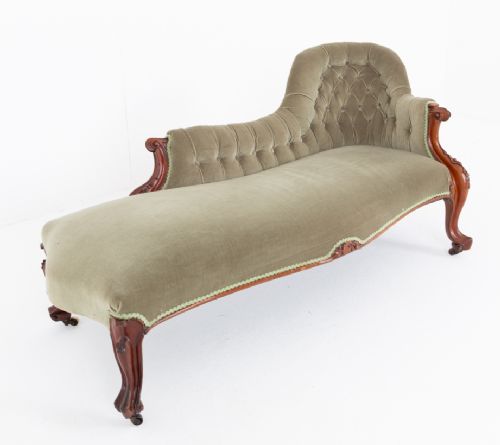
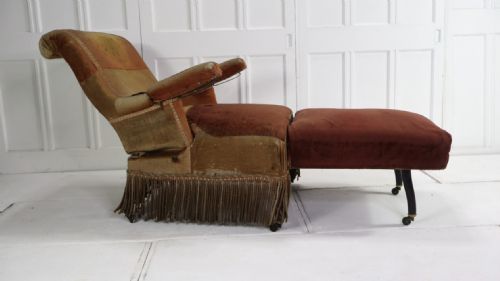
Upholstered Chaise Lounge
An upholstered chaise lounge provides a dedicated spot for reclining, drawing on nineteenth-century forms designed for daytime rest.
Upholstered Chaise Lounge
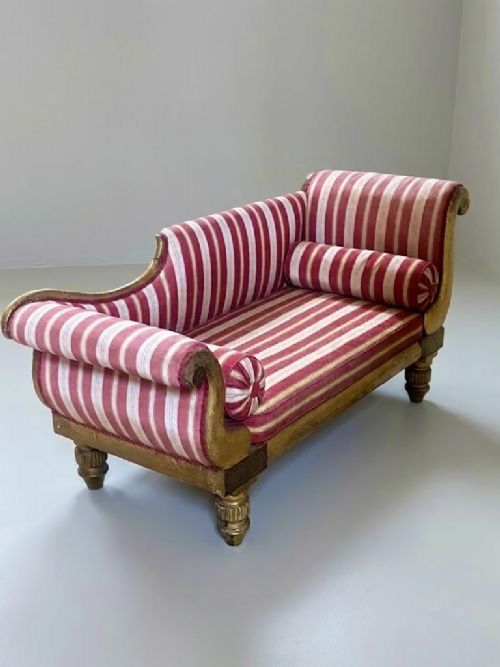
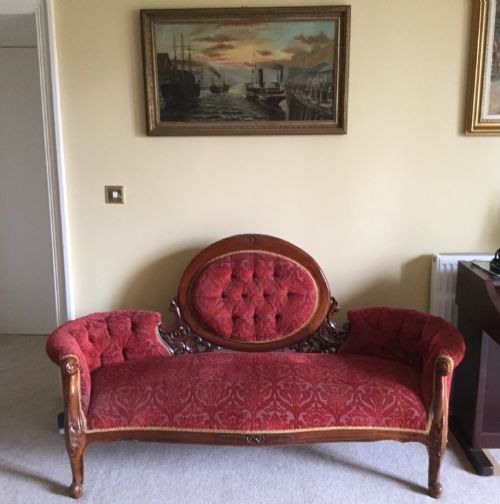
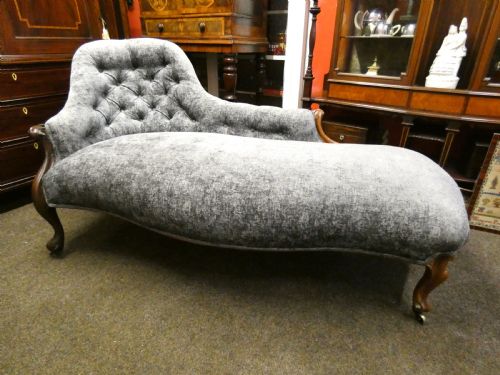
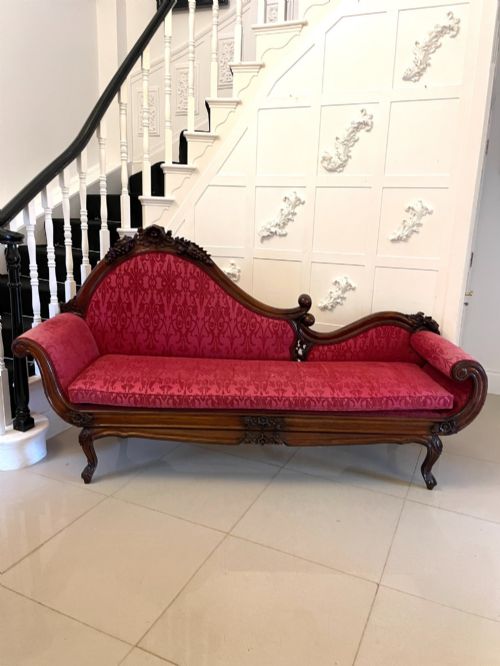
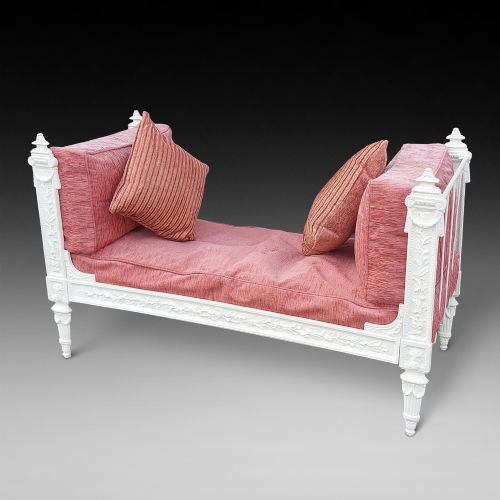
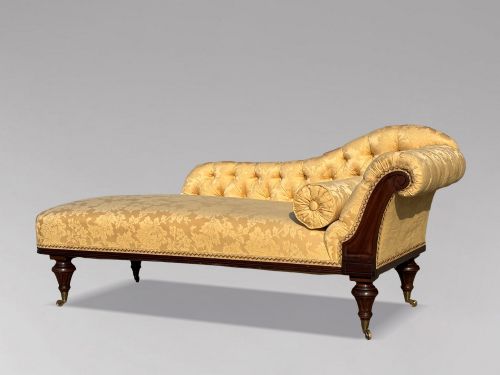
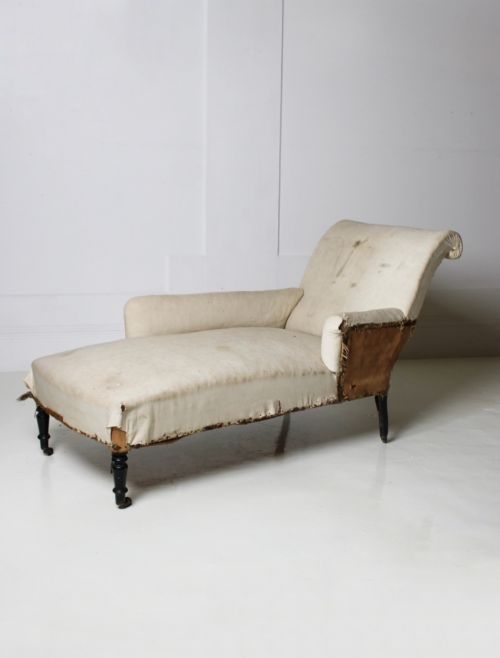
An upholstered chaise lounge combines the support of a sofa with the extended seat of a daybed, designed primarily for reclining in a semi-recumbent posture during the day. Buyers searching for an upholstered chaise lounge encounter various historical iterations, ranging from linear Regency models to elaborately carved Victorian examples and later Edwardian variants.
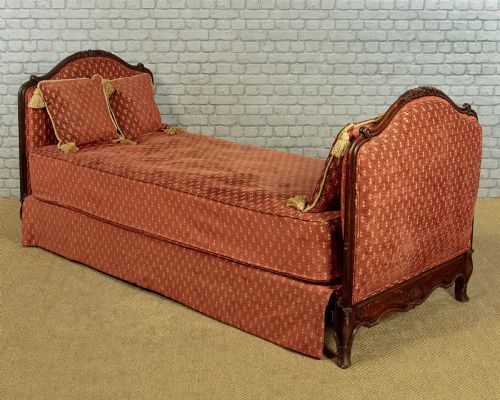
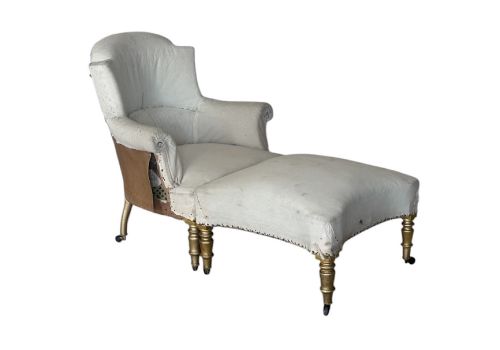
The pieces appearing in this selection frequently date from the nineteenth century, including specific styles such as William IV, Victorian, and Regency periods. Forms span single-ended scroll sofas, double-ended couches, and multi-part seating arrangements like the duchesse brisée, alongside simpler daybeds and recliners.
Materials and Construction Techniques
Frames are constructed from dense timbers such as mahogany, rosewood, walnut, and occasional cast iron, providing a rigid skeletal foundation for the upholstered body. Cabinet makers shaped these woods into scroll arms, turned legs, and carved show-wood rails that frame the upholstered sections.
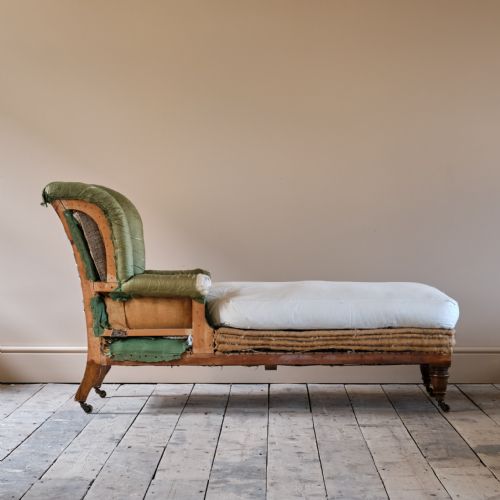
Internal padding relies on traditional stuffing materials contained within sprung or webbed seat bases, finished with top covers of velvet, damask, silk, brocade, leather, or standard upholstery fabric. Brass castors frequently support the legs, allowing these heavy seating units to move across reception rooms and salons.
Listings feature timber frames in mahogany, rosewood, and walnut, alongside cast iron daybeds spanning the nineteenth and early twentieth centuries.
Distinctions in Build and Execution
Quality rests in the sculptural integrity of the timber frame, where hand-carved details, matched veneer grains, and robust joinery distinguish high-workshop output from standard commercial production. Maker attribution, such as pieces associated with established firms, indicates superior cabinet-making standards.
The execution of the upholstery foundation determines longevity and line, with disciplined springing and appropriate textile selection preserving the intended contour of the scroll or bolster. Original elements, including retained castors and untouched timber surfaces, retain greater historical coherence than heavily altered examples.
Howard and Sons·H. Goodall and Sons·Holland and Sons·Jas Shoolbred
The Upholstered Chaise Lounge Glossary
- Duchesse brisée
- A multi-part daybed consisting of an armchair accompanied by a stool or a matched pair of chairs with a central footstool. This arrangement creates an extended surface for reclining.
- Scroll arm
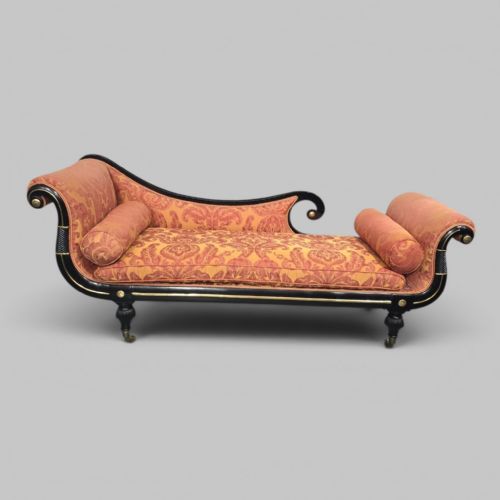
- A curved, volute-shaped armrest terminating in a spiral scroll. It forms the primary structural and decorative end-stop on nineteenth-century daybeds.
- Double ended sofa
- A seating form featuring matching raised headrests at both extremities rather than a single elevated back. This symmetrical layout allows a user to recline facing either direction.
- Webbing
- Interwoven strips of strong jute or hemp fabric stretched across the frame base to support the internal stuffing and springs. It forms the foundational layer beneath the primary upholstery.
- Show-wood
- The exposed polished or carved wooden portions of a frame that remain visible around the upholstered padding. It highlights the cabinet maker's joinery and timber selection.
Upholstered Chaise Lounge: Frequently Asked Questions
How do I identify a Regency period chaise?
Regency pieces display classical architectural influences, incorporating rectilinear mahogany or rosewood frames, sabre legs, and classical mounts. Carved scroll ends often reference ancient Greek or Roman klismos seating.
Manner of Gillows or documented Regency workshops show restrained brass inlay and giltwood accents, distinguishing them from later, heavier Victorian interpretations.
Were these pieces meant for sleeping?
These pieces served primarily for daytime resting, reading, or receiving visitors in formal reception spaces rather than overnight sleeping. The elevated headrest supported a semi-reclined posture suited to wearing structured period garments.
Their placement in parlours and large drawing rooms reflected domestic routines where daytime repose occurred in public areas of the home.
How should I care for antique upholstery fabrics?
Antique textiles such as silk, velvet, and damask require protection from direct sunlight to prevent fibre degradation and colour fading. Regular light vacuuming using a soft brush attachment removes surface dust without stressing the historic weave.
Professional textile conservators should handle deep cleaning or structural interventions to preserve fragile internal foundations and historic show-wood frames.